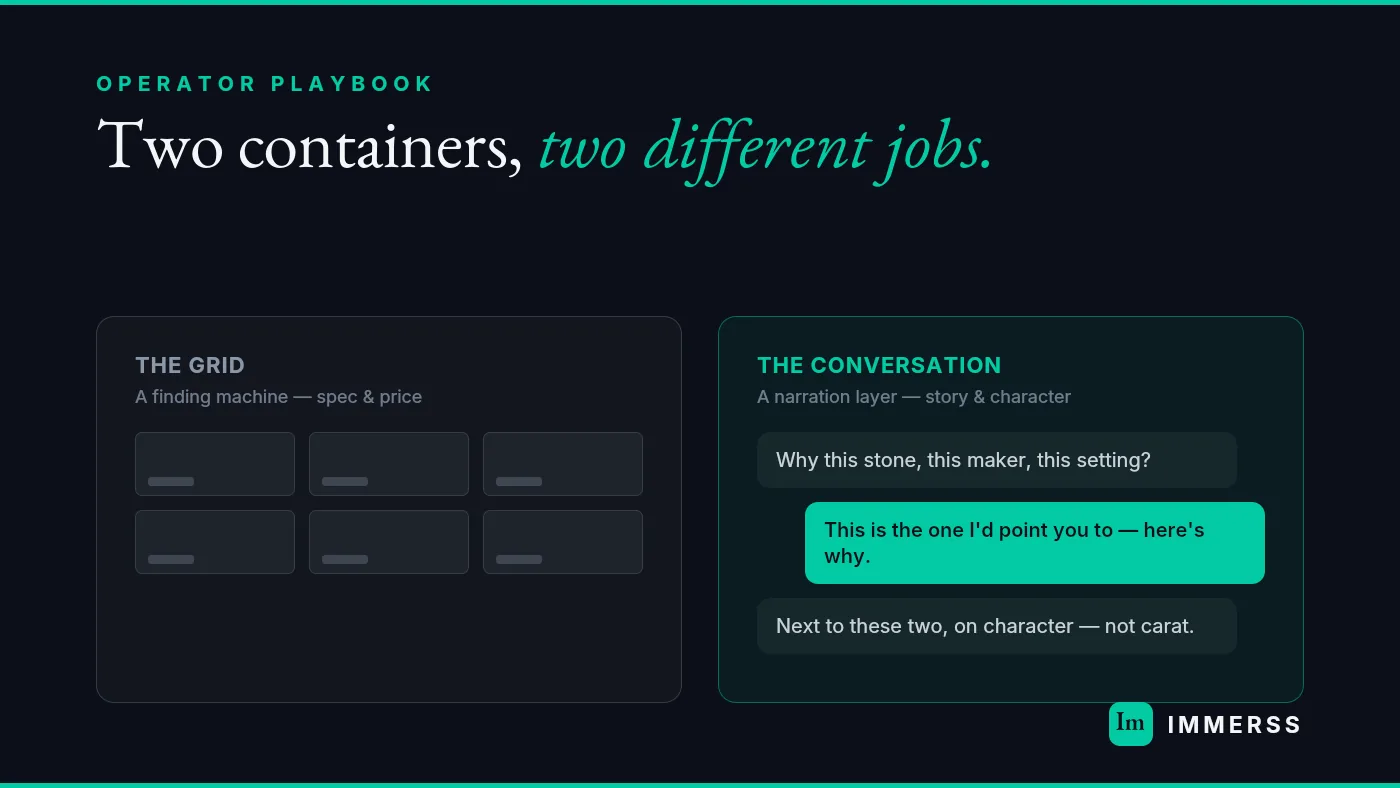

Every e-commerce platform pours inventory into the same container: the grid. Thumbnails, filters, sort, a detail page with specs and a price. For commodity goods, that’s the correct design — it’s a finding machine, and most shopping is a finding problem.
Fine retail isn’t a finding problem, and the grid is quietly the wrong container for what fine jewelers and watch dealers actually sell. This playbook explains the mismatch, how to spot it in your own data, and how to add the container your inventory was always missing.
The grid does one job. Your inventory needs two.
| The finding layer (grid) | The narration layer (conversation) | |
|---|---|---|
| Built for | A buyer who knows what they want | A buyer who needs to be guided to it |
| Sells on | Spec, material, price | Story, provenance, character, fit |
| Right for | Commodity goods | High-consideration pieces |
| Behavior it invites | Compare on visible numbers | Compare on character, in dialogue |
| Who delivers it | Self-service UI / AI sales agent | The advisor who curated the piece |
| Failure mode | Drags fine pieces into price comparison | (none — this is the missing layer) |
Most fine-retail websites built only the left column. Then they mistook the result — long dwell, low conversion — for a traffic or photography problem, when it was a missing-container problem.
Why the grid actively misleads fine buyers
The grid isn’t a neutral container that merely fails to add narration. It teaches the wrong behavior:
- It trains spec-and-price comparison. A grid of tiles with prices is an instrument for comparing on visible attributes. A fine buyer dropped into one will line up pieces by price per carat — treating a category that lives on character as if it lived on specification.
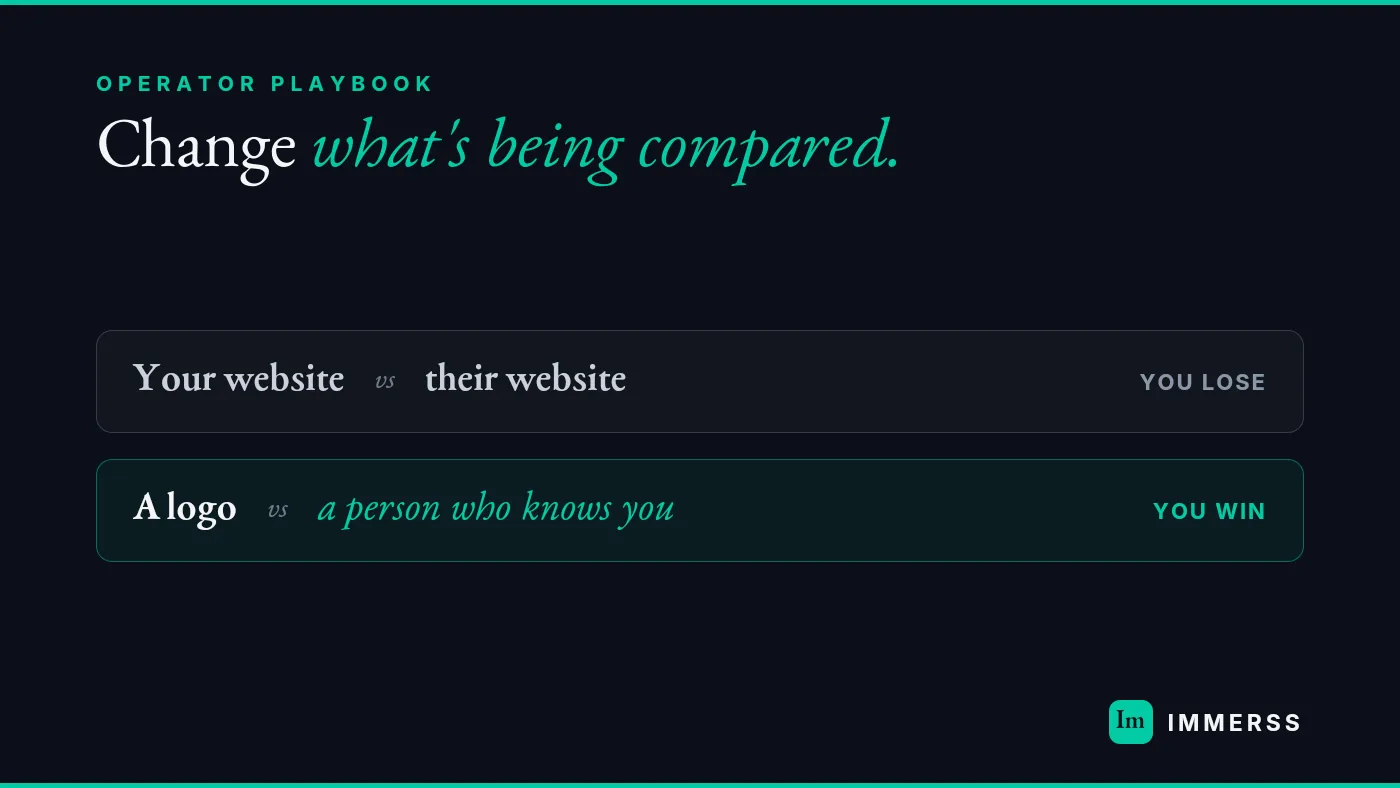
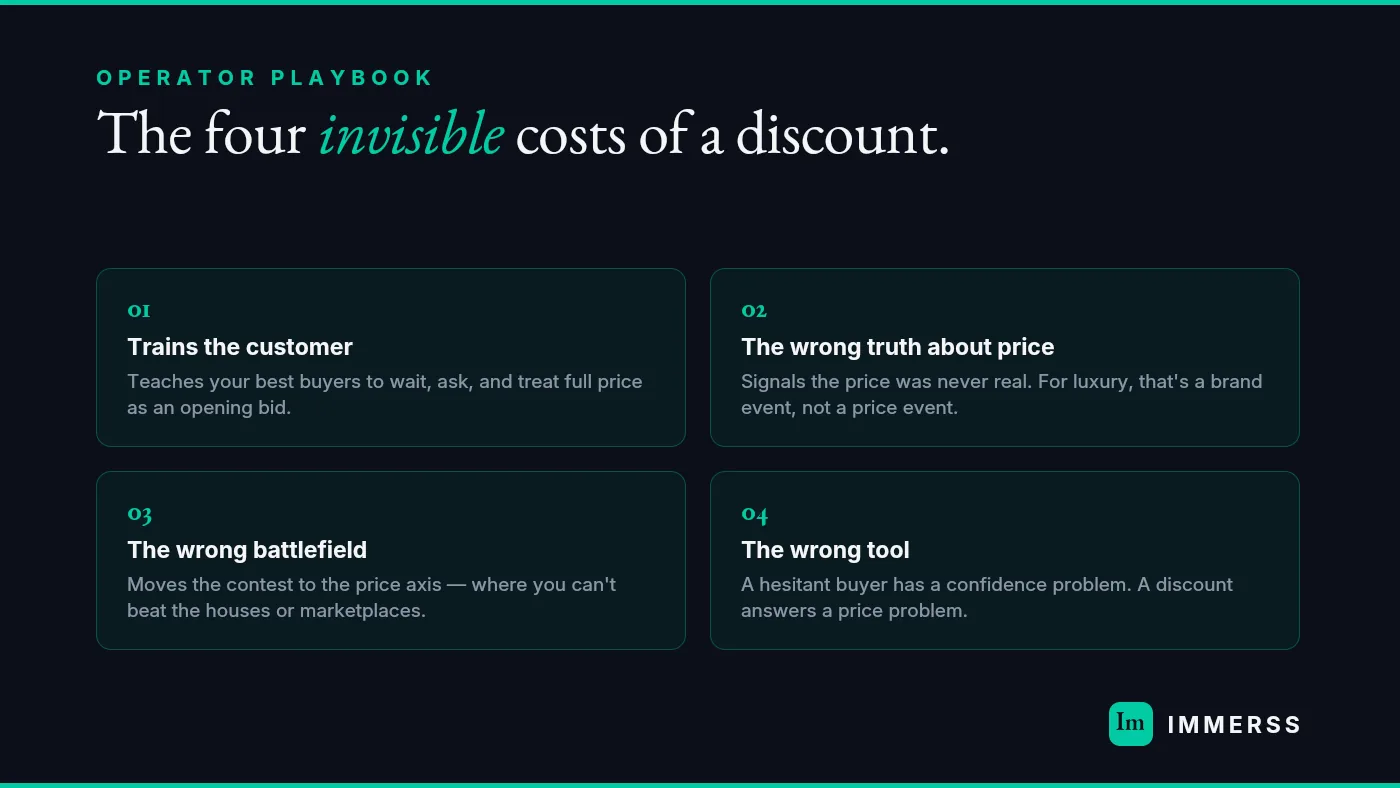
- It reads as commodity. The moment a $25K piece sits in a grid beside a price, it reads like a commodity SKU — and commodities get judged on price. That’s how independents get dragged into a price-comparison game they should never have entered.
- Filters ask the buyer to be their own advisor. Filters serve a buyer who knows what they want. The fine-retail buyer often doesn’t — that’s why the advisor exists. Hand them a filter panel and they dwell, then leave.
How the mismatch shows up in your data — the ICP filter
This playbook is for a specific operator. Run it against your business:
- Shopify Plus, 50K+ monthly visits, AOV $100+ — sweet spot $500+, decisive at $5,000+. The higher the AOV, the more value lives in narration the grid can’t carry.
- Pieces that never sell online but always sell in store. The cleanest signal the container is wrong — the product and photography are fine; the piece needs narration.
- A long-dwell, no-purchase cohort. Often high-intent buyers stuck in the wrong container, wanting a conversation with no way to start one.
- Research-online-buy-in-store behavior. The website does the finding, the store does the narrating. The mismatch in motion — and it caps online at the finding layer.
- “What’s your best price on X” on pieces that aren’t about price. The grid has trained your buyers to shop you like a commodity.
If two or more of these are true, your inventory is in the wrong container — and the fix is structural, not a photography refresh.
The move: add the narration layer
The constraint that made this unavoidable is gone. Live one-to-one video consultation restores the conversation the inventory was built around — an advisor walking the buyer through the collection online the way they would across the case: narrating, contextualizing, comparing on character, reading hesitation.
The two layers work together, not in competition:
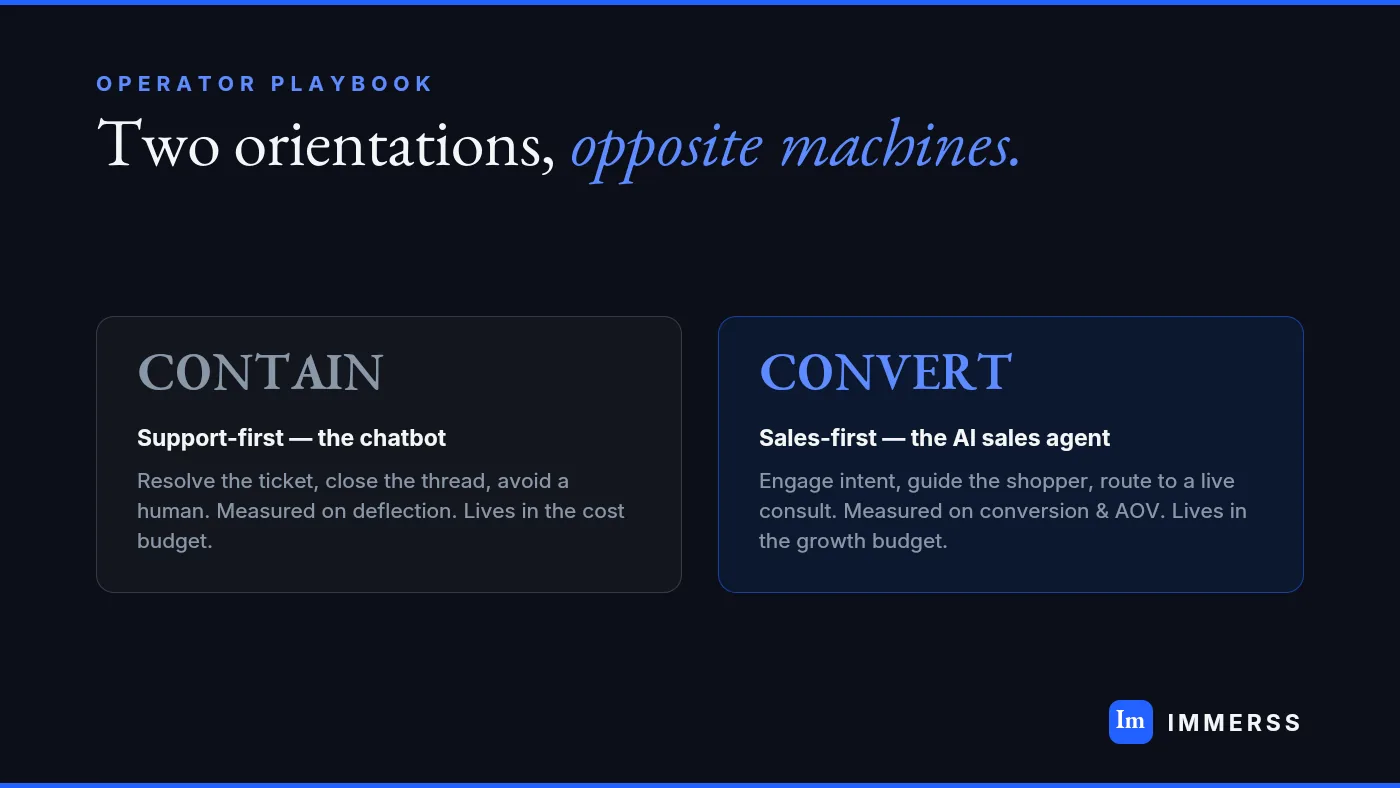
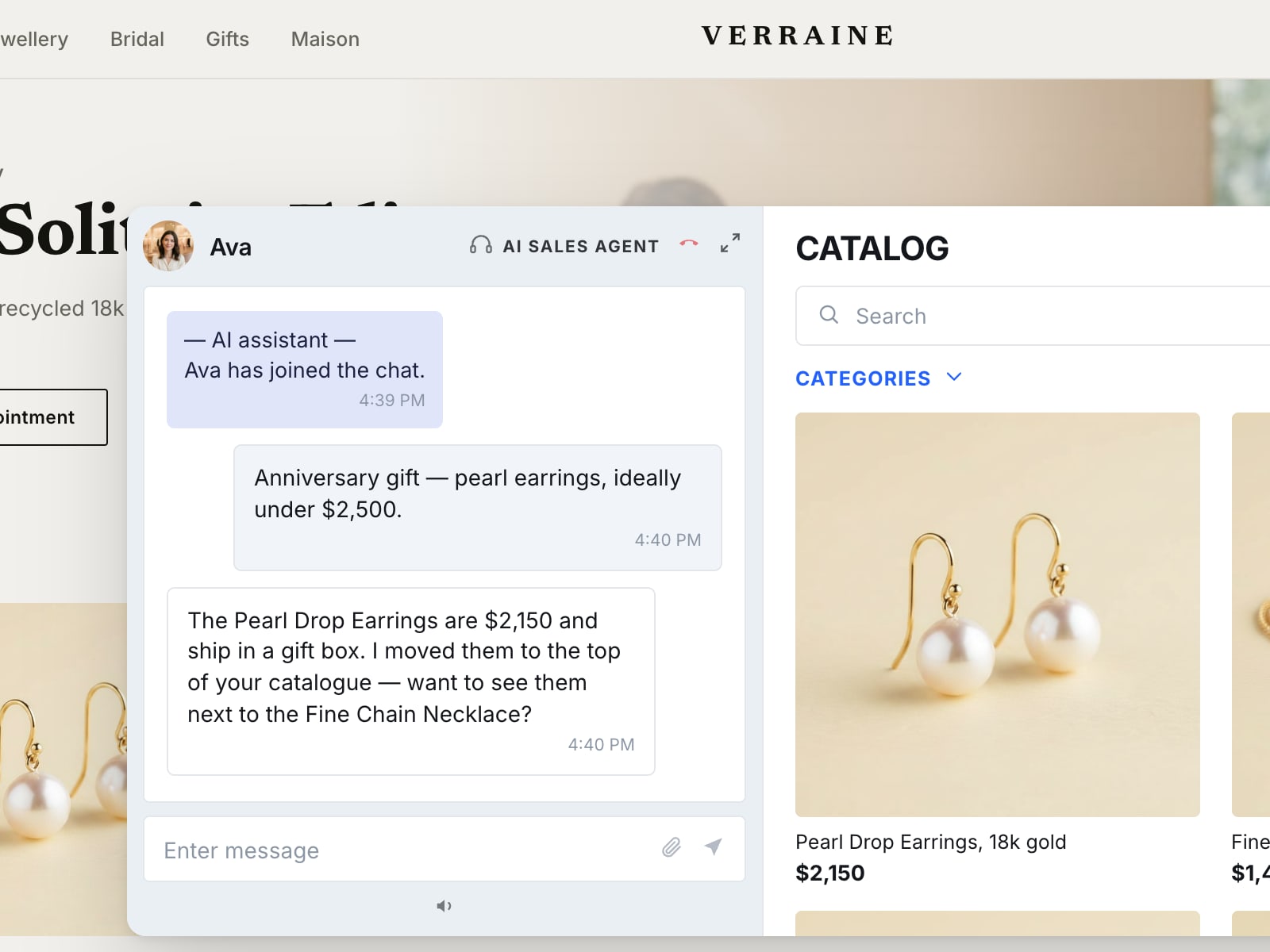
- The AI sales agent runs the finding layer — surfacing relevant pieces, answering factual questions, routing the serious buyer without friction.
- The advisor runs the narration layer — the work the grid was never capable of, where the high-AOV sale is actually made.
The 60-day pilot, on us
The fastest way to find out whether your inventory is in the wrong container is to add the narration layer and watch what your long-dwell, never-buy pieces do. That’s what the pilot is for.
We run a structured 60-day pilot, on us — an AI sales agent handling the finding layer, live one-to-one video consultation available as the narration layer, and measurement built around the pieces and cohorts the grid was failing. You change no catalog, rebuild no site, and risk no margin to find out whether the conversion gap is a traffic problem or a missing-container problem.
Brands running consultative sessions through Immerss typically see assisted interactions convert meaningfully higher than self-service browsing on exactly the high-AOV pieces the grid struggles with. We frame that as a benchmark, not a promise — the pilot finds your number, on your inventory, with your advisors.
See the pilot for merchants: landing.immerss.live Agency partner program: partners.immerss.live
Immerss is a luxury live commerce platform — AI sales agents and one-to-one video consultation for fine jewelry, watches, and high-AOV retail, built on Shopify Plus.