
How To Recover The Stuck Buyer Hiding In Your Window-Shopper Cohort
Every fine retailer has a large cohort of sessions that run long and end without a purchase. The conventional read files them all under “window shoppers” — top of funnel, not ready, nothing to be done. For a significant share of that cohort, the read is wrong, and the error costs operators some of their highest-value, most recoverable sales.
This piece is the practical playbook for recovering the stuck buyers hidden inside the long-dwell cohort: why browsing and stuck look identical in the data, how to tell them apart at a finer grain, and how to deploy the capability that resolves the load-bearing question and completes the purchase.
The Mixed Cohort Problem
The long-dwell, no-purchase cohort is not a single phenomenon. It contains two completely different visitors with nearly identical analytics signatures:
| Genuine Browser | Stuck Buyer | |
|---|---|---|
| Intent | Aspirational, not close to a decision | Decided, at the edge of purchase |
| Why long dwell | Enjoying the browse | Circling a decision they can’t close |
| Why no purchase | Was never going to buy today | Blocked by one unanswered question |
| Recoverability | Slow, uncertain nurture | One answer away |
| Value | Uncertain | High, concentrated in high-AOV |
The dashboard records both as the same event: long session, multiple views, no conversion. Treating the cohort as uniformly “window shoppers” files the high-value stuck buyer in the same bucket as the casual browser and writes off the sale.
What The Stuck Buyer Is Blocked On
The stuck buyer is not uncertain about whether to buy. They are blocked on one specific, answerable question — the load-bearing question that is the single point of failure between them and a decision they have already made. In high-AOV fine retail, it is almost always one of four types:
Suitability. Is this specific piece right for the specific purpose, person, or occasion? The configurator cannot make this judgment.
Verification. Can I trust that this is what it claims to be at this price? The product page cannot provide the reassurance.
Comparison. What is the real, meaningful difference between the two or three options I have narrowed to? This has to be reasoned through with someone who knows the category.
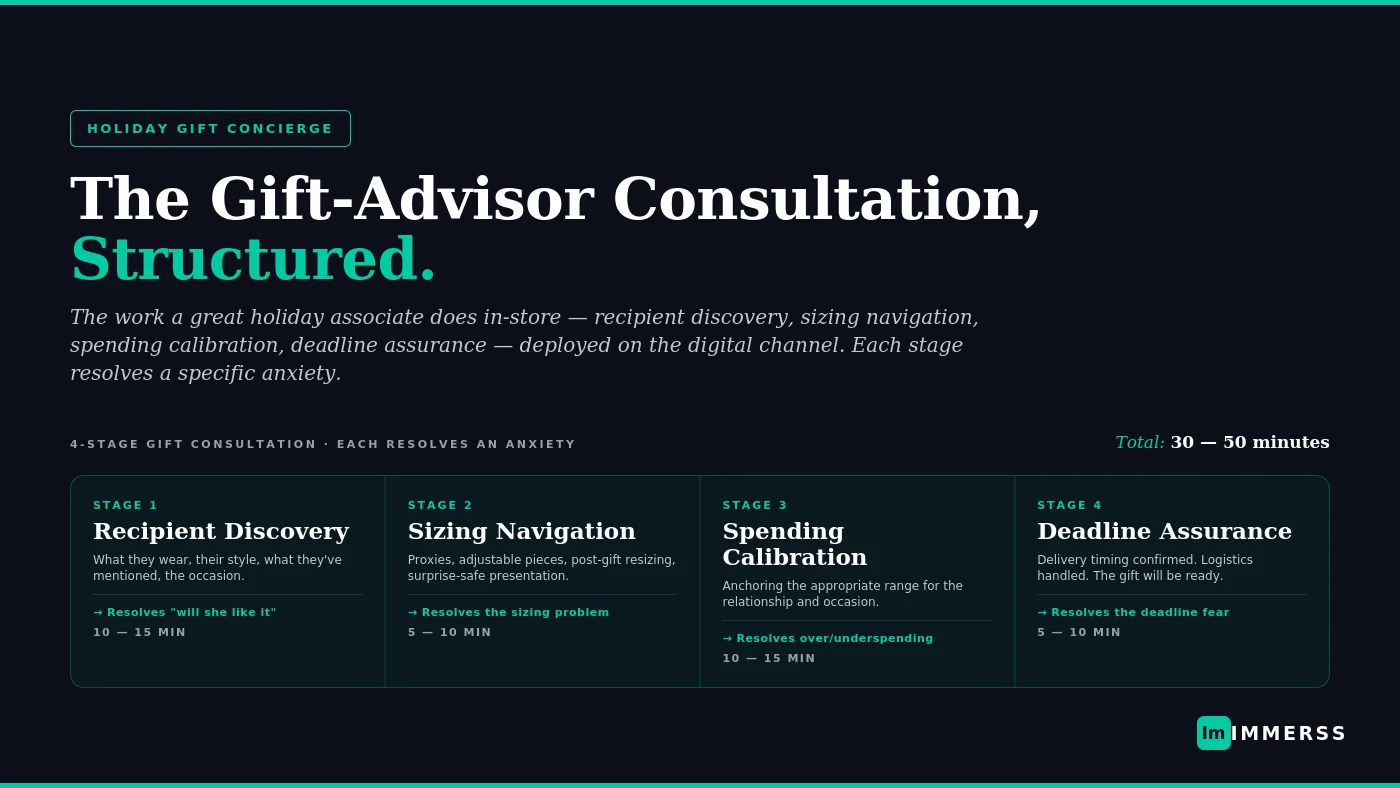
Logistics. Sizing, timing, delivery — the practical constraints that must resolve before the purchase can happen. These require a human who can check and confirm.
Each question is answerable in a short conversation. None of them is a price objection or a fundamental mismatch. Each is a single piece of missing information or reassurance — and the self-service surface has no mechanism to provide it.
Telling Browsing And Stuck Apart
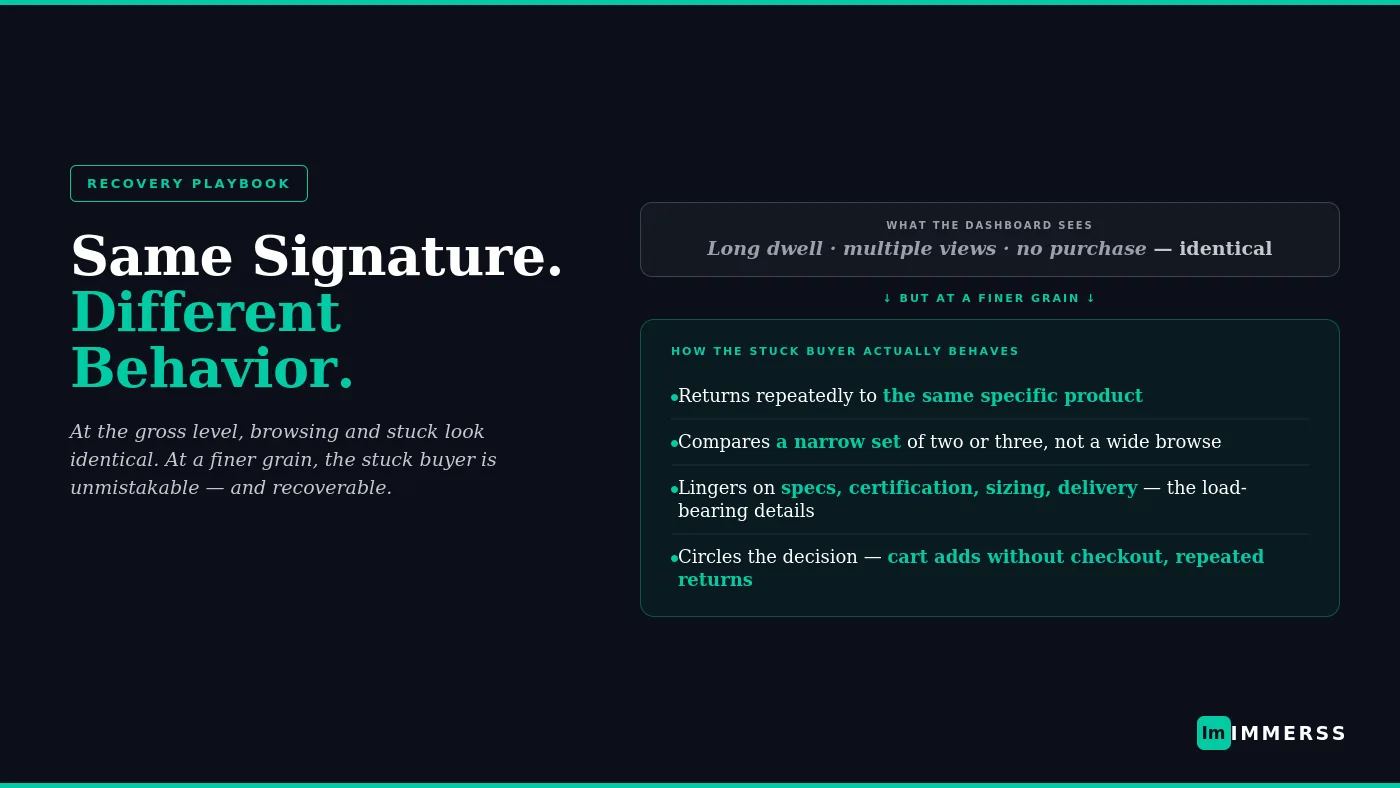
At the gross level, browsing and stuck produce the same signature. At a finer grain, they diverge — and the divergence is what the recovery capability reads:
- The stuck buyer returns repeatedly to the same specific product, rather than browsing across many
- They compare a narrow set of two or three options rather than exploring widely
- They linger on the elements tied to the load-bearing question — specifications, certification, sizing, delivery terms
- They circle — repeated visits to the same decision point rather than the linear exploration of a browse
- They exhibit decision-adjacent behavior — cart adds without checkout, configurator completion without purchase, repeated returns within a compressed window
An AI sales agent reads this finer signature, distinguishes the stuck buyer from the genuine browser, and acts on the difference.
The Recovery Mechanism
The deployment that recovers the stuck buyer has three layers:
Layer 1: Intelligent qualification. The AI sales agent reads session signals at a finer grain than the conventional dashboard, distinguishing the stuck buyer’s decision-circling behavior from the genuine browser’s wide exploration.
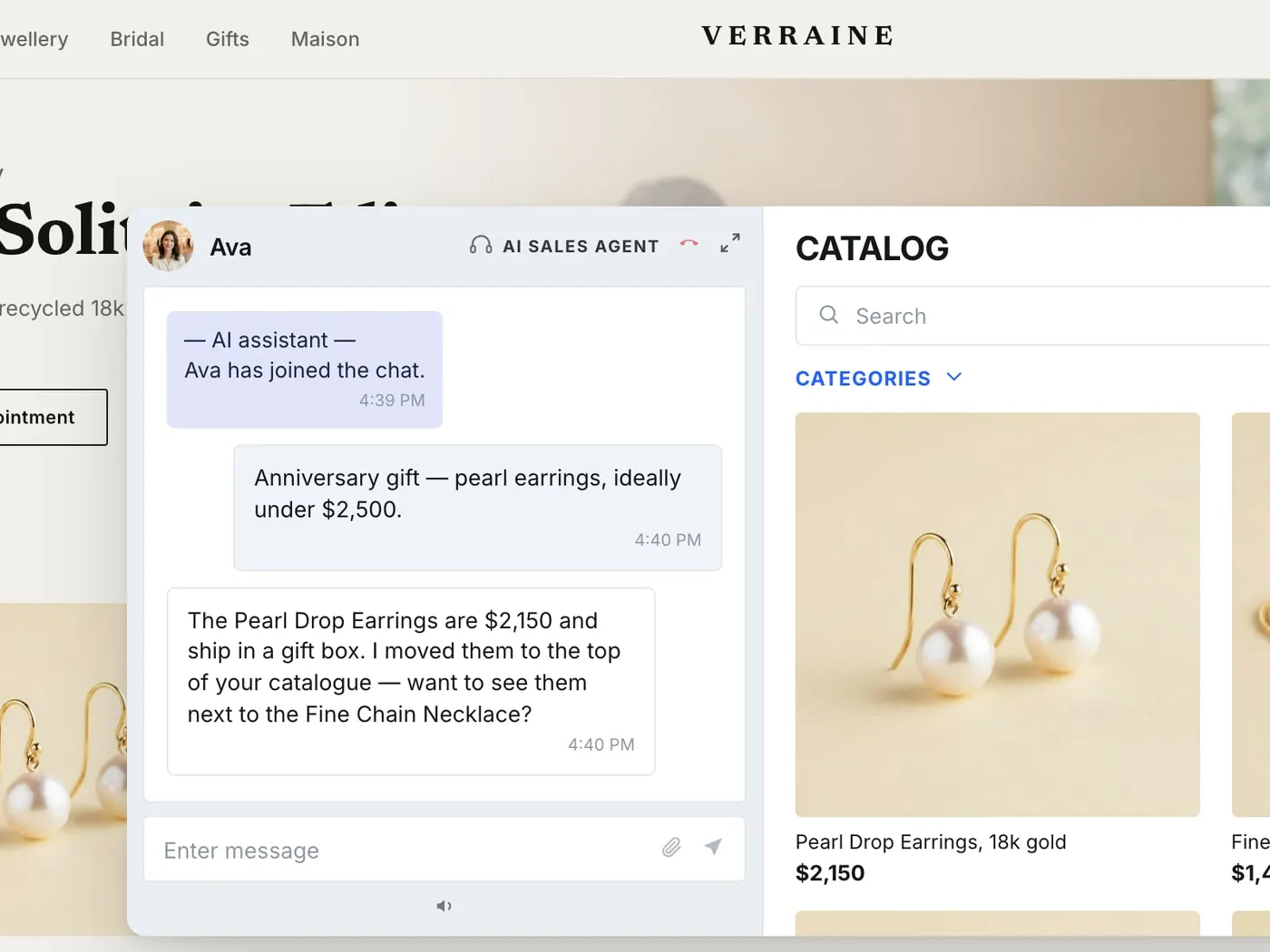
Layer 2: The right offer at the right moment. For the stuck buyer, the AI offers a path to the answer — not a generic “can I help you” popup, but a contextual offer tied to the load-bearing question the behavior indicates. For high-AOV stuck buyers, this is an offer to connect with an advisor who can resolve the question directly.
Layer 3: The advisor resolves the load-bearing question. On a short video consultation, the advisor provides the suitability judgment, the verification reassurance, the comparison guidance, or the logistics confirmation. The question the surface could not answer gets answered, and the purchase that was one answer away proceeds.
The genuine browser is left to browse undisturbed. The stuck buyer gets the one thing standing between them and the purchase.
Why The Recovery Economics Are Exceptional
The stuck buyer is the cheapest high-value conversion available, for a structural reason:
Almost all the work is already done. The research, the narrowing, the decision to buy — the buyer has done all of it themselves. The operator is not nurturing a cold prospect toward a decision; they are removing the single obstacle in front of a decision already made.
The conversion is fast. One answer completes the purchase. There is no long nurture cycle, no multi-touch sequence. The load-bearing question resolves in a short conversation and the sale closes.
The value is concentrated in high-AOV. The higher the stakes, the more likely the buyer has a load-bearing question they cannot resolve alone, and the more decisive it is. The stuck-buyer phenomenon is most pronounced exactly where the transactions are most valuable.
The cohort is large and currently unrecovered. Because the conventional read writes the entire cohort off as window shopping, the stuck buyers within it are, in most operations, recovered at a rate near zero. The recovery capability addresses a pool that is currently almost entirely unaddressed.
The 60-Day Pilot For This Specifically
For operators considering whether to deploy stuck-buyer recovery, the structured 60-day pilot tests it on the operator’s actual long-dwell cohort:
- Whether the AI correctly distinguishes stuck buyers from genuine browsers on real session traffic
- What share of the long-dwell cohort is actually stuck buyers rather than browsers
- Whether the load-bearing questions resolve in consultation at the rates that complete the purchase
- What the recovered conversions are worth against the cohort that was previously written off
The pilot is fully managed. The operator provides the advisor time and brand context. Setup, qualification configuration, consultation infrastructure, and optimization are handled by Immerss. No upfront cost. 60 days. At the end, the operator has data on how much recoverable revenue was hiding in the cohort they were calling window shoppers.
Who This Fits
The operators for whom stuck-buyer recovery produces the most leverage:
- A large long-dwell, no-purchase cohort. The recovery addresses this cohort specifically; operators with a substantial one have the most to recover.
- High-AOV inventory. The stuck-buyer phenomenon and its value concentrate in high-stakes transactions.
- Load-bearing questions the surface can’t answer. Categories where suitability, verification, comparison, and logistics questions are common — fine jewelry, watches, high-consideration luxury — are where the stuck buyer is most prevalent.
- Shopify Plus storefront with meaningful traffic. The recovery captures value from traffic the operator is already attracting.
If your business fits this profile, the structured pilot is a low-risk way to measure the recoverable revenue hiding in the cohort you have been writing off.
The Strategic Position
The long session that ends without a purchase is the most misread signal in fine retail analytics. The conventional interpretation — window shopper, top of funnel, nothing to be done — is comfortable because it requires nothing of the operator. It is also wrong for a significant share of the cohort, and the error is expensive: it loses the cheapest, highest-value, most recoverable sales on the site, invisibly, by disguising them as browsing.
The capability to distinguish the stuck buyer from the genuine browser and to resolve the load-bearing question is operationally available now. The operators who deploy it recover the sales that everyone else cannot even see they are losing.
Immerss is a luxury live commerce platform combining AI sales agents with one-to-one video consultations. The AI reads session signals at the grain that distinguishes the stuck buyer from the browser, and connects high-AOV stuck buyers to advisors who resolve the one question standing between them and the purchase.
Apply for the 60-day AI Sales Agent pilot: landing.immerss.live For Shopify Plus agencies introducing this to fine retail clients: partners.immerss.live