
How to Win & Keep the Serious Jewelry Collector in 2026
The serious collector is the highest-lifetime-value client a jeweler will ever have — and they’re won and kept on completely different terms than everyone else. A collector isn’t making a purchase; they’re building a collection over years, which is inherently a relationship: they want an advisor who knows them, gives them first access, provides expertise and provenance, and can be trusted over time. A transactional storefront can be none of those things. This guide explains who the collector is, what they actually want, why a storefront fails them, and how consultation sustained into clienteling wins the most valuable, most defensible, most referral-rich relationship in jewelry.
The short version: the collector doesn’t want a store — they want a person, and clienteling is how you become that person.
How do you sell to serious jewelry collectors in 2026?
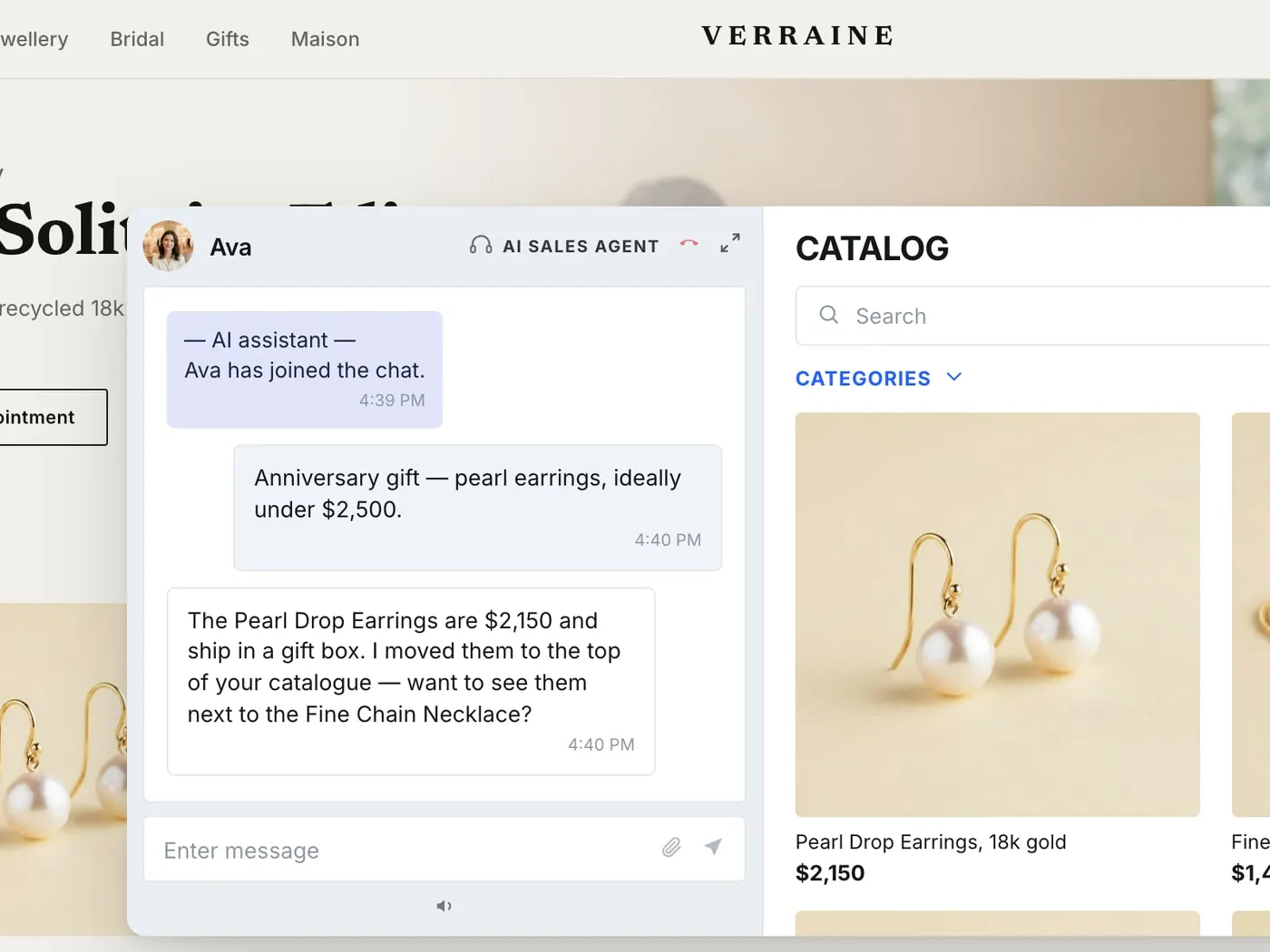
You sell to serious jewelry collectors in 2026 by becoming their trusted advisor, not by running a better storefront. A collector is building a collection over years, and collections are built through relationships — the collector relies on a person who knows their taste and collection, gives them first access to the right pieces, vouches for authenticity and provenance, and earns their trust over time. That relationship can’t be delivered by a transactional interface. The jewelers who win collectors lead with a real relationship — the model we build for jewelry and watch brands: an AI sales agent that identifies a serious collector and a live one-to-one consultation that begins an ongoing clienteling relationship. The sections below explain why, and how.
What makes the serious jewelry collector different from other buyers?
The serious collector is different because they’re building a collection, not making a purchase — a continuous, cumulative, years-long pursuit rather than a discrete event. Each acquisition relates to the ones before and after; the collector is assembling something over time and chooses every piece partly for how it fits the larger whole. So they’re not shopping for a piece but always for the right piece — the one that completes a set, fills a gap, or represents a maker, era, or stone they’ve been hunting — on a timeline of years, not sessions. Their relationship to jewelry is an ongoing, knowledgeable passion, not episodic desire. To sell one item and consider the job done is to misread what they came for: not to buy a ring, but to advance a collection they’ll keep advancing for life. (This is distinct from the self-purchasing buyer making a single meaningful purchase.)
Why is a collection a relationship, not a series of transactions?
A collection is a relationship because, in every serious collecting field, it’s built through a trusted advisor — and jewelry is no different. Look at art, wine, rare watches, or classic cars: the serious collector has a person — a gallerist, merchant, or specialist who knows them intimately, understands their taste and collection, and acts as guide, scout, and trusted counsel. That relationship isn’t incidental to collecting; it’s the mechanism of it. The collector relies on the advisor to find the right things, vouch for authenticity and quality, give first access, steer them from mistakes, and understand what they’re building well enough to help build it. Because the things collectors want are rare, hard to authenticate, and often available only through relationships, the relationship is the access. A jeweler who wants collector clients isn’t competing to make sales to them; they’re competing to become the person in that relationship.
What does a serious jewelry collector actually want?
A serious collector wants four things a storefront can’t provide: to be known, first access, expertise and provenance, and trust. To be known — an advisor who knows their taste, collection, what they own, and what they’re hunting, so every conversation starts from context, not zero. First access — the rare stone, signed vintage piece, or estate acquisition, offered before it reaches the public listing, which flows entirely through the relationship. Expertise and provenance — authentication, quality assessment, and history the collector can’t always supply themselves, delivered by a trusted expert who can say “this is the real thing, and here’s why.” And trust — a person they can rely on, call, and be recognized by, built only through sustained human contact over time. Being known is the whole luxury of having a person; it’s the opposite of being an anonymous visitor to a site that has no idea what you collect. Notice that none of these four things is about the product itself — a great storefront can have the finest inventory in the world and still deliver none of them, because they’re all properties of a relationship, not a catalog. That’s why competing for collectors on selection or price misses the point entirely: the collector isn’t choosing where to buy based on who has the best grid, but on who is their person.
Why can’t a jewelry storefront win a collector?
A storefront can’t win a collector because it’s structurally the opposite of what a collector needs. It treats every visit as anonymous and every session as a fresh transaction: it doesn’t know the collector, can’t give first access (it has no way to know this piece is the one this collector has hunted, and no relationship through which to call), can’t be the trusted expert (expertise and trust are properties of a person, not a product page), and can’t be the years-long relationship collecting runs on. This isn’t a flaw to fix with better site design — it’s a category mismatch. You can’t deliver a decades-long trusted-advisor relationship through an interface built to sell single items to anonymous visitors. The collector needs a person; a storefront is, by nature, not a person. (See why high-value jewelry sells through people, not grids.)
How is selling to a collector different from converting a single sale?
Selling to a collector is different because the goal isn’t converting one transaction — it’s building a relationship that produces transactions for years. A single-sale mindset optimizes for the immediate conversion: get this visitor to buy this piece now. A collector mindset optimizes for the relationship: become the person this client turns to for every acquisition, so the lifetime value compounds far beyond any one purchase. The two require different tools. Converting a single sale can be done with a good storefront and a smooth checkout; winning a collector requires knowing them, remembering them, reaching out to them, and being trusted by them over time — which only a person, through consultation and clienteling, can do. A jeweler focused solely on single-sale conversion will keep processing collectors as one-time buyers and forfeiting the relationship that was the real prize.
How does clienteling and consultation win the collector?
Consultation sustained into clienteling wins the collector by making the jeweler the person in the relationship. It starts with a real conversation: a live one-to-one consultation is where a jeweler stops being a storefront and becomes a person — getting to know the collector, understanding their collection and taste, demonstrating expertise, and beginning to earn trust. And it doesn’t end when the call does. The consultation seeds an ongoing relationship: the advisor who now knows this collector carries that knowledge forward — reaching out when the right piece surfaces, offering first access, advising on acquisitions, being the person the collector calls. An AI sales agent can identify a serious collector and route them to a real advisor; the advisor, through consultation and continued clienteling, becomes the human at the center of the collector’s buying life. That’s how the trusted-advisor relationship gets built online — not through a smarter storefront, but through a real person kept through relationship. See it on your store.
How to win and keep a jewelry collector: a step-by-step approach
A practical framework for building the collector relationship:
- Identify the collector. An AI sales agent recognizes signals of a serious, repeat, high-value collector (not a one-time buyer) and routes them to a real advisor.
- Open with a real conversation. A live one-to-one consultation begins the relationship: understand their collection, taste, and what they’re hunting.
- Get to know the collection. Capture what they own, want, and would never buy — so every future contact starts from context.
- Offer first access. Reach out when the right piece surfaces, before it hits the public listing — the most valuable thing an advisor provides.
- Be the expert. Provide authentication, provenance, and honest judgment; earn the trust serious spending requires.
- Sustain the relationship for decades. Clienteling, not transacting — become the person the collector calls, for life.
Worked example: transaction value vs. relationship value
Here’s a calculation you can redo with your own numbers. Compare how a jeweler treats 50 collector-caliber clients a year:
- As transactions: treated like any storefront visitor, each buys perhaps once at a $12,000 average and mostly doesn’t return → 50 × $12,000 ≈ $600,000, most of it non-recurring, with little defensibility or referral.
- As relationships: become the trusted advisor and each buys, say, 3–4 times a year at $12,000 for years → even 3 purchases each in year one ≈ 150 × $12,000 = $1.8M in year one alone — compounding across years, plus the referrals each collector brings and near-total retention.
The difference isn’t a better conversion rate on a transaction; it’s the difference between a sale and a decades-long relationship. One collector, kept, is worth more than dozens of one-time buyers. Swap in your own client count, purchase frequency, and average value.
Is your store ready to win collectors this way?
Run this filter:
- Shopify Plus, genuine high-value repeat demand (collectors, VIPs, serious enthusiasts), AOV $5,000+.
- You treat your best repeat clients the same as first-time visitors online.
- You have no way to know, remember, or proactively serve a collector’s taste and collection.
- You have the expertise and inventory access to be a real advisor — you just haven’t built the relationship online.
If two or more are true, a clienteling model is your opportunity. (See where you stand on the benchmarks.)
What to measure
Track the things a collector-relationship model should move — every one of them measurable from day one:
- Repeat purchase frequency and client lifetime value of top clients.
- Consultation-to-relationship conversion (one-time buyer → ongoing client).
- First-access outreach → acquisition rate among known collectors.
- Referral rate from collectors (collectors know collectors).
The 60-day pilot, on us
The best way to see what becoming your collectors’ trusted advisor does for your business is to run it and measure it. That’s what the pilot is for.
We run a structured 60-day pilot, on us — an AI sales agent identifying and engaging serious, high-value clients, live one-to-one video consultation as the relationship-building mechanism, and measurement around repeat purchase, lifetime value, and referral. You change no platform and risk no margin to see what treating collectors as relationships rather than transactions does for your store. It’s the whole Immerss thesis in miniature: an experience that is human, personal, and measurable.
FAQ: winning and keeping jewelry collectors
How do you sell to a serious jewelry collector? By becoming their trusted advisor, not by running a better storefront. A collector is building a collection over years through a relationship — they want to be known, given first access, provided expertise and provenance, and able to trust you over time. That’s delivered through consultation and ongoing clienteling, not a transactional interface.
Why won’t a normal online store keep a collector? Because a storefront treats every visit as anonymous and every session as a fresh transaction — it can’t know the collector, give first access, be the trusted expert, or be the years-long relationship collecting runs on. It’s a category mismatch, not a design flaw.
What is clienteling in jewelry? Clienteling is building and sustaining an ongoing, personal relationship with a client — knowing their taste and collection, proactively reaching out with the right pieces, and serving them as a trusted advisor over time, rather than treating each purchase as a separate transaction. It’s how collectors are won and kept.
Why are collectors the most valuable jewelry clients? Because the relationship has high lifetime value (repeat, high-end buying for years), deep defensibility (a collector with a trusted advisor doesn’t shop around), and premium referrals (collectors know collectors). One sustained collector relationship can be worth more than hundreds of one-time transactions.
How do you offer collectors first access online? Through a relationship, not a storefront: an advisor who knows what a specific collector is hunting reaches out when the right piece surfaces, before it’s publicly listed. This requires knowing the collector — which requires the consultation-and-clienteling relationship a transactional site can’t provide.
See the pilot for merchants: landing.immerss.live Agency partner program: partners.immerss.live
Immerss is a luxury live commerce platform — AI Sales Agent, Clienteling (1:1 live co-shopping and outbound), and Video Commerce for fine jewelry, watches, and high-AOV retail, built on Shopify Plus.
Frequently asked questions
By becoming their trusted advisor, not by running a better storefront. A collector is building a collection over years through a relationship — they want to be known, given first access, provided expertise and provenance, and able to trust you over time. That's delivered through consultation and ongoing clienteling, not a transactional interface.
Because a storefront treats every visit as anonymous and every session as a fresh transaction — it can't know the collector, give first access, be the trusted expert, or be the years-long relationship collecting runs on. It's a category mismatch, not a design flaw.
Clienteling is building and sustaining an ongoing, personal relationship with a client — knowing their taste and collection, proactively reaching out with the right pieces, and serving them as a trusted advisor over time, rather than treating each purchase as a separate transaction. It's how collectors are won and kept.
Because the relationship has high lifetime value (repeat, high-end buying for years), deep defensibility (a collector with a trusted advisor doesn't shop around), and premium referrals (collectors know collectors). One sustained collector relationship can be worth more than hundreds of one-time transactions.
Through a relationship, not a storefront: an advisor who knows what a specific collector is hunting reaches out when the right piece surfaces, before it's publicly listed. This requires knowing the collector — which requires the consultation-and-clienteling relationship a transactional site can't provide.