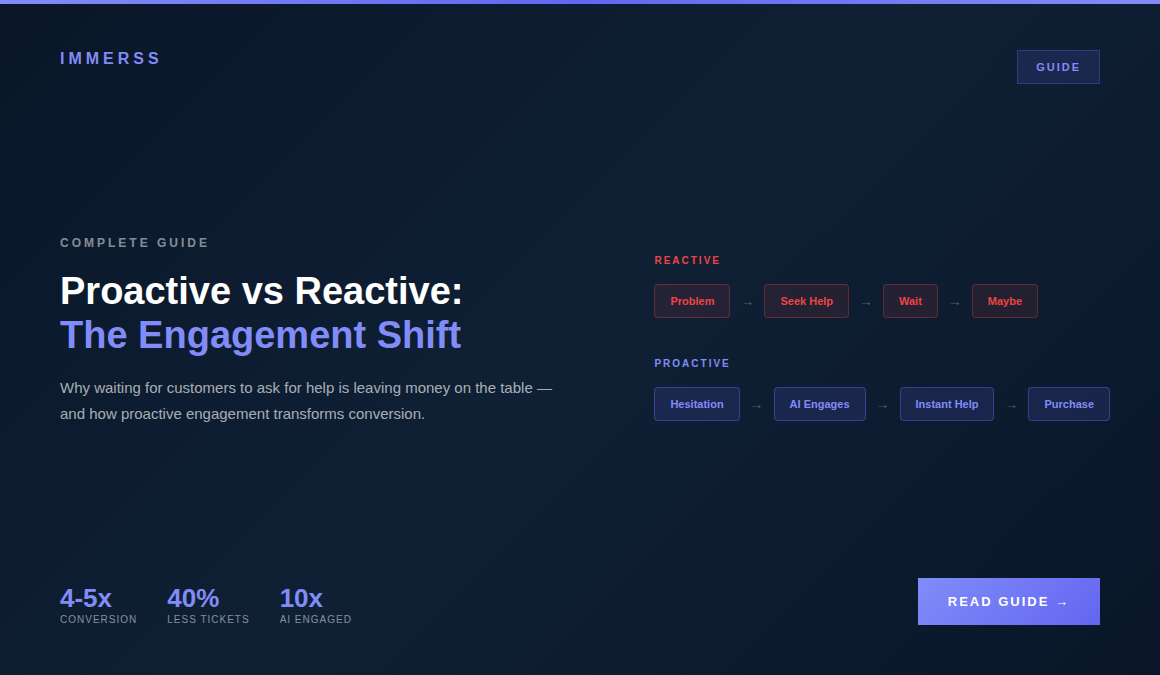

Proactive vs Reactive Engagement in E-Commerce
A comprehensive guide to proactive customer engagement and its impact on conversion.
Executive Summary
The traditional reactive model of customer service — waiting for customers to encounter problems and reach out — is being replaced by proactive engagement that anticipates needs and initiates helpful interactions. This guide explores the difference between reactive and proactive approaches, why proactive engagement converts dramatically better, and how AI Sales Agents make proactive engagement operationally feasible at scale.
Key insight: Gartner projects proactive customer interactions will outnumber reactive ones by 2025. Companies making this shift report 4-5x higher conversion rates among proactively engaged visitors and up to 40% reduction in reactive support volume.
The Reactive Model
For decades, customer service operated on a simple reactive formula: customers encounter problems, contact support, receive assistance. The entire infrastructure was built around responding to issues after they occur.
This model made sense when customer service was viewed purely as a cost center. The operational goals were straightforward: minimize the number of contacts, resolve issues quickly, and reduce handling time.
But reactive support has fundamental limitations in e-commerce:
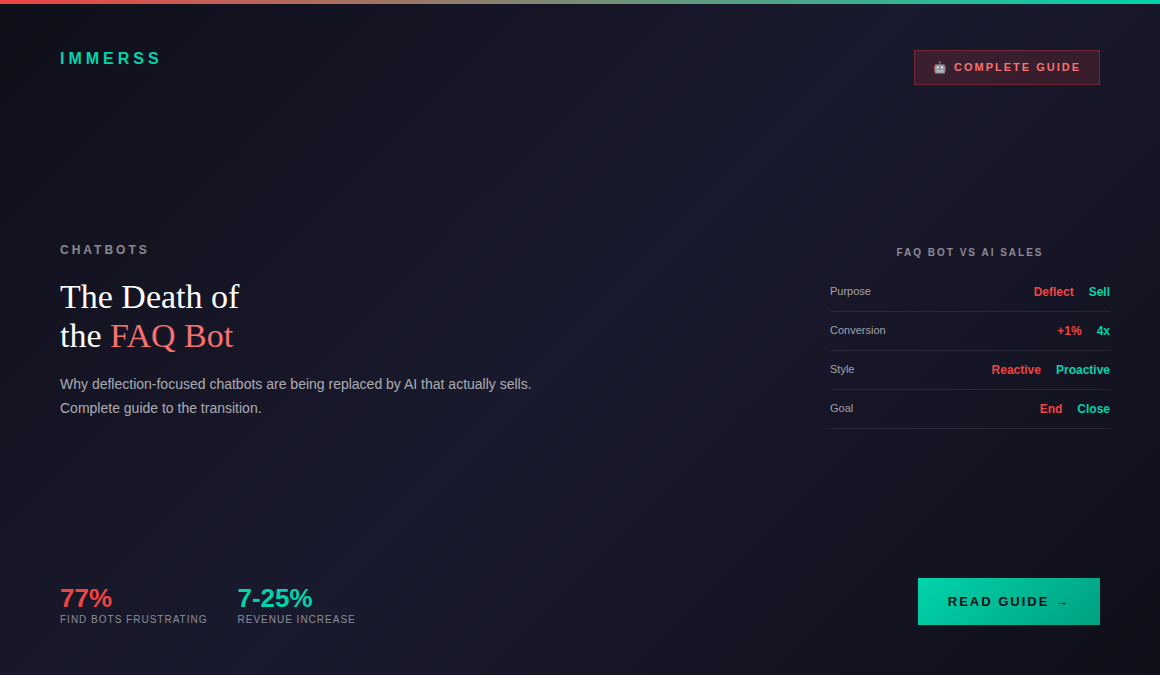
It only captures escalated issues. By the time customers reach out, something has already gone wrong. They’re frustrated, confused, or experiencing friction. The interaction begins from a negative position.
It misses silent abandonment. Most customers with questions never reach out. They simply leave. They don’t submit tickets, send emails, or initiate chats. They bounce — and reactive support never sees them.
It can’t drive sales. Reactive support is designed to solve problems, not create opportunities. The model doesn’t accommodate proactive selling, recommendation, or guided purchasing.
It creates negative feedback loops. When all customer interactions are problem-driven, customer service becomes synonymous with complaint handling, creating adversarial dynamics.
The Proactive Model
Proactive engagement inverts the traditional model. Instead of waiting for customers to experience problems and reach out, proactive engagement anticipates needs and initiates helpful interactions before issues arise.
The operational mindset shifts fundamentally:
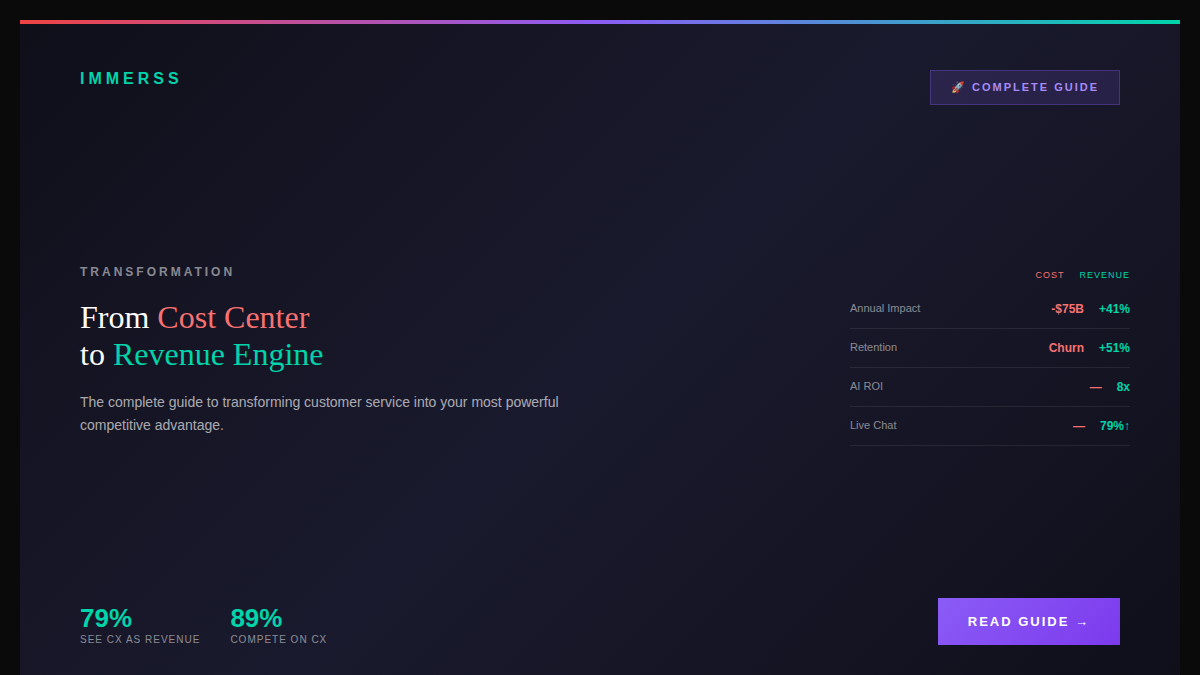
From cost center to revenue driver. Proactive engagement isn’t about minimizing contacts — it’s about maximizing helpful interactions that move visitors toward purchase.
From problem-solving to value-creation. Instead of damage control after friction occurs, proactive engagement removes friction in real time before it accumulates.
From reactive responses to anticipatory service. Instead of waiting for questions, proactive engagement answers questions before they’re asked.
This shift transforms customer interaction from a defensive necessity into a strategic advantage.
The Conversion Impact
Research consistently demonstrates that proactive engagement dramatically improves conversion rates.
4-5x conversion lift. Studies show visitors engaged through proactive chat convert at 4-5x higher rates than passive browsers. Some research indicates even higher multiples.
Dramatically higher conversion among AI-engaged visitors. Immerss clients see visitors who engage with AI Sales Agents convert at a dramatically higher rate than those who browse without interaction.
Up to 40% reduction in reactive support. Companies using proactive strategies report significant reduction in reactive support volume. By answering questions before they become complaints, proactive engagement prevents escalation.
The mechanism is straightforward: proactive engagement removes friction in real time. Every question answered is a doubt eliminated. Every concern addressed is an objection overcome. Every moment of hesitation interrupted is a potential abandonment prevented.
Reactive support can’t achieve this. By the time customers reach out reactively, friction has accumulated, doubts have multiplied, and momentum toward abandonment has built.
Beyond Conversion: Full Business Impact
Proactive engagement delivers benefits across multiple dimensions of business performance.
Higher average order values. When AI proactively engages shoppers, it can suggest complementary products, explain premium options, and guide customers toward higher-value purchases. At Lucchese, this produced meaningfully higher average order values.
Lower support costs. Proactive engagement that prevents issues costs less than reactive support that resolves them after escalation. The reduction in ticket volume directly reduces support costs.
Improved customer satisfaction. Customers who receive proactive assistance report higher satisfaction than those who must seek help. Getting help before asking for it feels like exceptional service.
Enhanced customer loyalty. Proactive engagement creates the perception that a brand understands and anticipates customer needs. This emotional connection drives loyalty beyond transactional satisfaction.
Competitive differentiation. In a landscape where most competitors still operate reactively, proactive engagement creates experience-based differentiation that’s difficult to replicate.
The Proactive Engagement Framework
Effective proactive engagement operates through triggers — behavioral signals that indicate opportunity for helpful intervention.
Time-based triggers. After a visitor spends defined time on a page without action, initiate engagement. Example: “I see you’re looking at our leather collection — any questions I can answer?”
Behavior-based triggers. When visitor behavior indicates confusion, hesitation, or consideration, offer assistance. Example: “Looking at several options? I can help you compare them.”
Exit intent triggers. When cursor movement or navigation suggests departure, intervene. Example: “Before you go — any questions I can answer about this piece?”
Cart value triggers. When cart value approaches thresholds (free shipping, discount tiers), provide relevant information. Example: “You’re $23 away from free shipping — here are some items that might complete your look.”
Checkout friction triggers. When visitors hesitate at checkout stages, offer support. Example: “Having trouble completing checkout? Let me help.”
Comparison behavior triggers. When visitors alternate between products, facilitate decision-making. Example: “Comparing these two? Here’s how they differ…”
Each trigger type addresses specific moments where proactive engagement can create value that reactive support never could.
AI as the Enabler
The shift from reactive to proactive has been enabled by AI technology.
Human teams can provide excellent reactive support — responding thoughtfully to customer inquiries when they occur. But proactive engagement at scale requires capabilities that exceed human operational capacity:
Real-time behavioral monitoring. AI detects browsing patterns, time-on-page, scroll behavior, mouse movement, and other signals indicating engagement opportunity — across all visitors simultaneously.
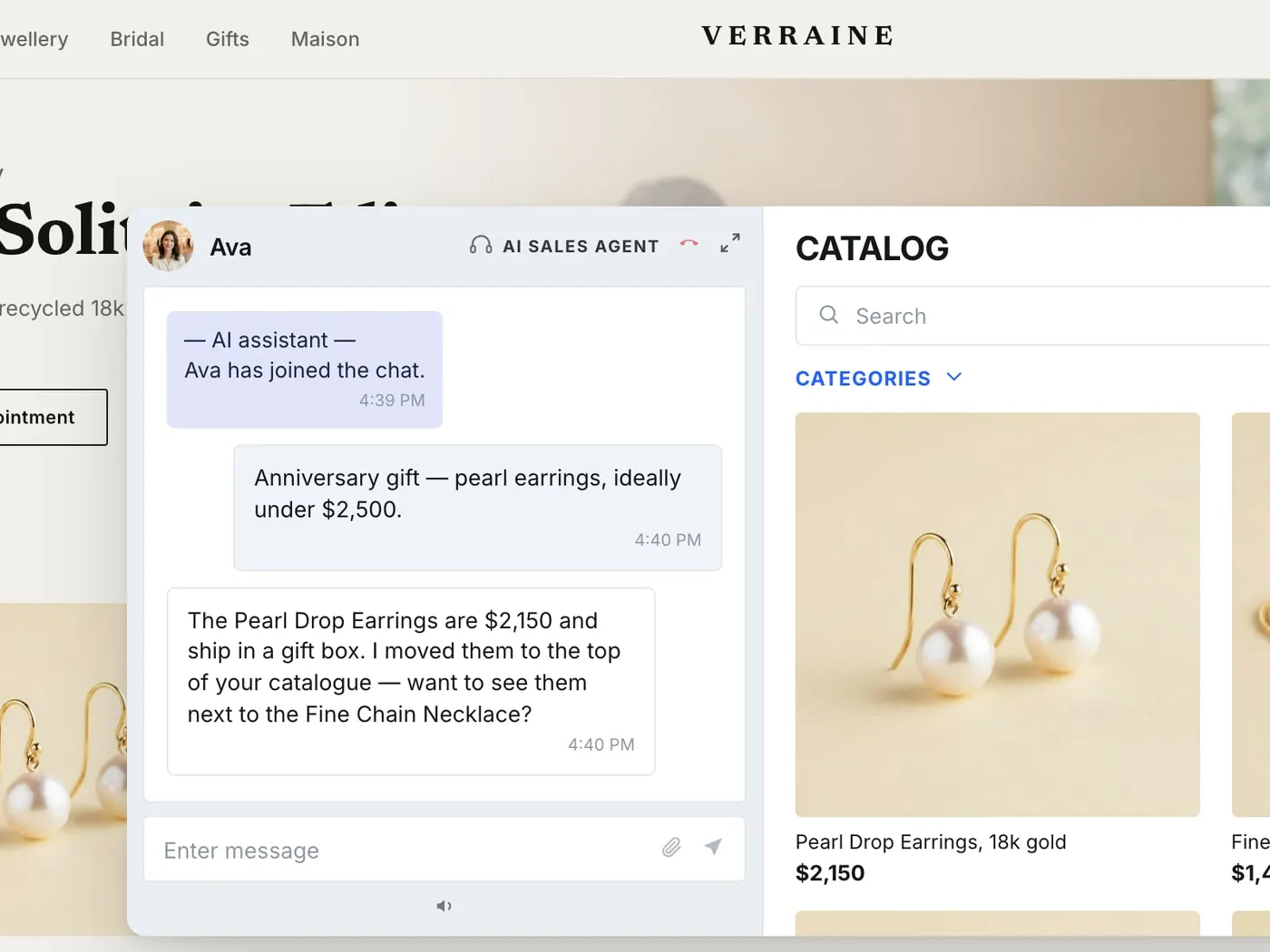
Contextual message generation. Based on behavioral signals and browsing context, AI crafts relevant, appropriate engagement. Different visitors receive different messages based on their specific situation.
Instant response capability. When visitors respond to proactive engagement, AI provides immediate answers. No queuing, no wait times, no business hours limitations.
Unlimited concurrent capacity. Whether one visitor or one thousand visit simultaneously, AI provides the same proactive attention to everyone. Human teams would require massive scaling to achieve equivalent coverage.
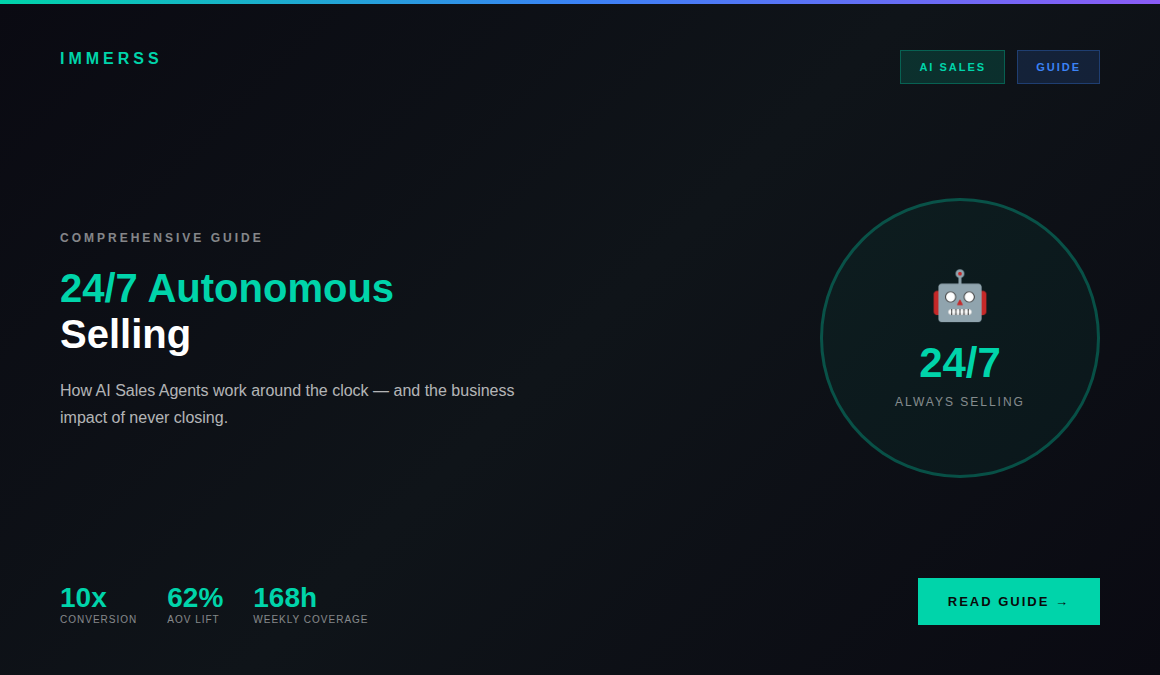
24/7 operation. Proactive engagement happens regardless of time zone, holiday, or staffing schedule. Every visitor, every hour, receives the same proactive attention.
This isn’t about replacing human interaction — it’s about making proactive engagement operationally feasible at e-commerce scale.
The Immerss Approach
Immerss AI Sales Agents are designed specifically for proactive engagement that drives sales.
Sales-first orientation. Unlike support chatbots designed to deflect inquiries, Immerss AI is designed to engage visitors and guide them toward purchase. The goal is revenue, not ticket reduction.
Intelligent trigger configuration. AI monitors behavioral signals and initiates engagement at optimal moments — when visitors show consideration, hesitation, or departure intent.
Contextual engagement. Based on browsing behavior and product interest, AI crafts relevant, helpful messages that feel personal rather than generic.
Seamless escalation. When situations require human attention — complex requests, VIP customers, or preference for human contact — AI hands off smoothly to human team members.
Analytics and optimization. Conversation data reveals which triggers, messages, and approaches drive best results, enabling continuous refinement.
Implementation Guide
Shifting from reactive to proactive engagement follows a structured approach.
Phase 1: Deploy AI Sales Agent Sign up for Immerss (free plan available). Install on your e-commerce platform. Configure basic product knowledge and brand voice.
Phase 2: Configure Initial Triggers Start with 2-3 high-impact triggers: time-based engagement on product pages, exit intent intervention, and checkout support. These provide foundation for proactive engagement.
Phase 3: Craft Proactive Messages Develop engagement messages that feel helpful, not intrusive. The tone should communicate “I noticed you might need help” rather than “Please buy now.” Test different approaches to identify what resonates.
Phase 4: Measure Baseline and Impact Track engagement rate (percentage of visitors who interact), conversion rate among engaged visitors, average order value, and reactive support volume. Compare to pre-implementation baseline.
Phase 5: Optimize and Expand Review conversation analytics to identify high-performing patterns. Refine triggers and messages based on data. Expand proactive engagement to additional pages, triggers, and scenarios.
Measuring Proactive Engagement
The shift from reactive to proactive produces measurable changes across multiple metrics.
Engagement rate. The percentage of visitors who interact with AI. Reactive models typically see 3-5% engagement (only visitors who seek help). Proactive models achieve 20-30% engagement through AI-initiated interaction.
Conversion rate among engaged. Engaged visitors should convert at 4-10x rates of passive browsers. If the multiple is lower, engagement approach needs refinement — messages may be poorly targeted or unhelpful.
Average order value. Proactive engagement should increase AOV through guided selling, complementary product suggestions, and confidence-building. 20-60% lifts indicate effective proactive selling.
Reactive support volume. Proactive engagement should reduce reactive support tickets by 30-40%. If reduction is lower, proactive engagement may not be addressing common questions effectively.
Customer satisfaction. Post-interaction surveys should show higher satisfaction scores for proactively engaged customers compared to those who sought help reactively.
The Competitive Imperative
The shift from reactive to proactive is no longer optional differentiation — it’s becoming competitive necessity.
Gartner projects proactive interactions will outnumber reactive ones by 2025. Companies still operating reactive-only models will find themselves structurally disadvantaged against competitors who engage first.
Consider the competitive dynamic: when your competitor proactively engages visitors and you wait for customers to reach out, their visitors get help immediately while yours have to seek it. Their doubts get addressed in real time; yours accumulate until abandonment.
The companies making this shift now will establish experience advantages that reactive competitors will struggle to overcome.
Conclusion
Reactive support waits for problems. Proactive engagement creates opportunities.
The shift from reactive to proactive isn’t just a customer service evolution — it’s a revenue strategy. Companies that engage first capture sales that reactive competitors lose to silent abandonment.
Don’t wait for customers to ask for help. Offer it before they need to ask.