
Why Independent Jewelers Are Winning Digital (And What The Brands Can't Copy)
For twenty years, the conventional wisdom in luxury retail was that independents would lose ground to brand scale on the digital surface. Brands had the ad budgets, the ecommerce operations, the global reach. Independents had charm and local reputation, which was assumed not to translate online.
The math has changed. Independent jewelers — particularly family-owned, regional, and specialty operators — are quietly outperforming brand retail in the specific segments that matter most: high-AOV conversion, lifetime value, and repeat purchase rate on digitally-acquired clients. The reasons are structural, not temporary, and they compound.
This piece breaks down the five specific advantages independent jewelers have over brand digital, why those advantages are becoming more rather than less valuable, and what tooling makes them finally deployable at scale.
The Five Structural Advantages
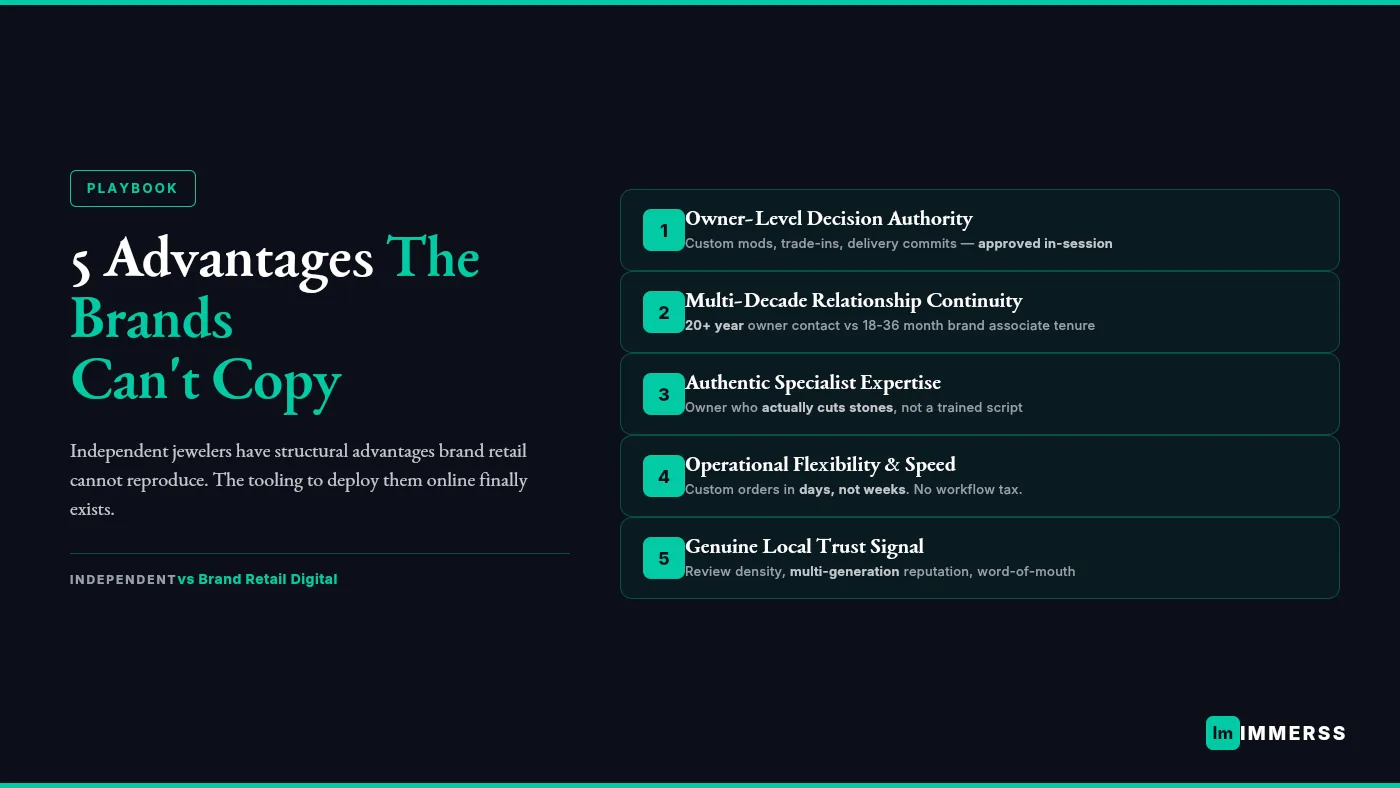
1. Owner-Level Decision Authority
The single biggest operational advantage independents have is that the person talking to the client is usually the person who can make the decision. An owner can agree to a custom modification, a favorable trade-in, a price adjustment for a long-term client, or a delivery commitment on a live call — without running the request through any approval chain.
Brand retail cannot easily match this. Corporate governance requires approval workflows. Associates at even the highest-end brand boutiques operate within defined limits, and anything outside those limits goes up the chain. In-store this is usually manageable. On a digital surface where speed of response is part of the conversion — where a client is deciding in the span of a single session whether to take the inquiry seriously — the independent’s decision speed becomes a structural close-rate advantage.
2. Relationship Continuity Beyond Staff Tenure
Brand boutique associates typically stay in their role for eighteen months to three years. A client’s relationship with the brand is therefore, by default, a rotating one. Each piece they buy may be from a different associate. The continuity of “someone at the brand knows me” is held by the CRM system, not by a person.
Independents invert this. The owner, and often the owner’s family, is the continuous relationship. A client who bought their first piece twenty years ago is likely still talking to the same advisor. The CRM exists but is secondary to actual memory and actual care. This produces lifetime value numbers that brand retail cannot reproduce without fundamentally changing their operational model.
3. Authentic Specialist Expertise
Brand retail trains associates to a standardized script. Independent jewelers are usually, by definition, specialists — owners who chose this business because they care about the craft, the stones, the history. A question about clarity grading, about comparing two movements, about the provenance of a stone is answered differently by someone whose livelihood depends on knowing the answer than by someone whose script covers it.
On a digital surface where prospects increasingly filter out generic expertise and reward genuine specialism, this matters. A video consultation with an owner who actually cuts stones, or who has been buying from the same Swiss manufacturer for thirty years, produces a qualitatively different experience than one with a brand associate delivering approved talking points.
4. Operational Flexibility and Speed
Independents can move faster in ways brand retail cannot. Custom orders that would take brand retail six weeks of approval and production move through an independent in days because the owner, the workshop, and the client are all in the same conversation. Last-minute resizings, deliveries, repairs, and modifications are possible because there is no workflow tax on them.
For the category specifically — where proposals happen on timelines nobody controls, where anniversary gifts get remembered at the last minute, where clients fly in unexpectedly — this flexibility is frequently the difference between a sale and a lost sale. Digital scheduling and video consultation tools extend this flexibility to clients anywhere, not just walk-ins.
5. Genuine Local Trust Signal
The most underrated independent advantage: the trust signal that accrues from having been on the same street, run by the same family, for decades. Online this shows up as review density, word-of-mouth referral patterns, and search behavior that favors “the local jeweler my family has used” over a brand chain store.
For high-AOV considered purchases specifically, this trust signal converts better than brand recognition in many markets. A proposal shopper searching in a mid-sized market will often trust the independent whose reviews span twenty years over the brand store with polished marketing. This is not sentiment — it is measured in conversion rates across thousands of comparative search sessions.
Side-by-Side
| Dimension | Brand Retail | Independent |
|---|---|---|
| Decision authority | Governed by approval chain | Owner-level, immediate |
| Client relationship | Held by CRM, associates rotate | Continuous with owner, multi-decade |
| Expertise | Trained to script | Authentic specialist |
| Custom orders | 4-6 week workflow | Days, often in-session |
| Local trust | Brand equity, broad | Relationship trust, deep |
| Best at | Consistency, inventory depth | Relationship-led close |
| Digital challenge | Can’t personalize at scale | Couldn’t deploy relationships online — until now |
What Used To Block Independents Online
The honest version of the independent story: until recently, none of these structural advantages were easy to deploy on the digital surface. The digital environment favored polish, paid distribution, and consistent ecommerce infrastructure. Independents who invested in those things were competing on the brand’s playing field with a fraction of the budget. The ones who did not invest in them were invisible online.
Three specific constraints kept the independent advantage stuck in-store:
First, there was no way to open a conversation with a high-intent digital visitor that matched what the owner would do in-store. The chat widget had to be staffed by someone, and the owner could not watch the website all day.
Second, there was no way to move a digital conversation to a live advisor quickly enough. By the time a form had been filled out and a callback scheduled, the prospect had moved on.
Third, there was no way to deliver the actual consultation remotely with the same quality as in-store. Phone calls lost the visual element. Email lost the interactivity. Video conferencing was clunky and not designed for the category.
Each of these constraints has broken in the last three years.
The Tooling That Changed It
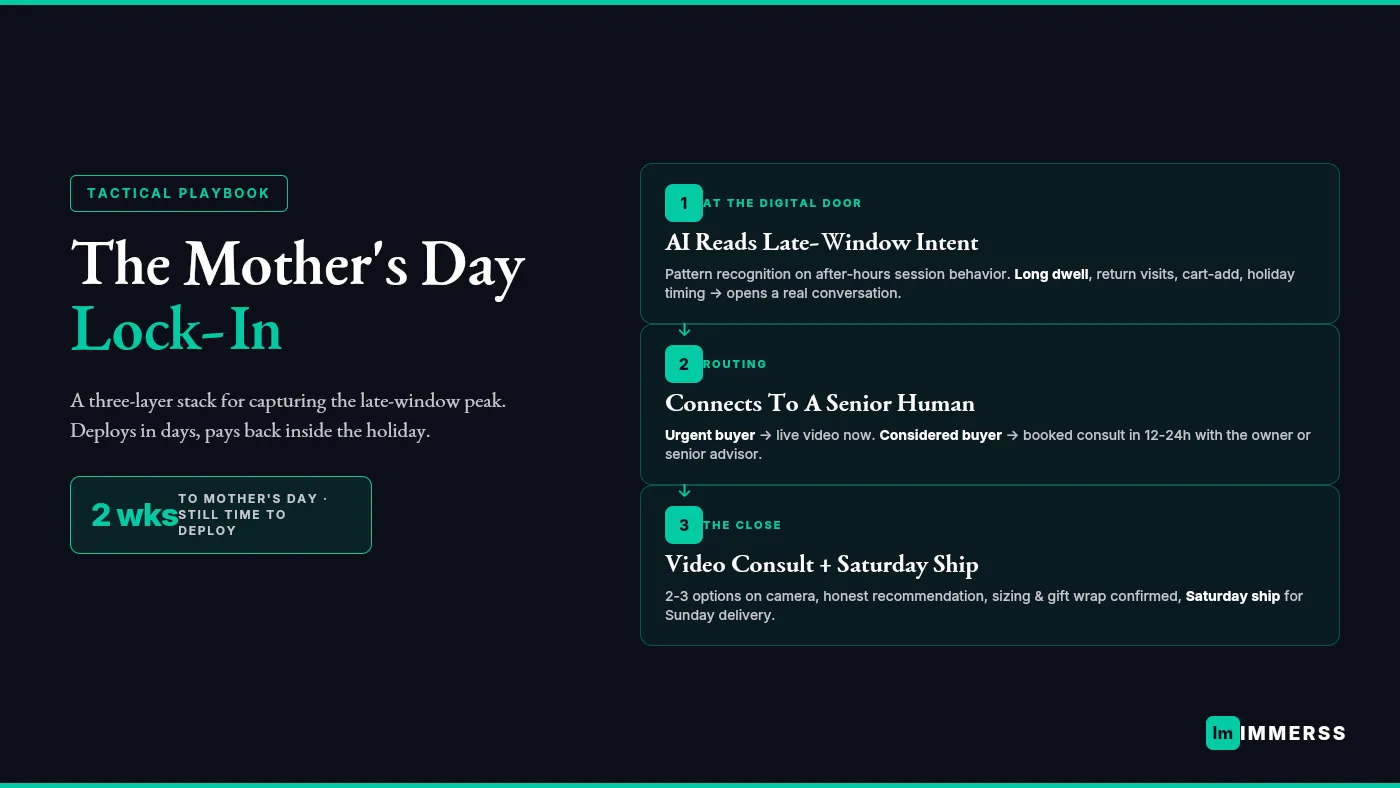
The stack that finally makes independent advantages deployable at scale has three layers:
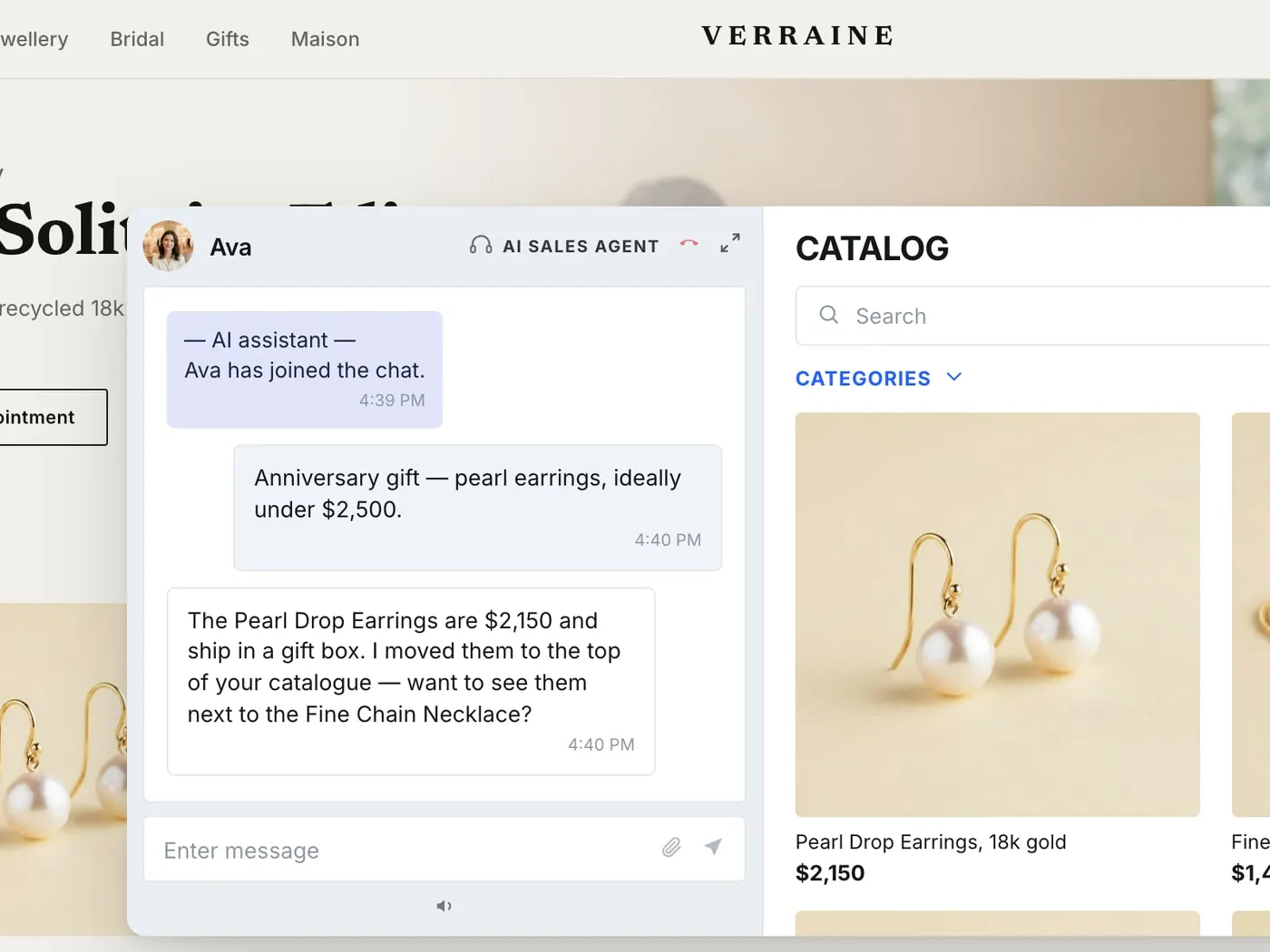
AI qualification at the digital door. An AI that reads session intent, identifies high-value visitors, opens a real conversation the way a showroom associate would, and qualifies the lead for the owner’s attention. This replaces the chat widget with something that functions more like a junior associate — the role that used to require hiring.
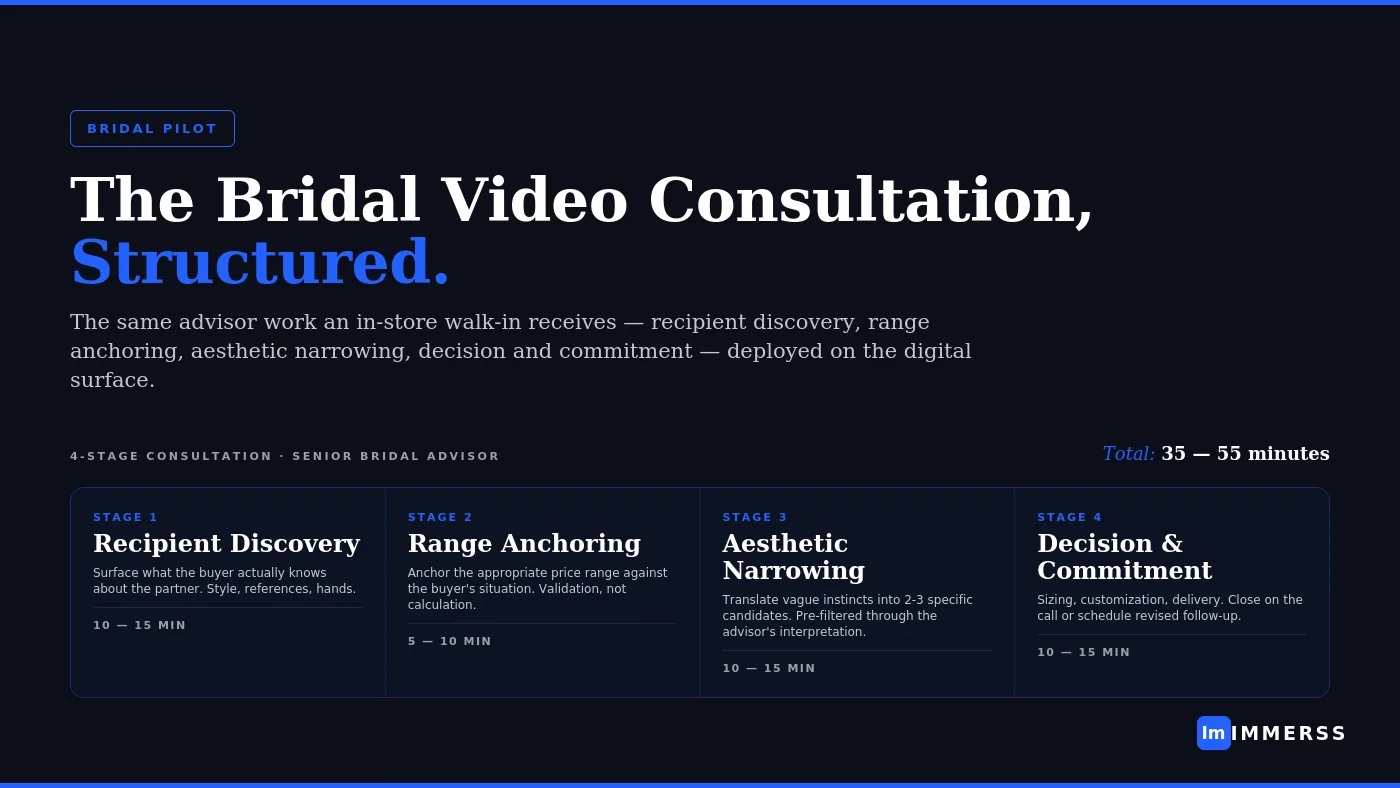
Appointment-based video consultations. A scheduling layer that books video calls with the actual owner or a named senior advisor, integrated into the site. Clients book the same way they would book an appointment at the store. The video experience is designed for the category — zoom-in on stones, high-resolution modeling, secure handling of purchase.
CRM continuity. A client record that remembers the conversation, carries context forward, and makes the second interaction feel like the continuation of the first. This is what brand retail has always had but could never use as effectively because the associate rotated. Independents can use it properly because the advisor stays.
Together these three layers let an independent deploy their actual advantage — owner-level service, continuous relationship, real expertise — to prospects who show up on the digital surface at any hour from anywhere. The geographical constraint is removed. The operational constraint is removed. What is left is the advantage itself.
The Operator Takeaway
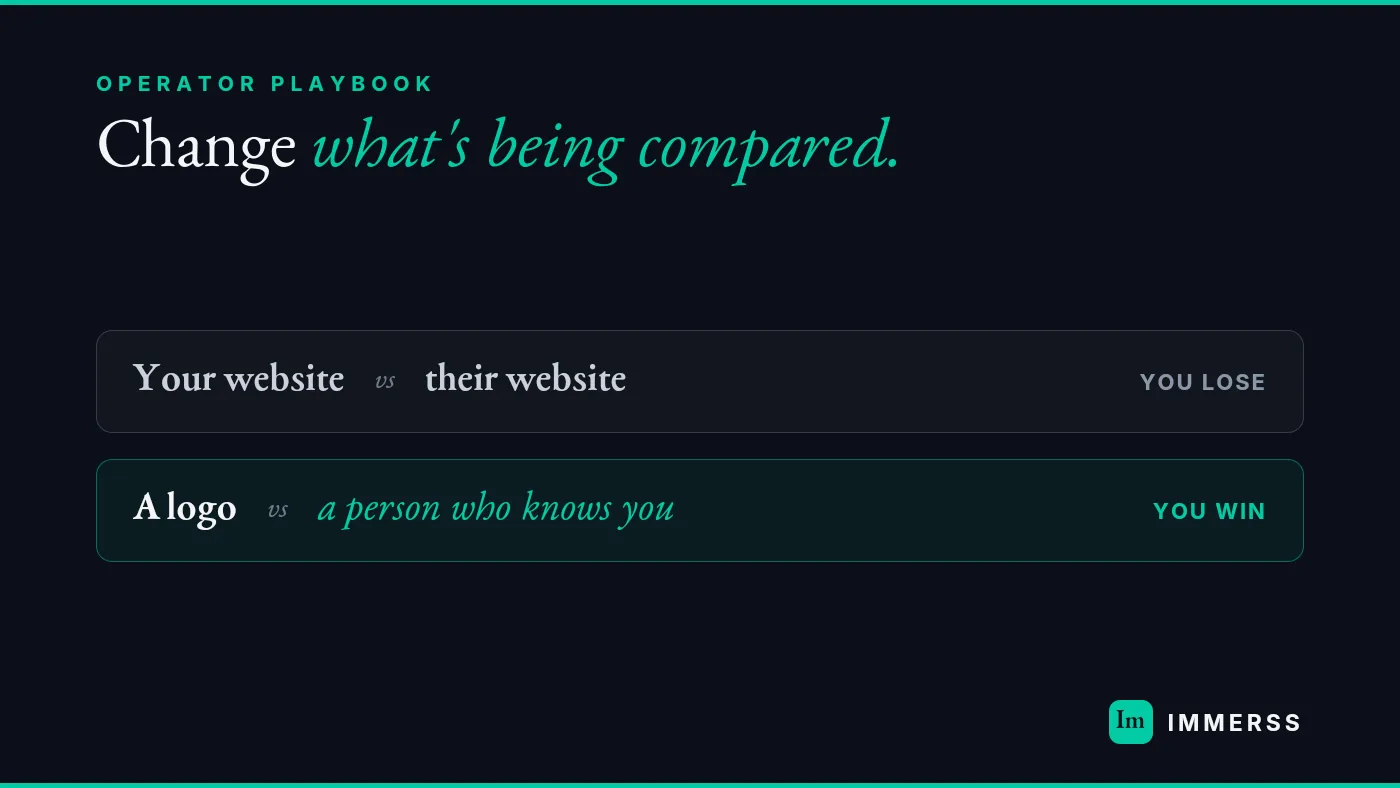
For independent jewelers evaluating their digital strategy now, the clearest framing is this: the battle is not to match brand digital on brand digital’s terms. That is a losing battle, and the investment is largely wasted.
The winning strategy is to deploy your actual structural advantages — owner relationships, specialist expertise, operational speed, local trust — on the digital surface using tooling that finally makes that possible. The prospects you want are not evaluating you on ecommerce polish. They are evaluating you on whether a real human with real expertise is on the other side of the inquiry, and whether that human will still be there in ten years when they come back for the next piece.
The independents pulling ahead right now are not the ones with the best websites. They are the ones who kept their clienteling discipline and got the tooling to extend it online. The arithmetic of the category is changing in their favor for the first time in two decades.
Immerss is a luxury live commerce platform combining AI sales agents with one-to-one video consultations. Built specifically for independent jewelers, specialty retailers, and high-end boutiques that compete on relationship, expertise, and trust.