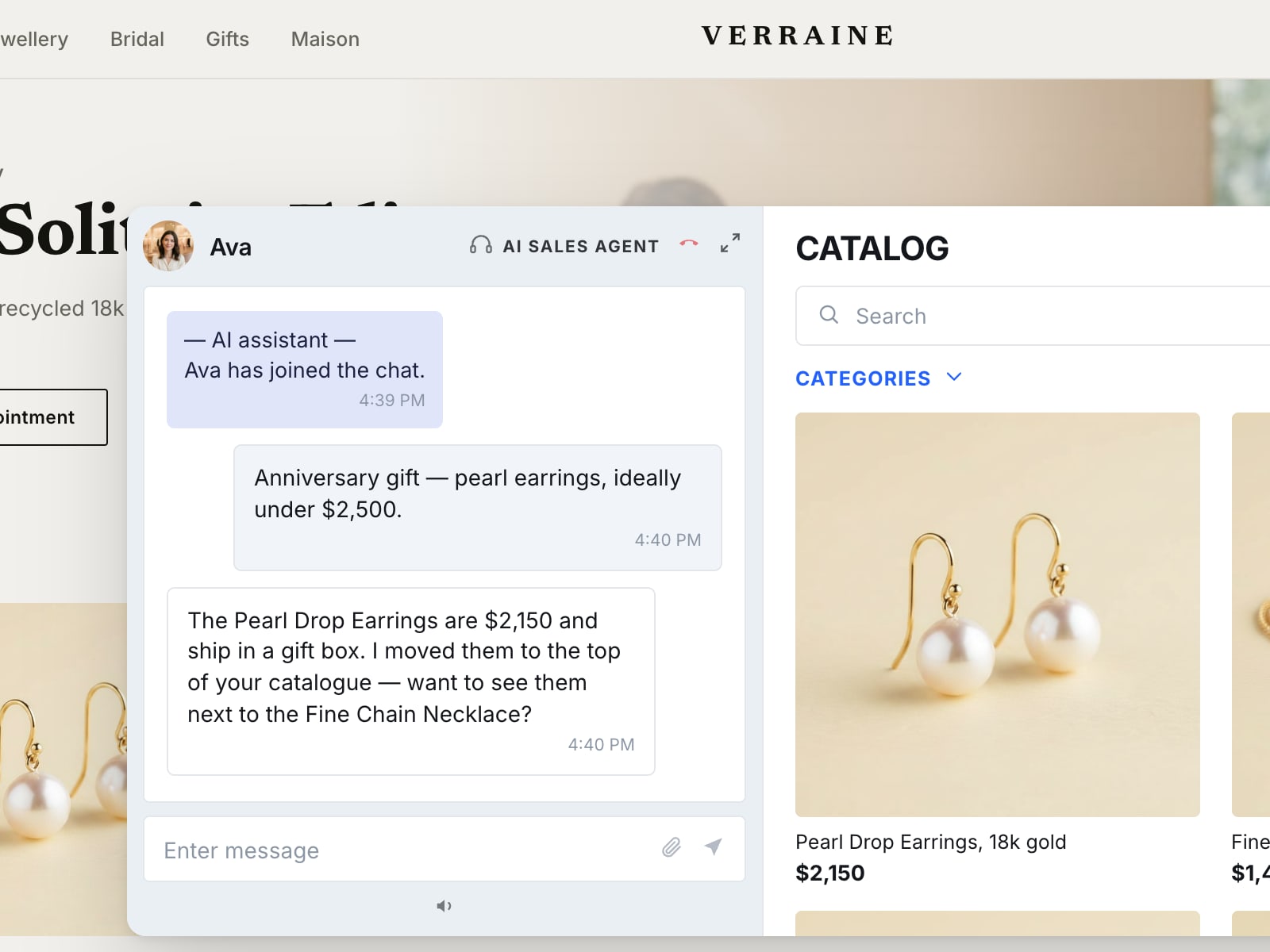
Sell around the clock, without adding headcount

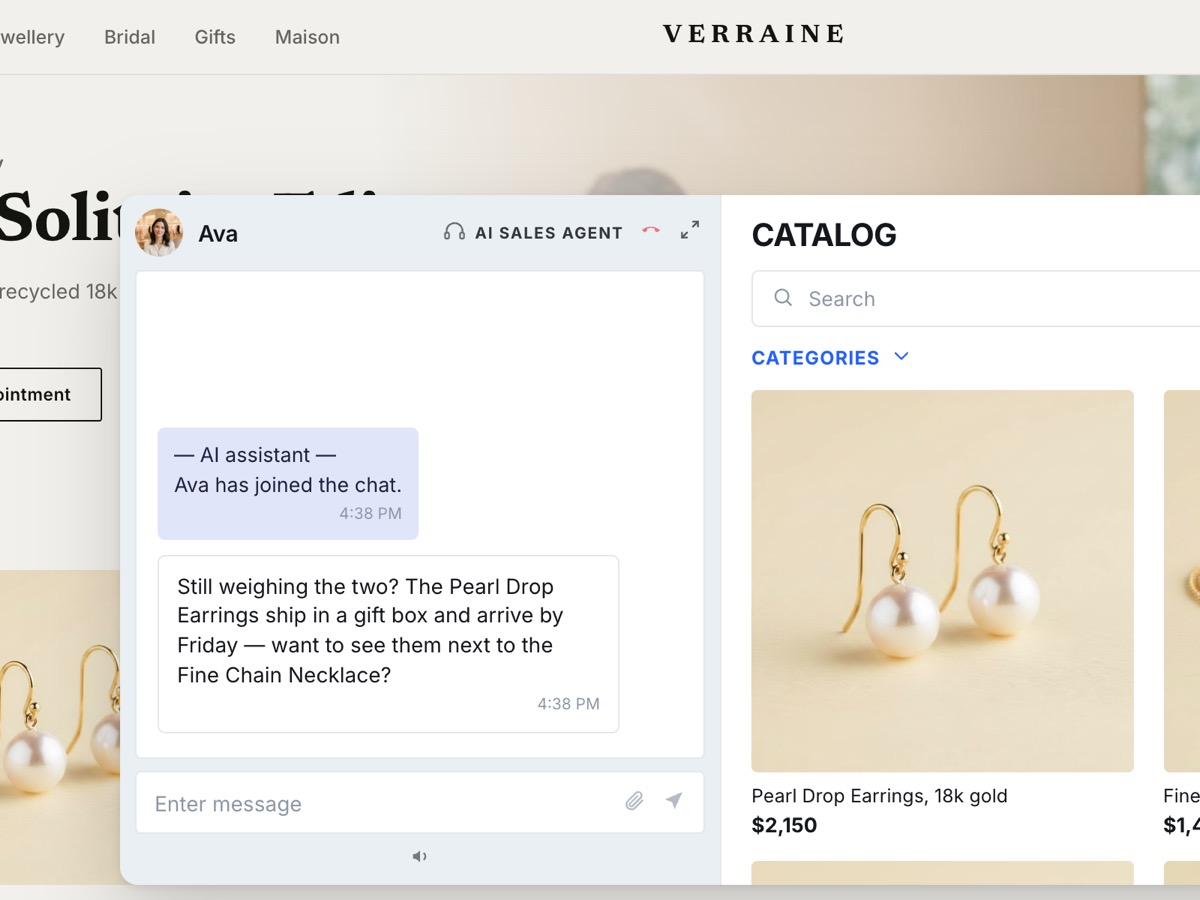
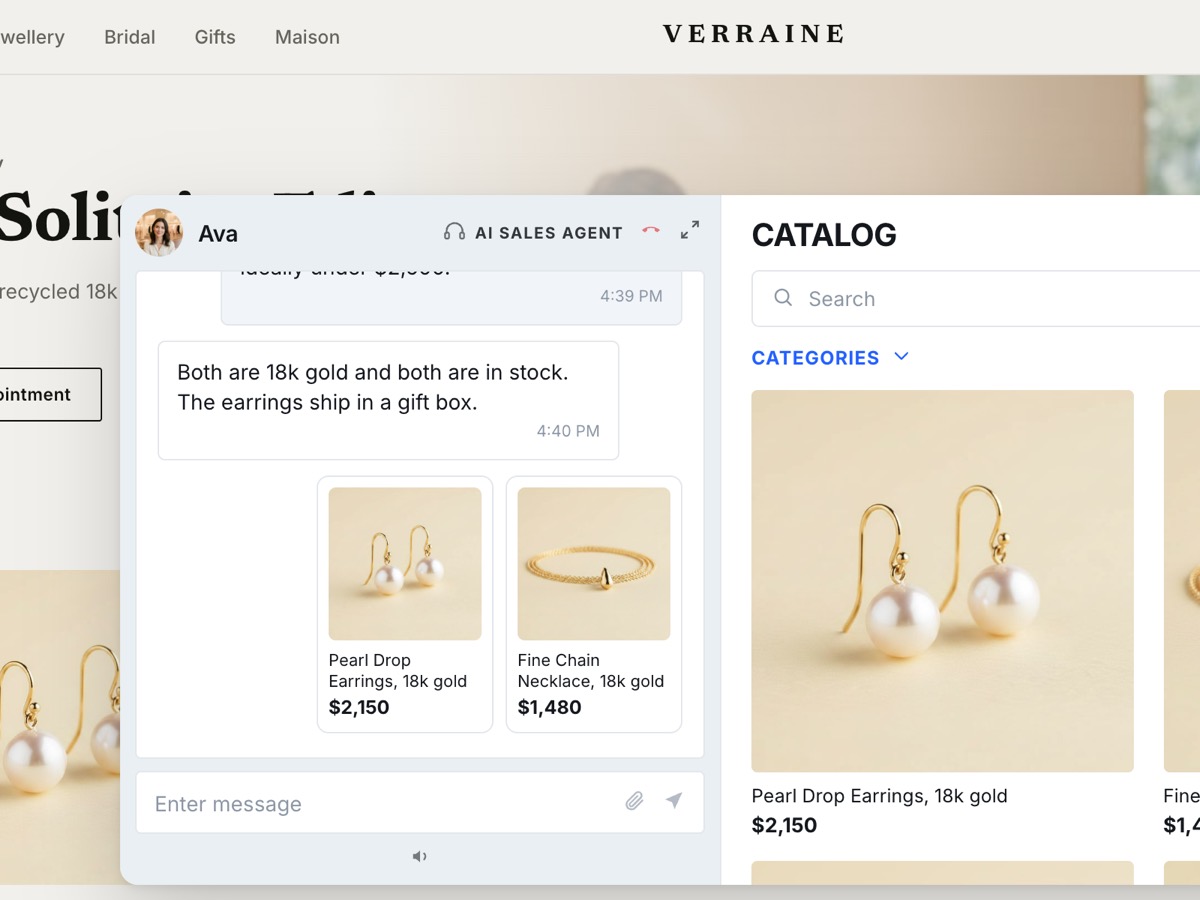
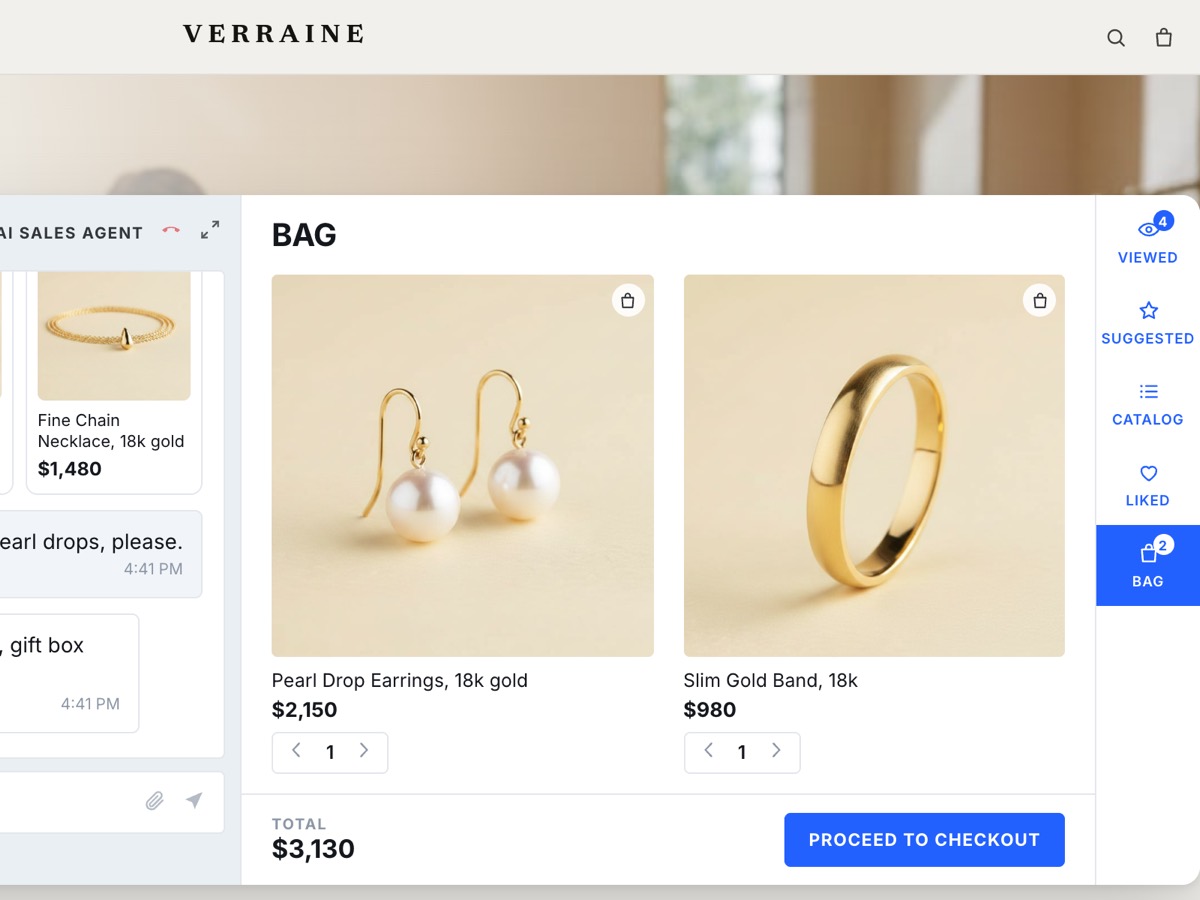










Five things it does on every session, at any hour
The conversation above is one shopper. These are the five that hold for all of them — and what each one takes off your side.
24/7. Traffic keeps no office hours. Three in the morning gets the same conversation as three in the afternoon, without a rota to fill, a night shift to pay for, or a queue for the shopper to join first.
Multilingual. It answers in the language the shopper writes in, so opening a second market does not mean staffing a second desk to cover it.
Catalogue-trained. Products, variants, prices and policies come from your store rather than from the internet. It recommends out of what you actually stock, at the price you actually charge, and does not improvise past either.
Browse-aware. It has the session in front of it — what was opened, what was returned to twice, what the shopper has already said — so the answer is for this shopper rather than for an average one.
Cart-capable. It finishes what it recommends: the right variant goes into the cart and the shopper goes toward checkout, the way an associate walks you to the register rather than pointing at a shelf. When the purchase wants a person, the handover is to one — not to a ticket queue.
A chatbot and a sales agent, side by side
Both have a place, and the expensive mistake is expecting the first to do the job of the second. They are built from opposite premises: one wants the conversation to end, the other wants it to progress. No amount of tuning turns one into the other.


See it in your category


Not ready for a walkthrough?
On immerss.ai you set the AI Sales Agent up yourself: sign up, connect the store, put the widget live the same day — no call, no scoping.
Same agent, smaller surface. Move to the full layer when the conversations outgrow it.
FAQs
Not necessarily. The two are built from opposite premises — a support chatbot exists to end conversations, a sales agent to advance them — so they are pointed in different directions rather than competing for the same job. Keep the support tool for tickets if it earns its keep, and add one built from the start to recommend, add to cart and close.
Yes, and this is precisely what distinguishes it from a support chatbot. A chatbot can tell a shopper which product fits, but the shopper then has to leave the conversation, find the product, choose the variant and add it themselves — and every one of those steps is a place to drop out. The agent places the right variant in the cart and carries the shopper toward checkout.
It answers out of your catalogue rather than around it: every product, variant, price and policy is synced, and what it recommends comes from what you actually stock, at the price you actually charge. Where a question falls outside that, the conversation goes to a person rather than to a guess.
The agent escalates with one tap into Live Co-Shopping: a named advisor joins on live video, sees what the shopper is looking at, recommends in real time and puts items into the cart during the call. It qualifies before it escalates, so the advisor joins conversations that are already worth an advisor's time.
From your own store's figures rather than from a vendor's uplift number — including ours. Watch the share of assisted sessions that reach a cart, assisted against unassisted orders over the same period and traffic mix, average order value on assisted orders, and, once a human path exists, the escalation-to-order rate.