
Fit and setup decide the sale, and neither is on the spec sheet
Fit and compatibility, answered by a person
Where a conversation is worth more than another photograph
Four situations this vertical produces constantly, and a product page is the wrong shape for all four.
Sizing is a geometry problem, not a number. A frame, a last, a shell, a length, a width. The size on the label is a summary of one axis of a fit that a fitter arrives at by asking questions and looking. Online the shopper is left to convert their own body into a number and hope, which is why so much of this category is bought in a shop and so little of it online.
The real competitor is your own next model up. A range is built so that each step matters to somebody, and the page lists every difference without ranking any of them. The gap between two builds is twenty minutes of explanation, not a comparison table — and the shopper who cannot get those twenty minutes usually buys neither.
Compatibility is half the basket. What fits what, what has to be swapped, what the shopper already owns and can keep. It is the question that stalls a basket that was otherwise ready, and it is answered in a sentence by somebody who knows the range and in three days by an email thread.
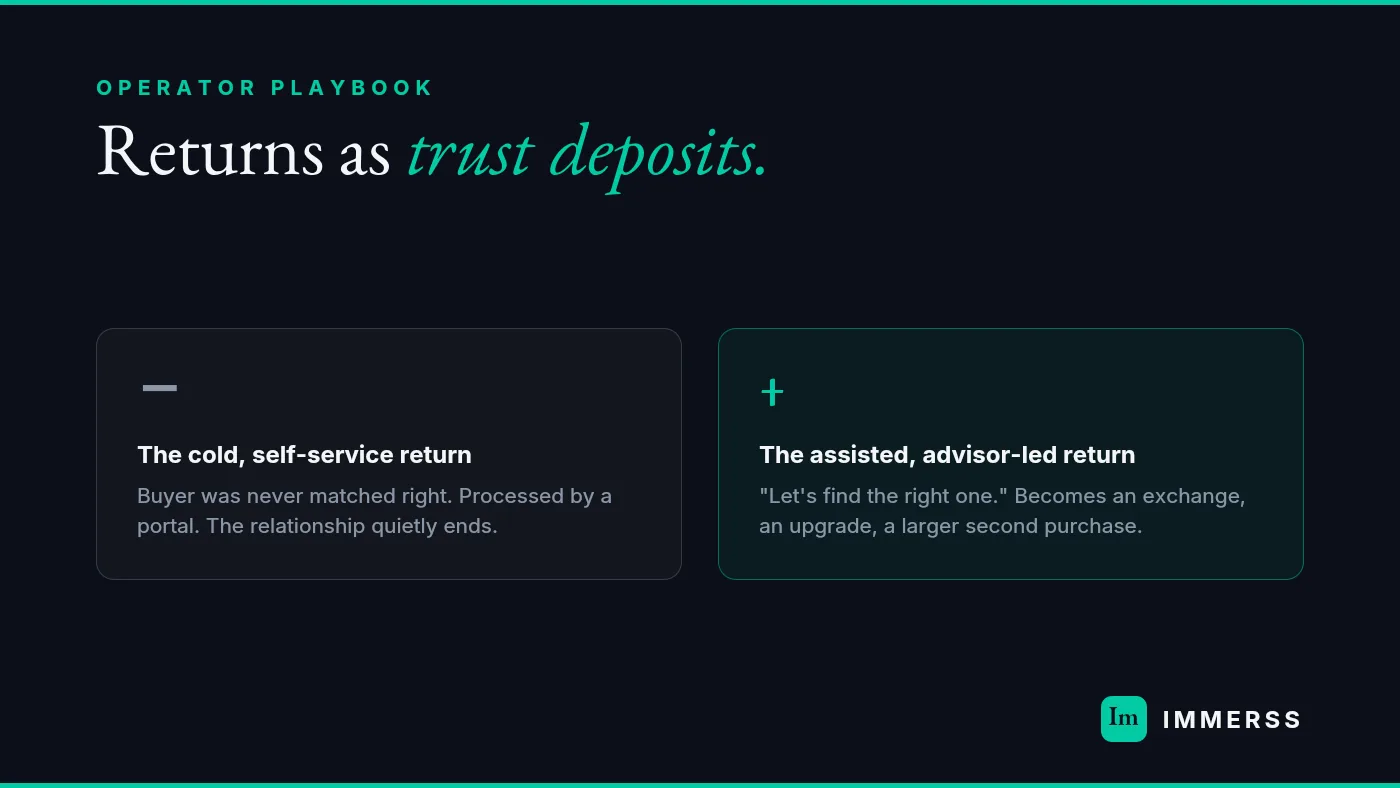
Getting it wrong is expensive to undo, and the shopper knows it. A bike, a set of skis or a fitted boot is not a parcel that goes back in a mailer, and even a pair of shoes worn once outdoors is not. That is felt as risk before the order, not after it, and it is the reason a considered buyer hesitates on a page where nobody is available to reassure them.

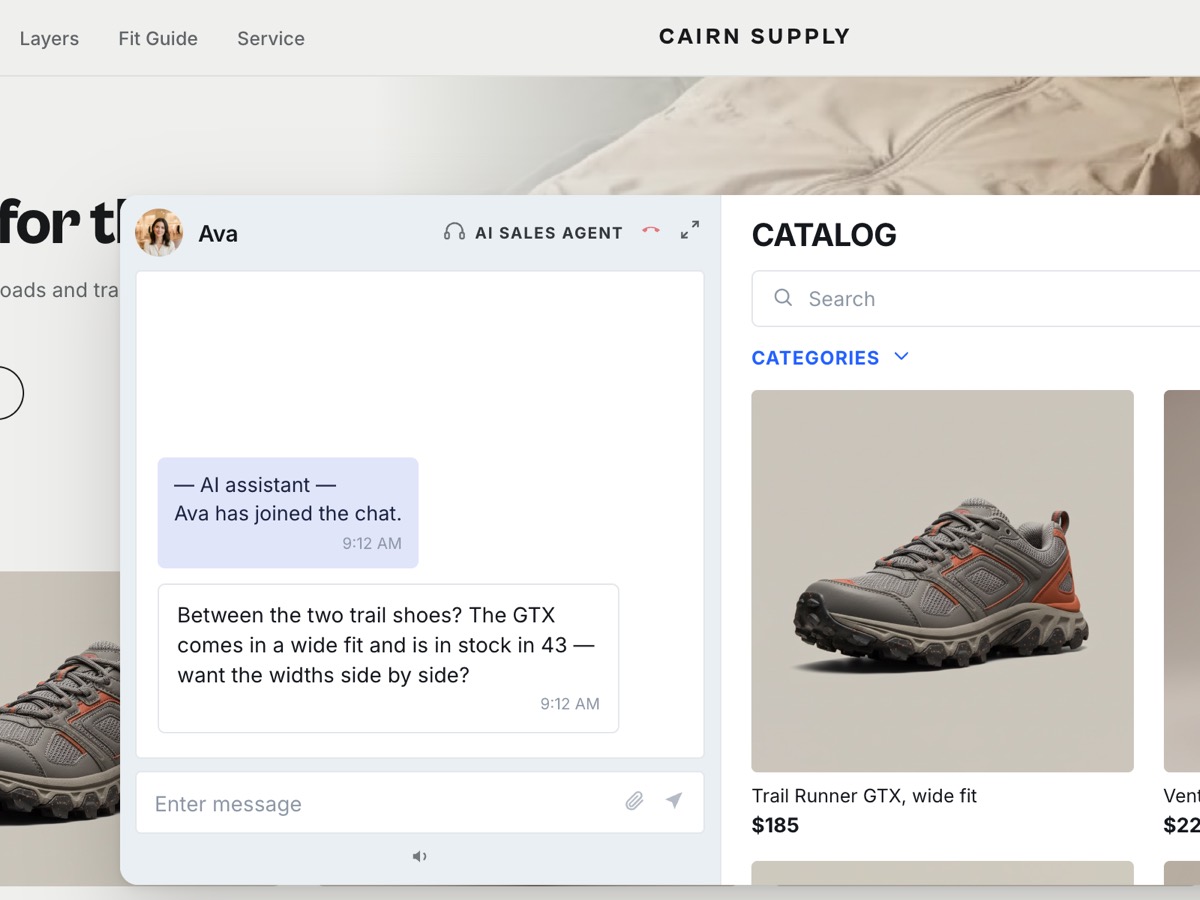
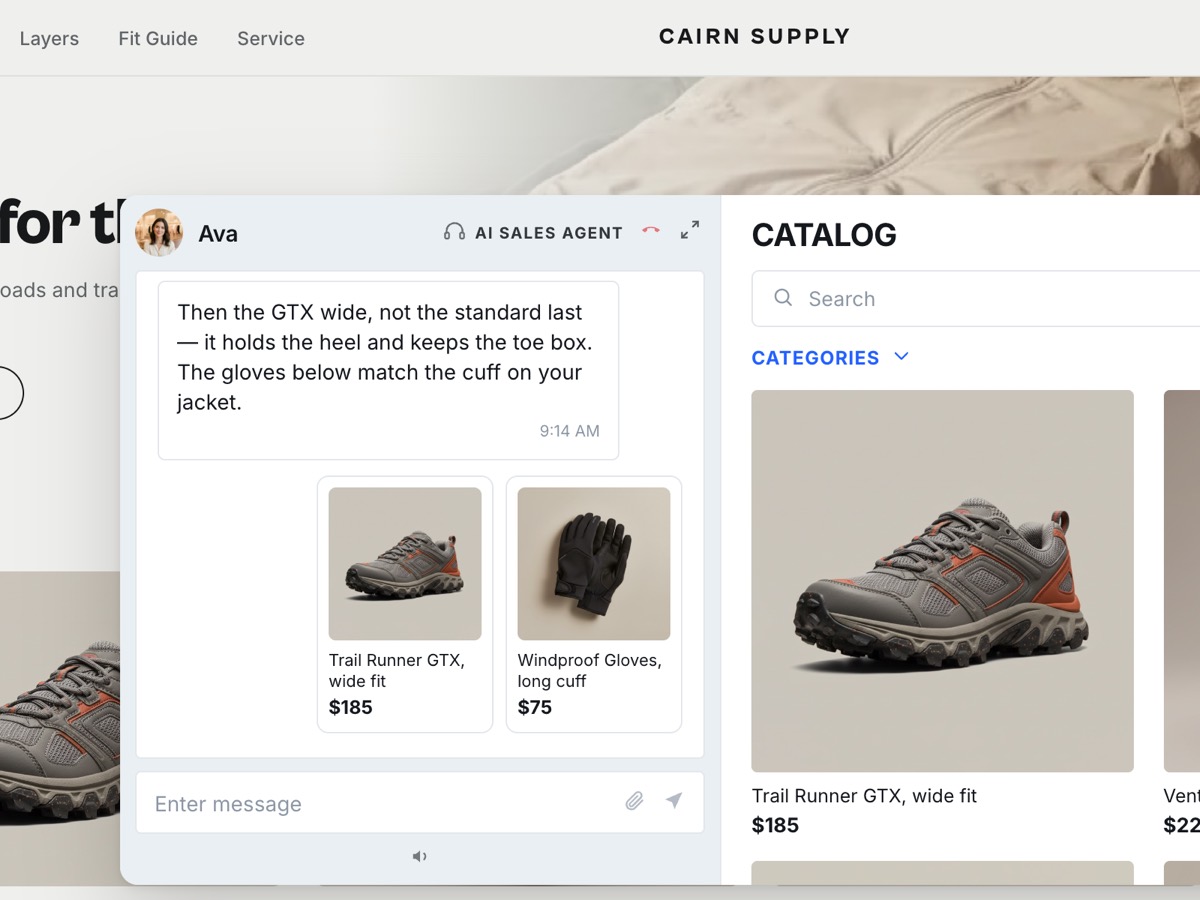
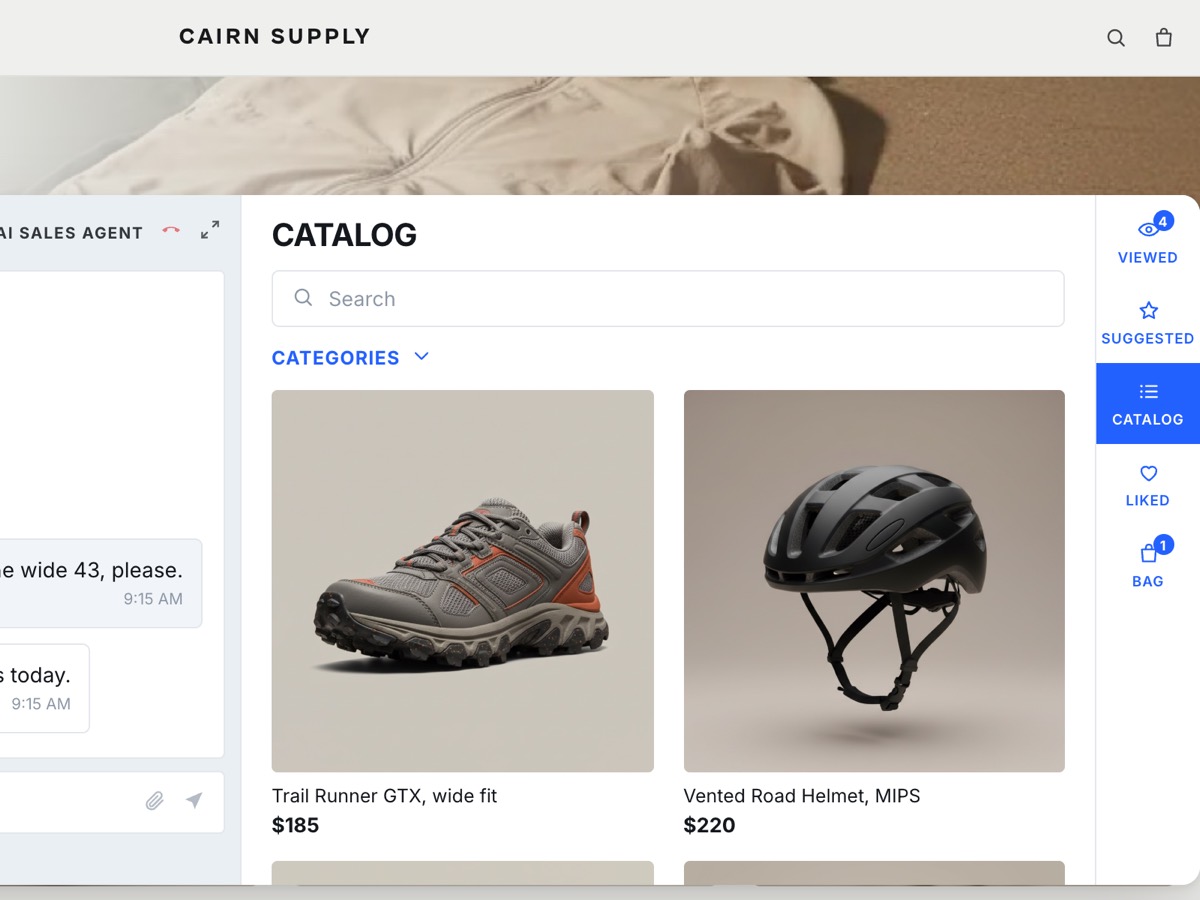

Specialized is on Immerss. The fitting conversation is the part a page cannot have.
On selling gear that has to fit
All insights →

The algorithm knows the number. It does not know the last
A size finder is cheap, quick and genuinely good at what it does, and for a t-shirt it is the whole answer. What it cannot do is the axis this category actually fails on — and it does not tell you it has failed until the parcel comes back.
FAQs
Less than a fitting bay and a great deal more than a size chart. The advisor can ask what the customer already owns and rides or runs in, look at how they describe the problem, hold two builds up against each other and say which one suits what they actually do. Your catalogue is inside the session, so the right one goes in the bag while they watch rather than being hunted for afterwards. It does not replace the bay. It replaces nobody being there.
It answers out of your own catalogue and your own copy, so it says what you have already written down — what fits what, what is in stock, what the sizes and standards are. Where the question goes past what is written down, it does not guess: it brings in an advisor with the conversation intact, so the customer never types it twice. The failure mode worth designing against is a confident wrong answer, and the way to avoid it is to keep the agent inside what you have published.
That is the normal case rather than the awkward one. There is nothing to download and no appointment to keep — a shopper taps, and whoever is free picks it up where they are standing. What matters is that the person who takes it can actually sell the thing; how many locations you run and where they happen to be at the time does not.