Maintain customer relationships outside of the store

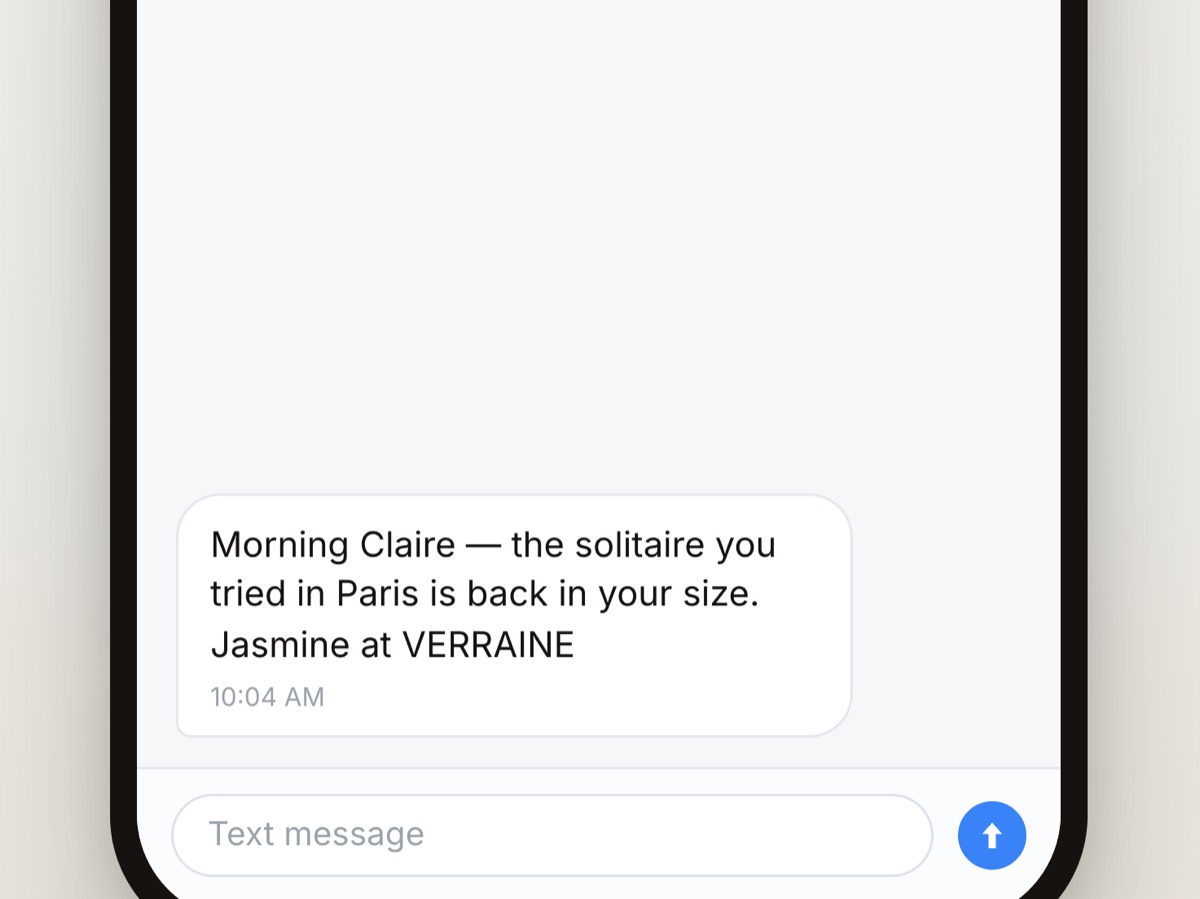
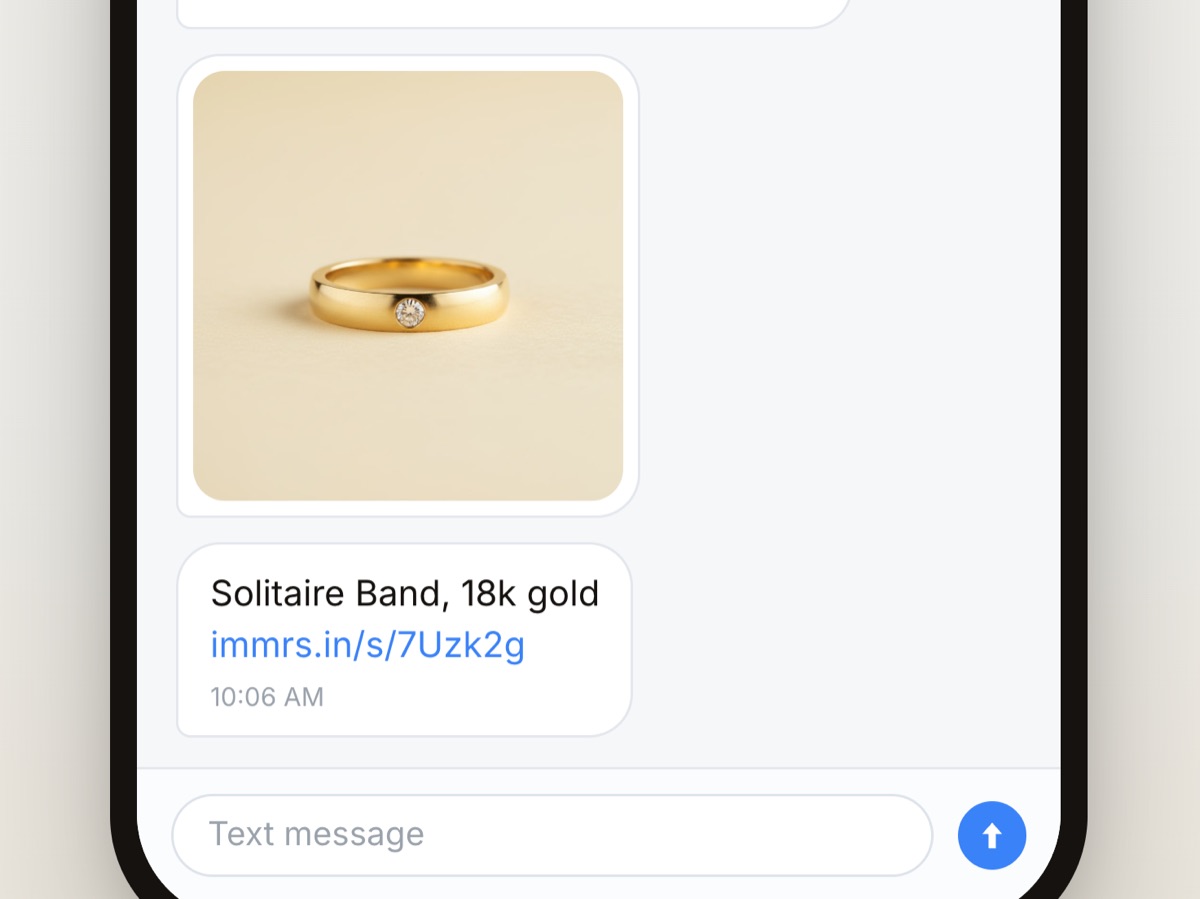
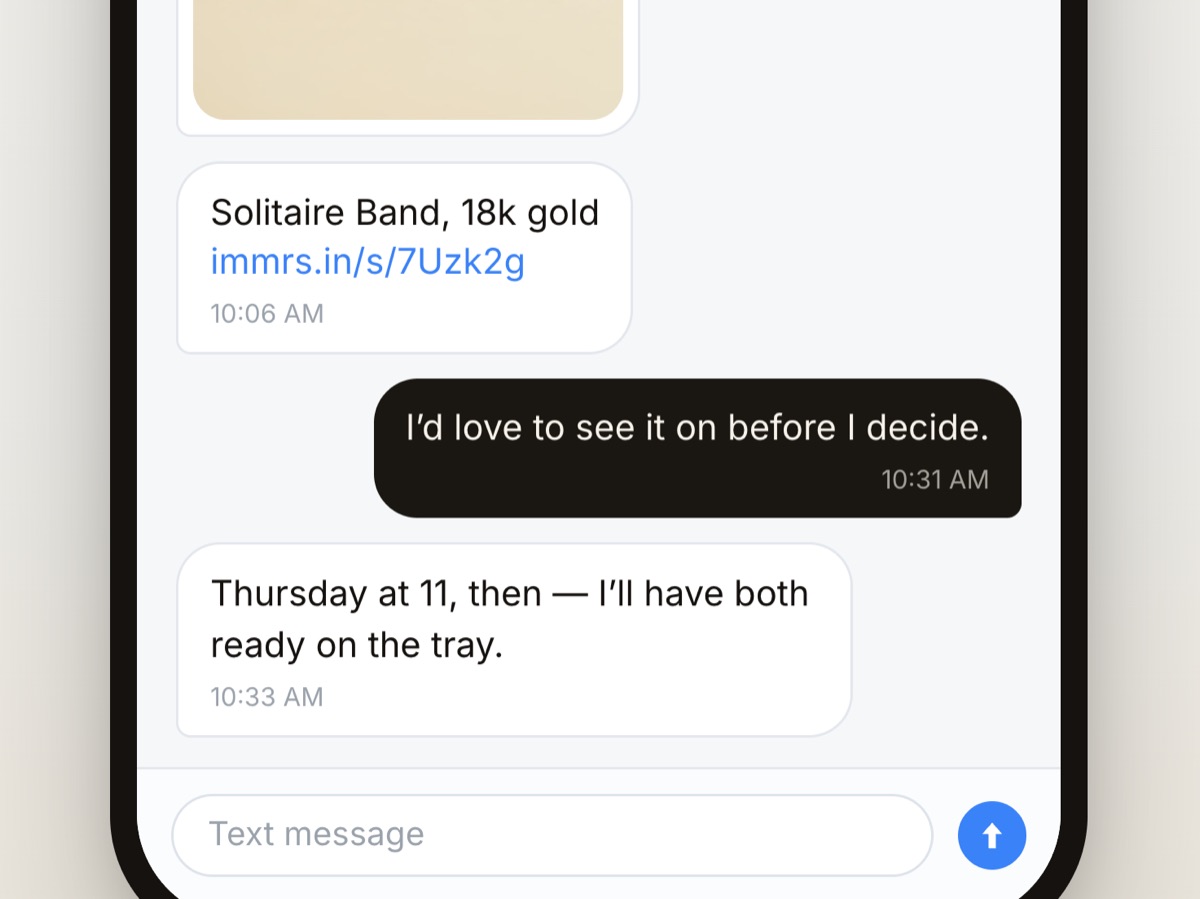










The relationship, worked between visits
That is one client and one thread. These are the parts a programme needs before the same thing holds for a whole client book.
A reason, every time. A new collection that matches a stated preference, a restock in their size, a service reminder two years after a watch purchase, an invitation to come and see something in person. Every message owes the client a reason they recognise as their own — a blast with a first name in the header is not clienteling, and the programme is only as good as its worst message.
On the channel they answer on. SMS, email and the phone, worked out of the same client record, so the conversation continues where this client actually replies instead of wherever the tool happens to send.
A client book the brand owns. Sizes and fit notes, stated preferences, wishlist, past conversations and service history sit in a shared record any associate can open. When an associate leaves, the book stays with the brand rather than walking out in their phone.
Numbers a finance department accepts. Assisted against unassisted orders, reply rate, appointment show rate, repeat rate by client book, return rate on assisted orders. Programmes get cut because nobody instrumented them and the first budget review finds only anecdotes — so decide what you are counting before the rollout, and count it against your own baseline rather than anyone's benchmark.
The client you know, and the visitor you don't yet
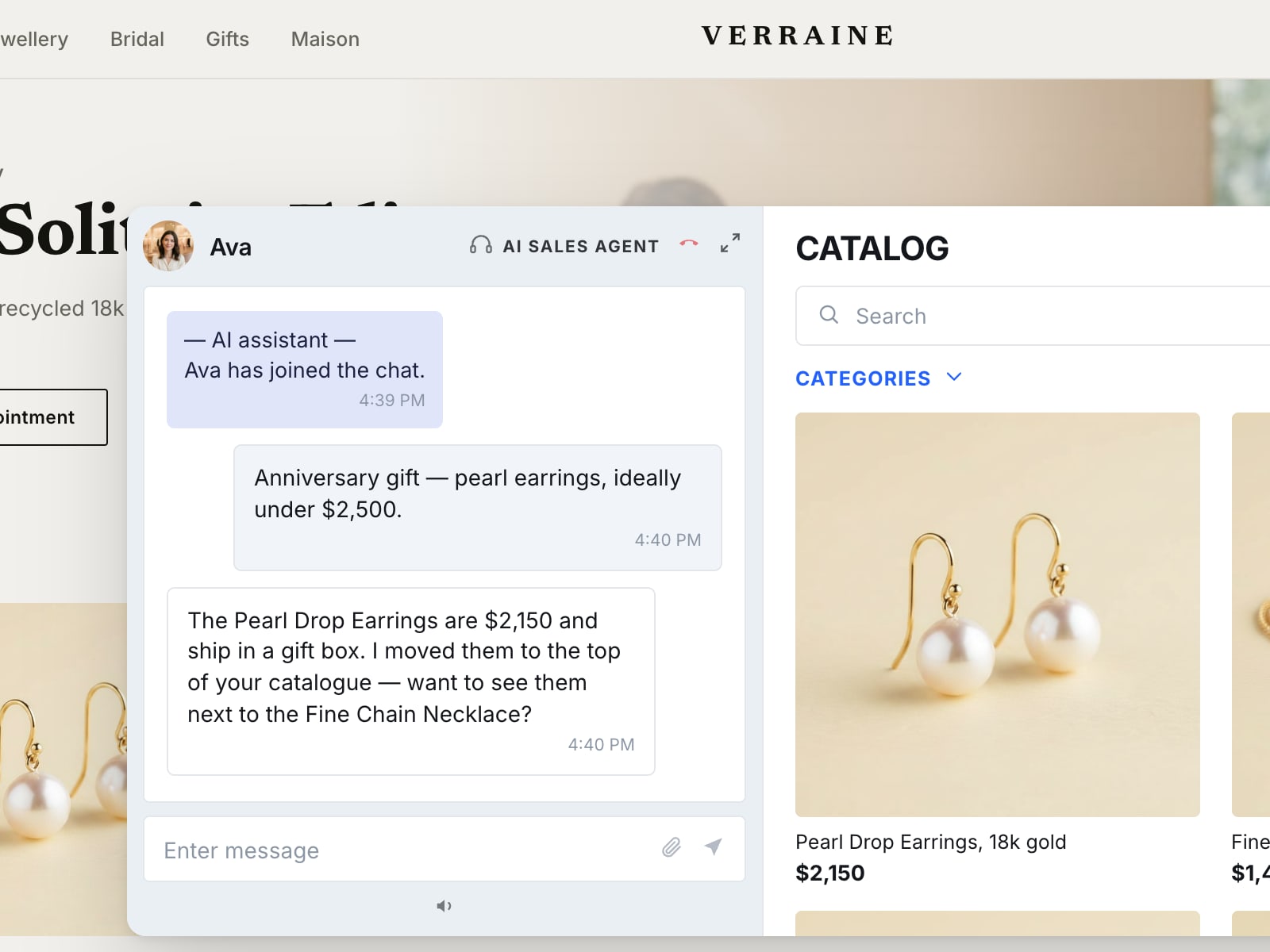
Most brands with a clienteling problem already own an outreach tool, and it is doing its job — keeping associates in touch with customers who are already in the database. What it cannot reach is the person on a $4,000 ring right now, who is in no database at all. Run both; just do not expect the first to do the second's work.
Where the client book is the asset


FAQs
The associates, and that is the point: the most under-used asset in this category is a person who already knows the product and sells it well, and who in most retailers is still waiting for someone to walk through a door. Outreach from a named advisor is answered because it reads as a person rather than a campaign, and it stops associates depending on foot traffic — which matters to anyone working on commission. Be honest about the cost side: these are new duties on people who are also fulfilling online orders, so the rota has to be part of the plan rather than an afterthought.
On memory and a notebook, somewhere around one to two hundred — that ceiling is why luxury retail historically rationed the practice to a small top tier and let everyone else start from zero on every visit. What raises it is not effort but the record: when purchase history, sizes, preferences and past conversations sit in a shared system, the context is retrieved rather than remembered, any associate can pick up a client they have never served, and the coverage stops being a tier.
On low-ticket, habitual repurchases. If the customer already knows exactly what they want and the order is small, a named human relationship costs more than it returns, and coverage from an AI sales agent is the right level of investment. It earns its keep where a purchase involves real deliberation and one answer decides the sale — jewelry, watches and bridal, custom and high-fit categories, furniture and interiors, premium apparel and accessories.
A client record unified across the storefront, the POS and the inbox — purchases, sizes, stated preferences, past conversations — because how personal the next conversation can be is capped by that. Then a rule for who gets an appointment and who gets self-serve coverage, and the reporting, stood up before rollout rather than after. And an honest look at the rota: these are new duties for people who are already fulfilling online orders, and a programme that ignores scheduling arrives as one more app nobody opens.