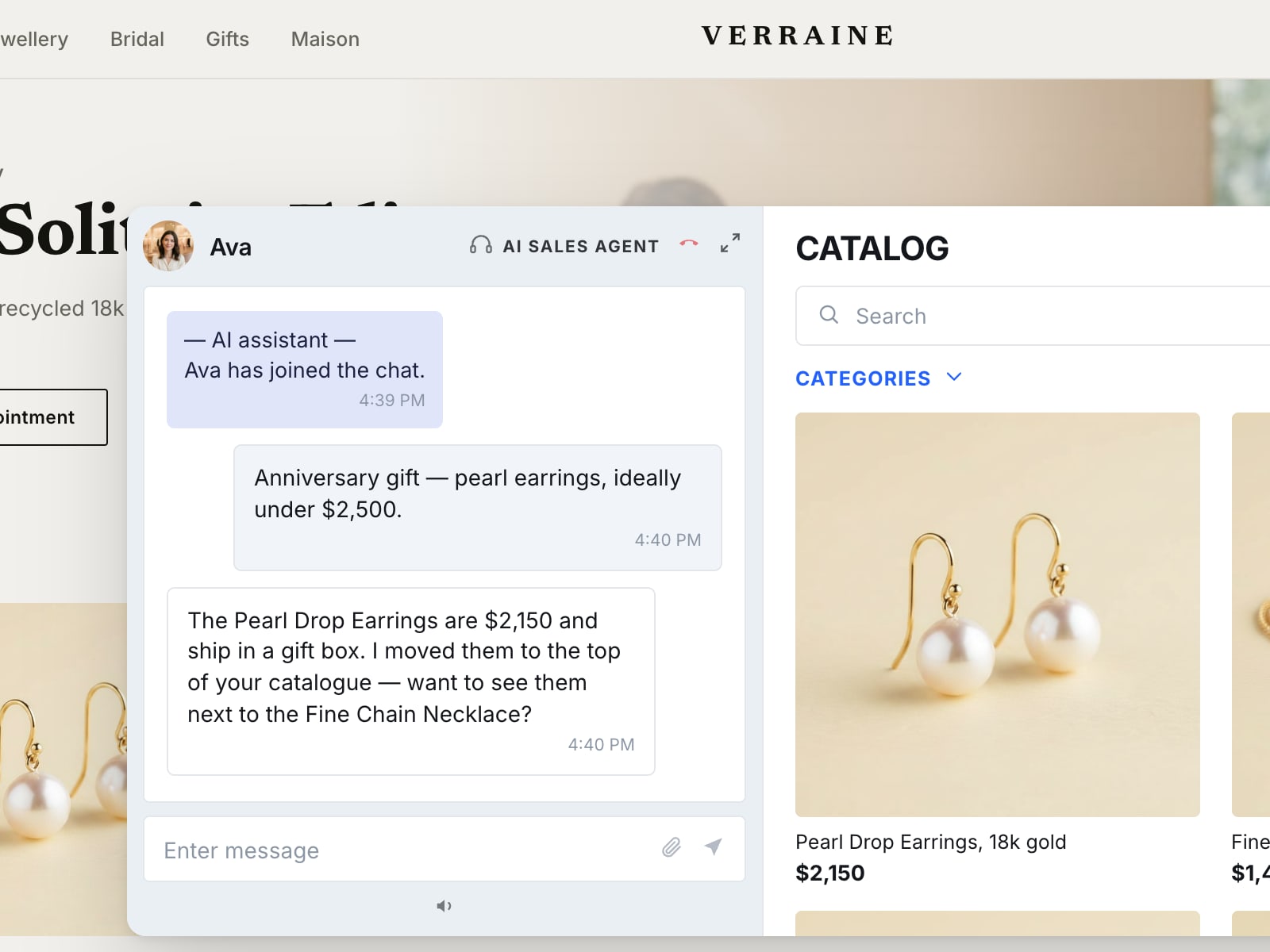
Put a real advisor in front of the shopper







What holds in every session
That is one shopper and one call. These are the parts that hold in every session — and what each one takes off your side.
One to one, not one to many. A private session between one advisor and one customer rather than a broadcast to a room. It is the model the figures on this page come from: consultation sells where an audience event builds an audience, and the two are different jobs with different economics.
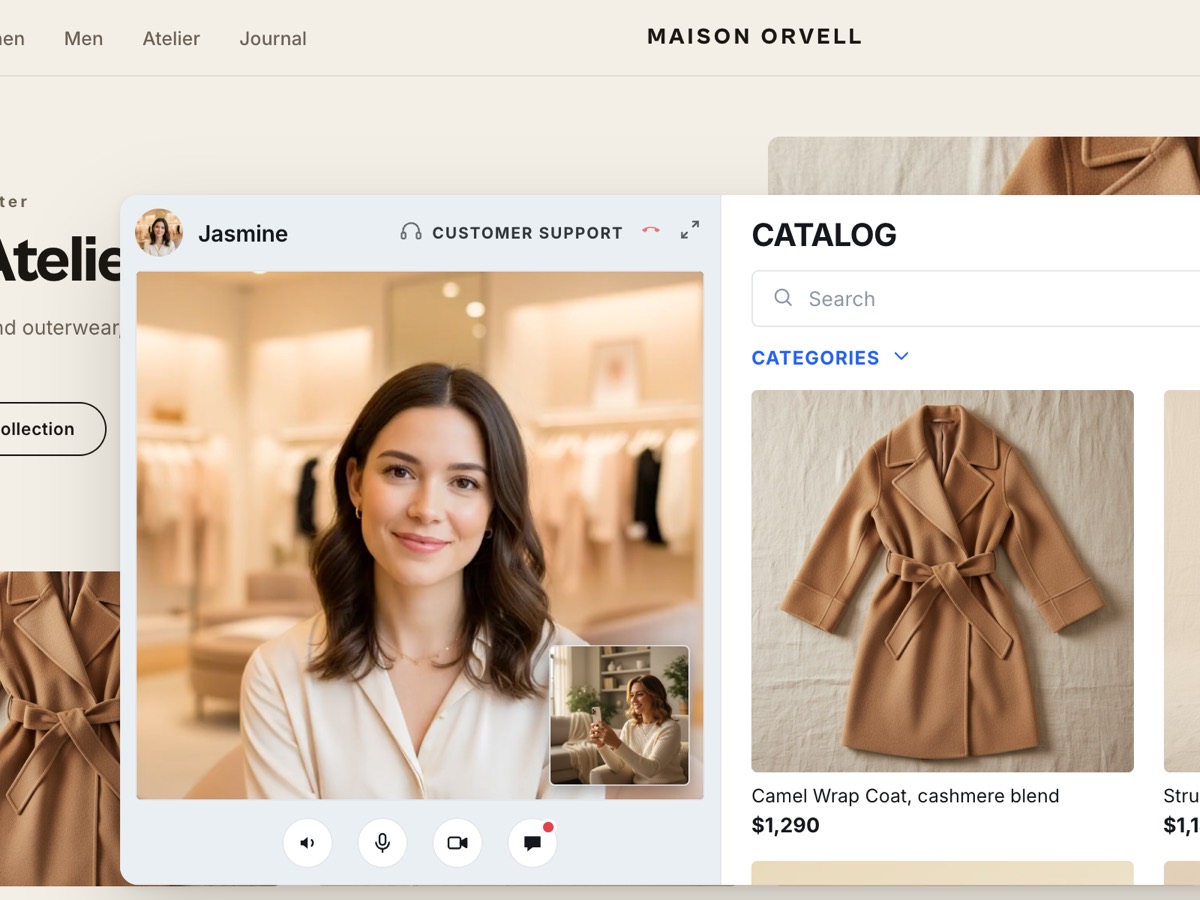
Chat, voice or video — on demand or scheduled. The shopper who wants an answer now gets one; the client who wants Thursday at eleven books it, and the advisor comes to that appointment with time to prepare. One module covers both, so a brand does not run two tools for the same conversation.
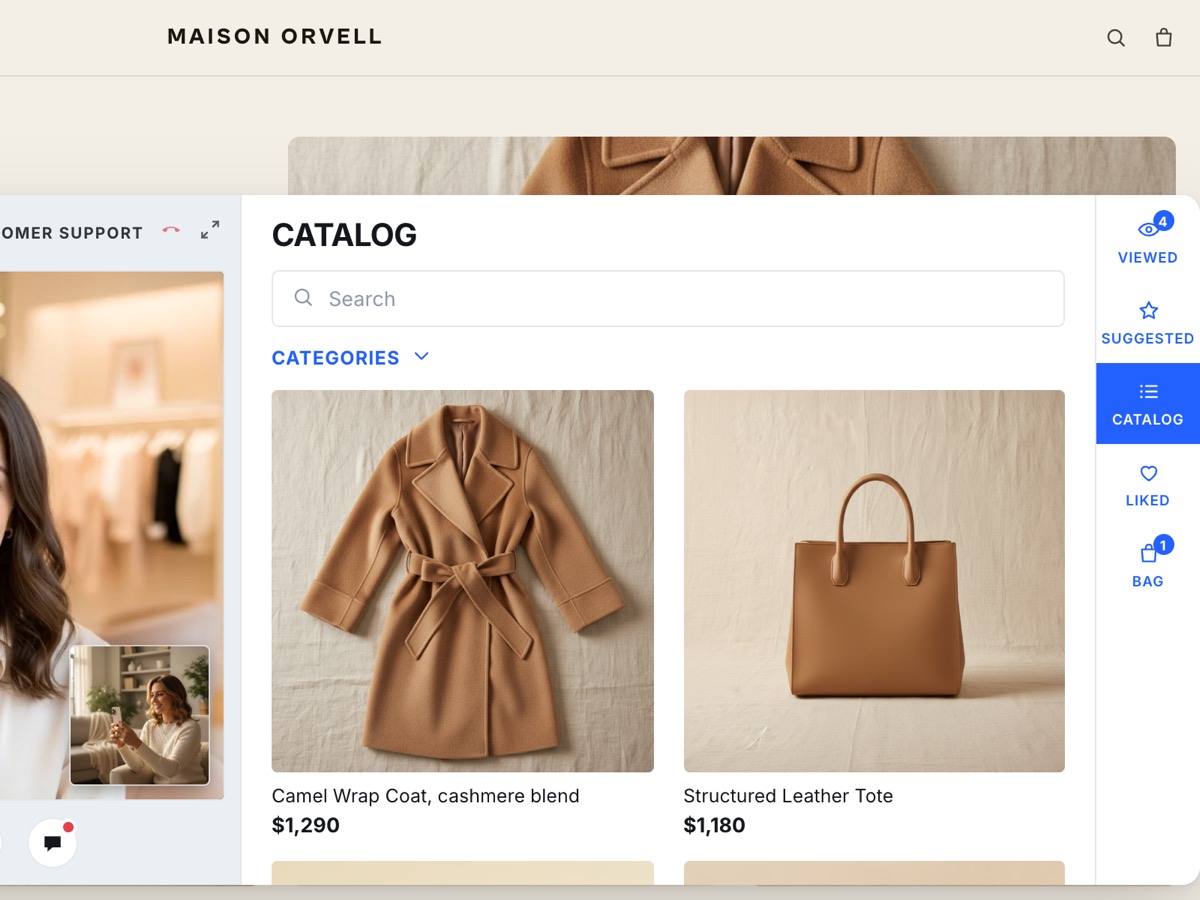
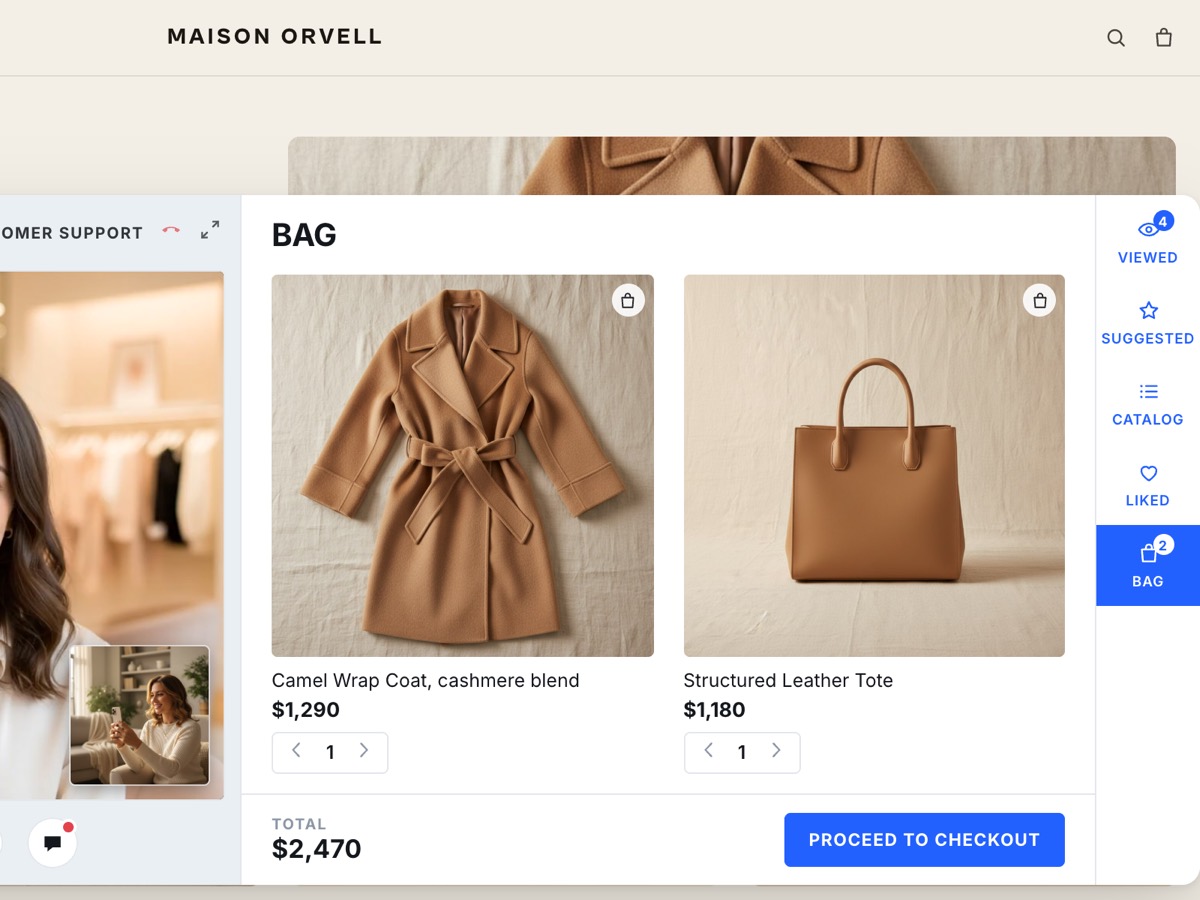
The advisor arrives briefed. Product detail, stock and pricing are in front of the advisor during the call, and so is this customer's own history — what they viewed, liked and left in the bag. Expert guidance without guesswork, rather than a knowledgeable person asking the shopper to describe what is on their screen.
The order carries the session with it. Checkout happens inside the call or straight after it, and the order stays attached to the session afterwards. That is what lets you see which products, which approaches and which advisors actually sell — and what turns a programme that felt good into one that survives a budget review.
Fine for the first ten appointments
A meeting link and a spreadsheet is the honest way to find out whether selling by consultation works for you, and the first dozen appointments need nothing more. What breaks is the fortieth: the manual work starts eating the selling time, and everything the meeting link does not carry starts costing orders.

“The conversion rate is so much higher. It’s obviously a better experience for customers.”

Where the associate is the reason people buy


FAQs
No. This is built for selling to online visitors, and it works without a store fleet behind it — the advisor can be anywhere, and two people who know the product are already a programme. What matters is that whoever takes the call can actually sell the thing, not how many locations you operate.
It is a related skill, not the same one, and pretending otherwise is what makes rollouts fail. Framing, lighting, narrating what your hands are doing and knowing when to stop talking are all learned separately from selling on a shop floor. Budget for teaching it, start with one category or one client segment, and watch session outcomes weekly before scaling.
The AI Sales Agent sits underneath the whole thing. It answers product questions from your catalogue around the clock, qualifies who is worth an advisor's time, and hands over with the context intact so the shopper never repeats themselves. Most storefront traffic arrives without an appointment and a good deal of it arrives at three in the morning; coverage is what makes the human hours land on the conversations that deserve them.
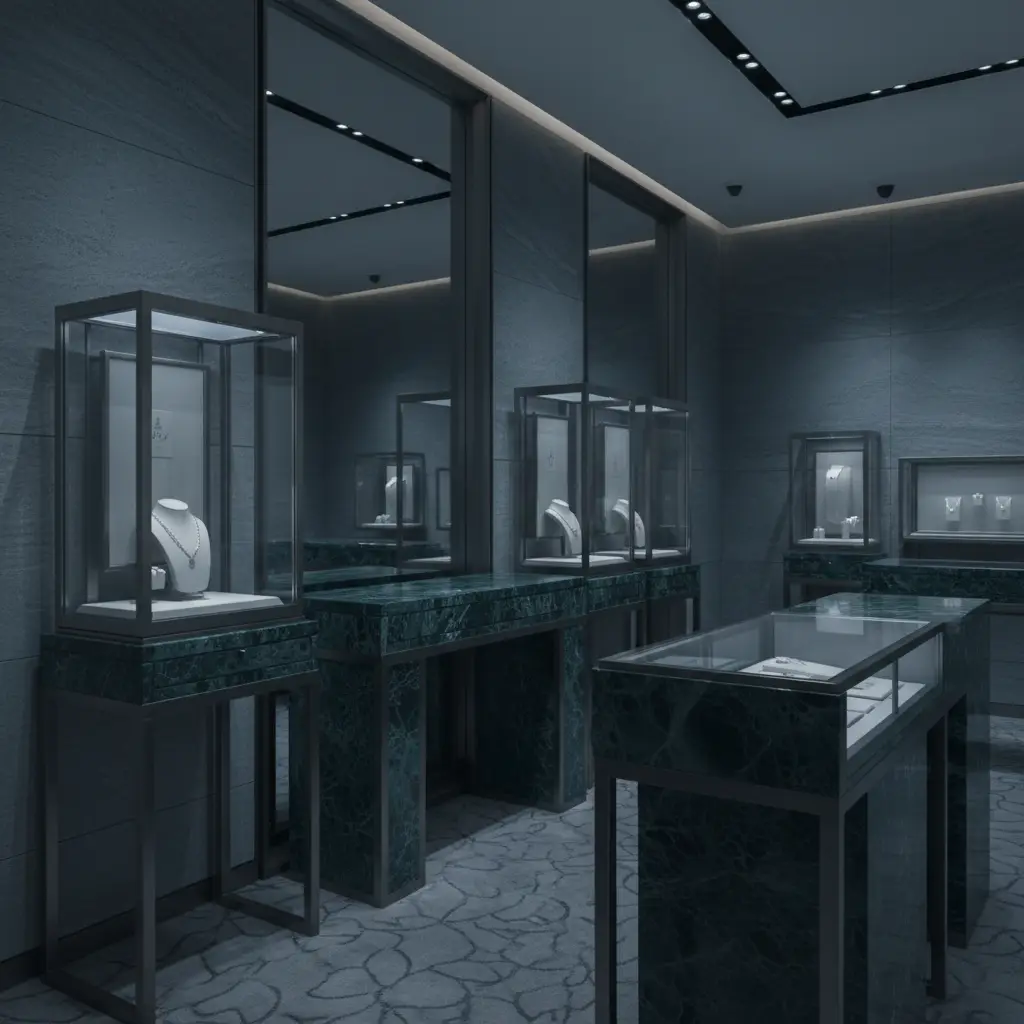
A high-definition camera, and a macro-capable lens if you are showing stones, stitching, movements or grain — that is the one place worth overspending. Controlled, consistent lighting, because jewelry and leather are lit rather than shot. A real microphone, since the whole product here is a conversation. A quiet, branded background, because the customer is judging the house as well as the item. And a stable connection with room to spare: a dropped call in a five-figure sale is a lost sale, not a technical problem. No studio.