
Shade and texture do not survive a photograph
Your own video, and an advisor who can see the skin
What a beauty shopper cannot judge from the page
Four things a still photograph and a review from a stranger cannot settle, and all four decide the order.
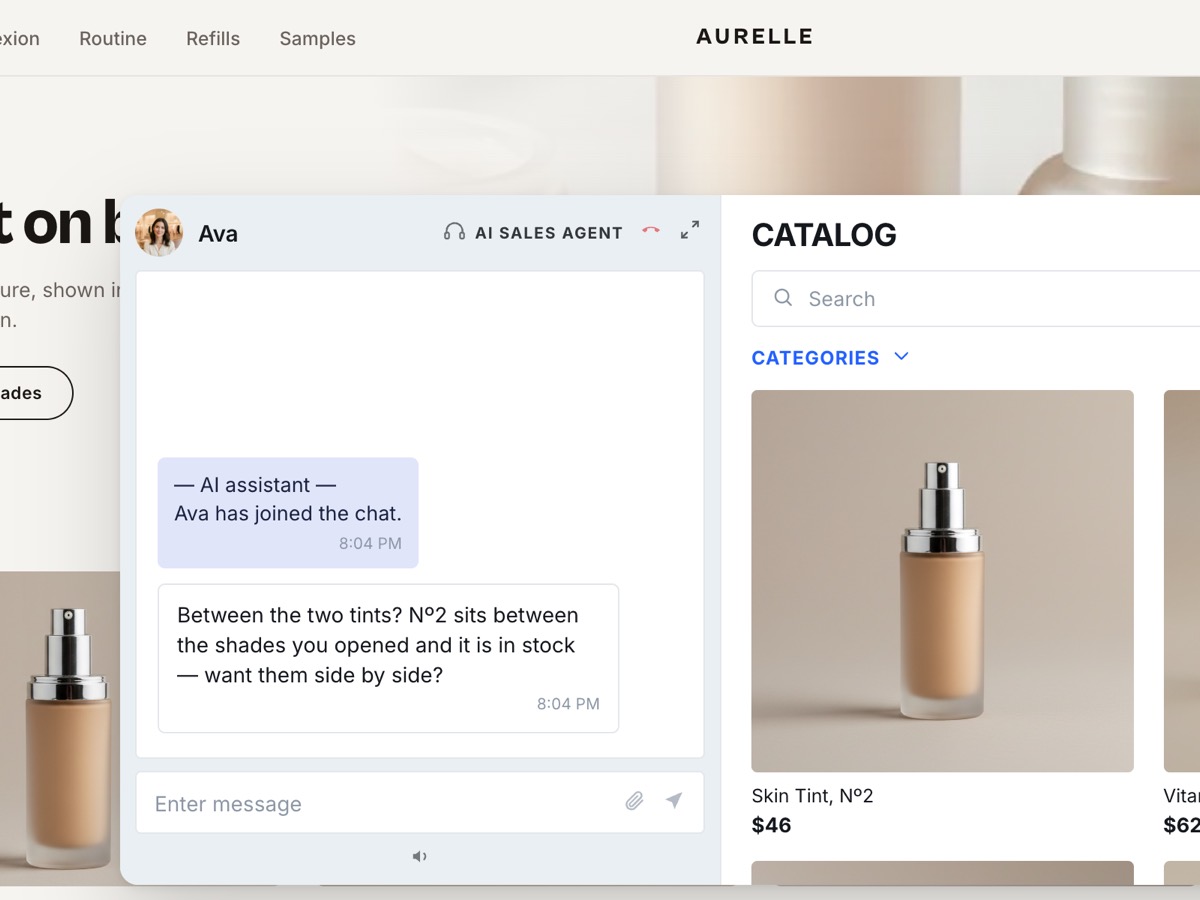
Shade is a lighting problem before it is a colour problem. A swatch shot under a softbox is not the same shade over a bathroom mirror at seven in the morning, and it is not the same shade on the shopper's undertone either. The photograph is honest and still misleading, which is worse than a bad photograph, because nobody thinks to distrust it.
Texture is most of what they are buying. How heavy the cream is going on, whether it sinks or sits, whether the serum pills under SPF an hour later. A flat-lay says "lightweight" and the word does no work — the shopper finds out on their own face, which is also where they find out it was wrong.
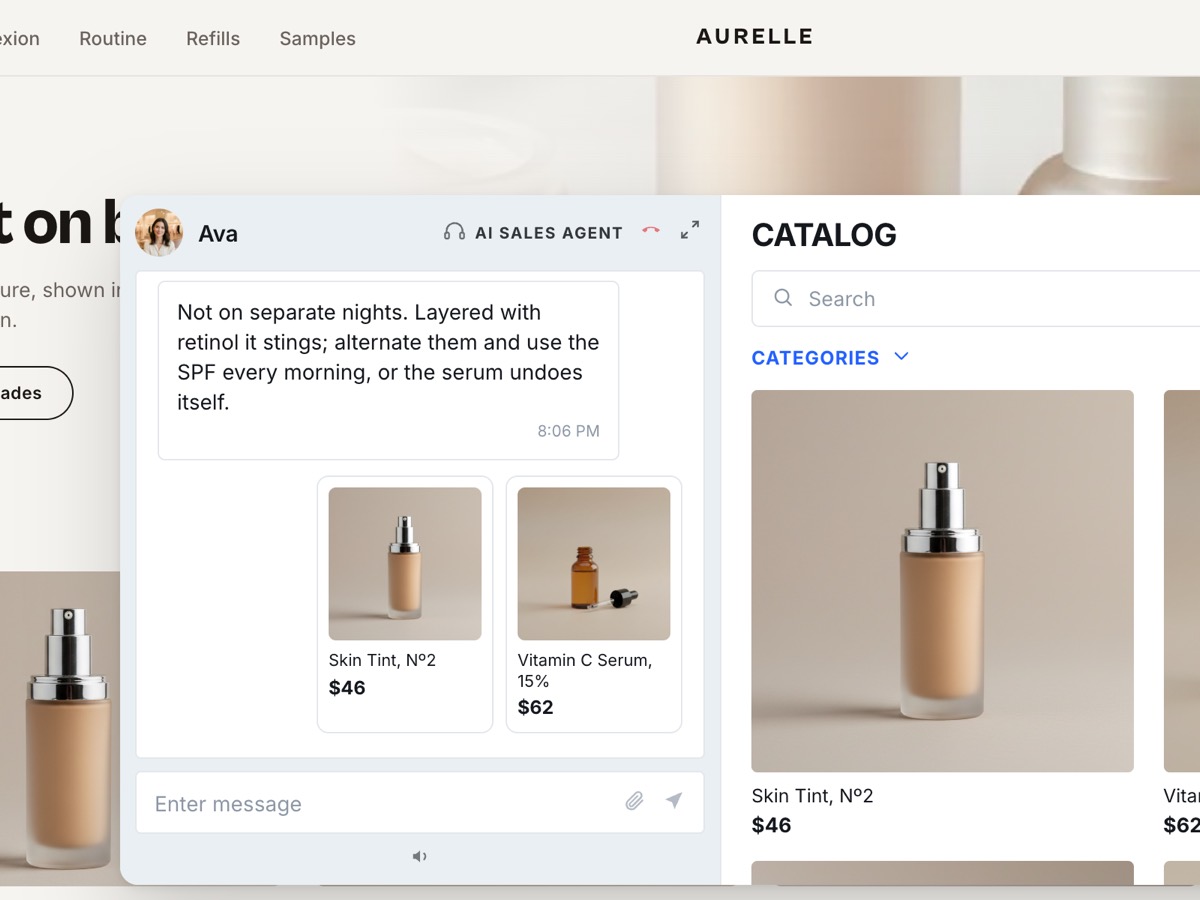
The mistake is usually a routine, not a product. Actives that should not be layered, a sequence applied in the wrong order, a new bottle put on top of something already in the cabinet. A grid sells one item at a time and leaves the assembly to the customer, and the product that fails is often the one that was fine on its own.
The first order is not the sale. Beauty is replenishment: the value of a customer is the fourth bottle, not the first. Getting the first one wrong does not cost one order — it costs the routine that never got established, and the customer does not come back to explain why.
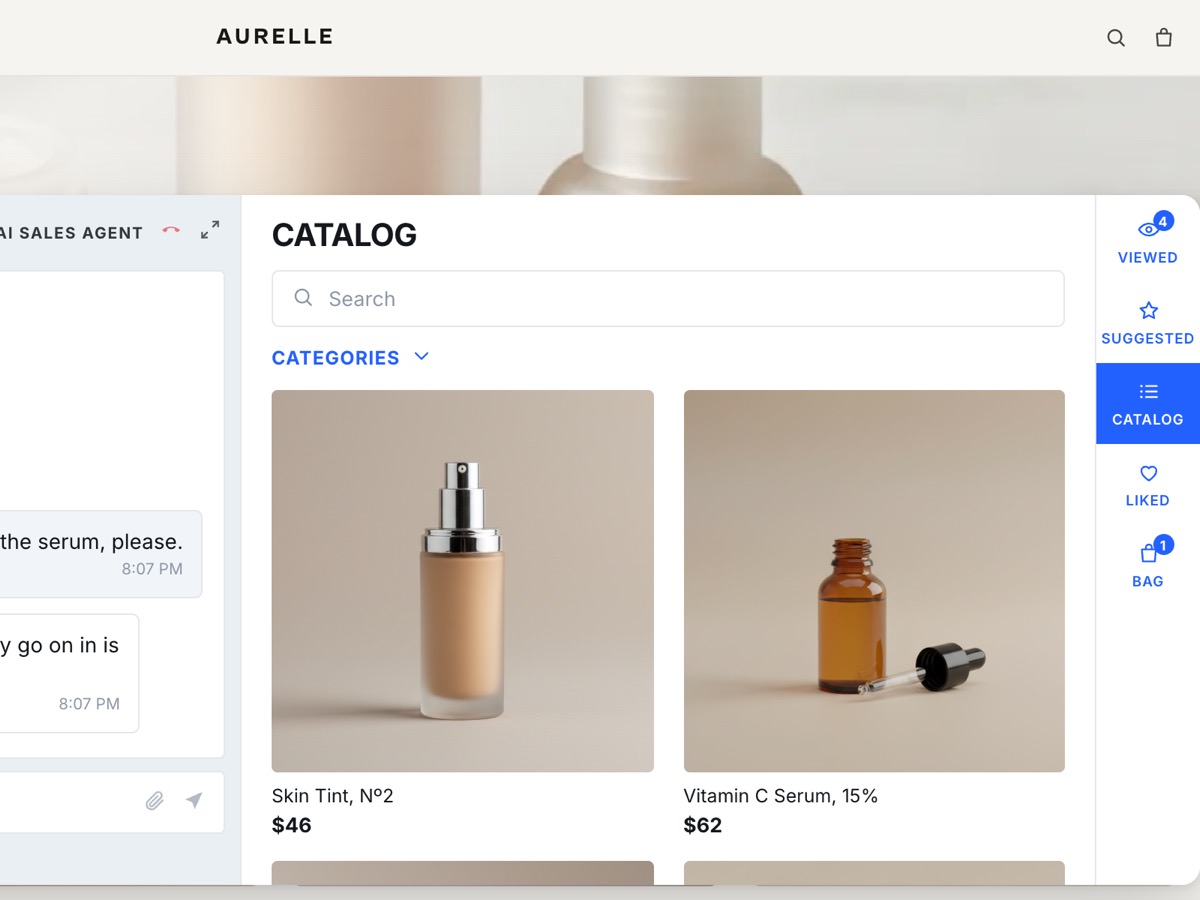
Somebody else's skin, in somebody else's bathroom
Creator content is how a beauty brand gets found, and nothing here argues with that — it is the best top-of-funnel the category has ever had. What it cannot do is answer the question that decides the order, because the face in the video is not the face buying the product.
Written for beauty brands
All insights →


FAQs
No, and a programme that required it would never start. Film the range in the tones that carry the volume, and let the live session cover the rest on demand — an advisor holding the two shades either side of the one a shopper is asking about does more than forty separate clips, because the question is almost always which of two rather than which of forty. The recorded clips build up from the sessions you are already running, so the library grows without a shoot being booked.
It is trained on your catalogue and your copy, and it says what you already say in writing — ingredients, what a product is for, what it should not be layered with, what the label claims. It does not diagnose, and it should not: the moment a conversation turns into a skin condition rather than a product, it belongs with a person, and the handover is what the agent is for. Everything it can say is something you have already published and are already accountable for.
More than it does for the first, which is the part usually missed. A customer who was put on the right routine comes back for the refill; a customer who guessed and was disappointed does not come back and does not tell you why. The session also stays attached to the order, so the advisor who sees them in three months knows what they bought, what they were trying to fix and what they said they had already tried — which is the difference between a refill prompt and a conversation.
A single line is the easier case, not the harder one. The conversation a beauty brand needs is not a comparison across labels — it is which of your products, in which order, for this skin, and that is a conversation your own team can already have better than anyone. What was missing was a way for someone who is not standing at a counter to have it.