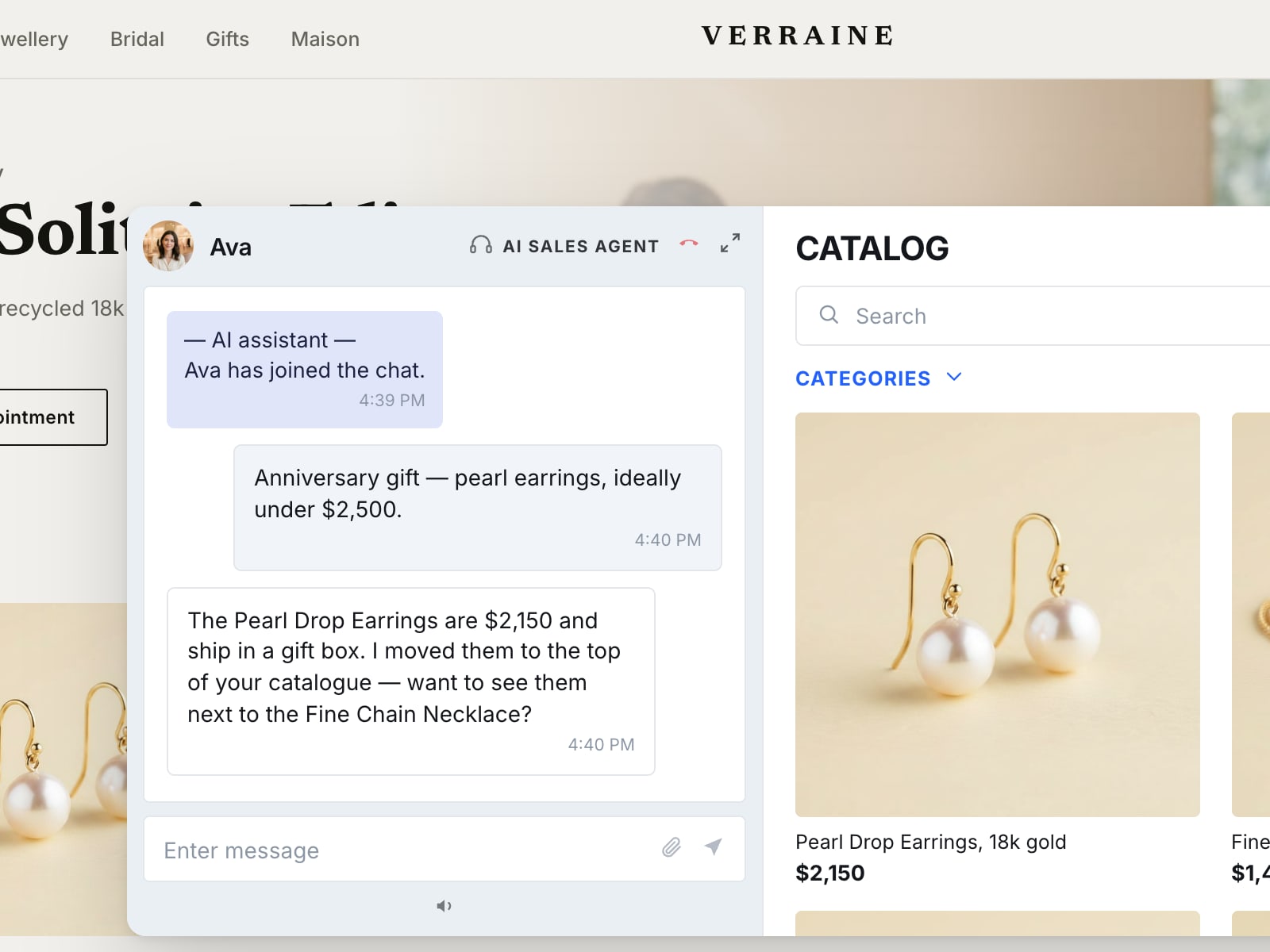
Hand over to a person mid-conversation

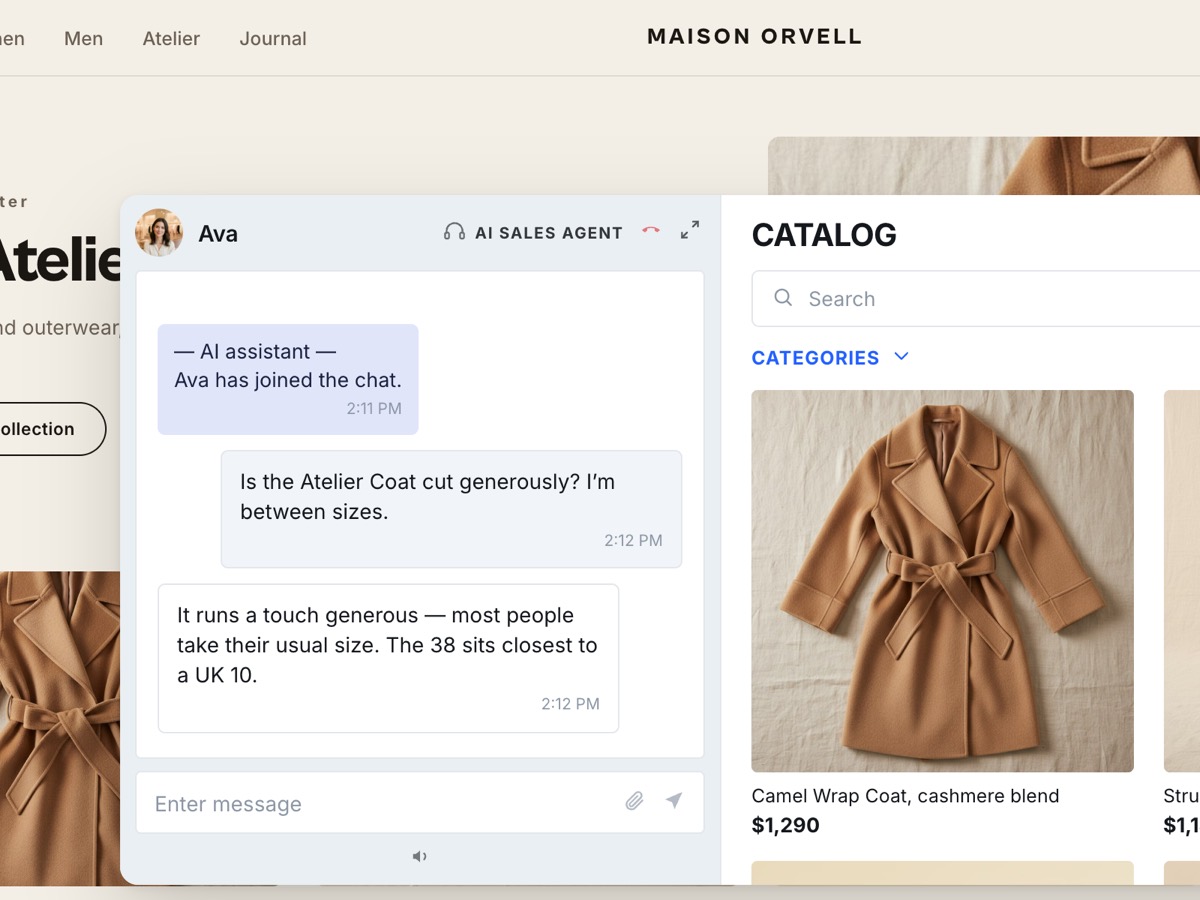
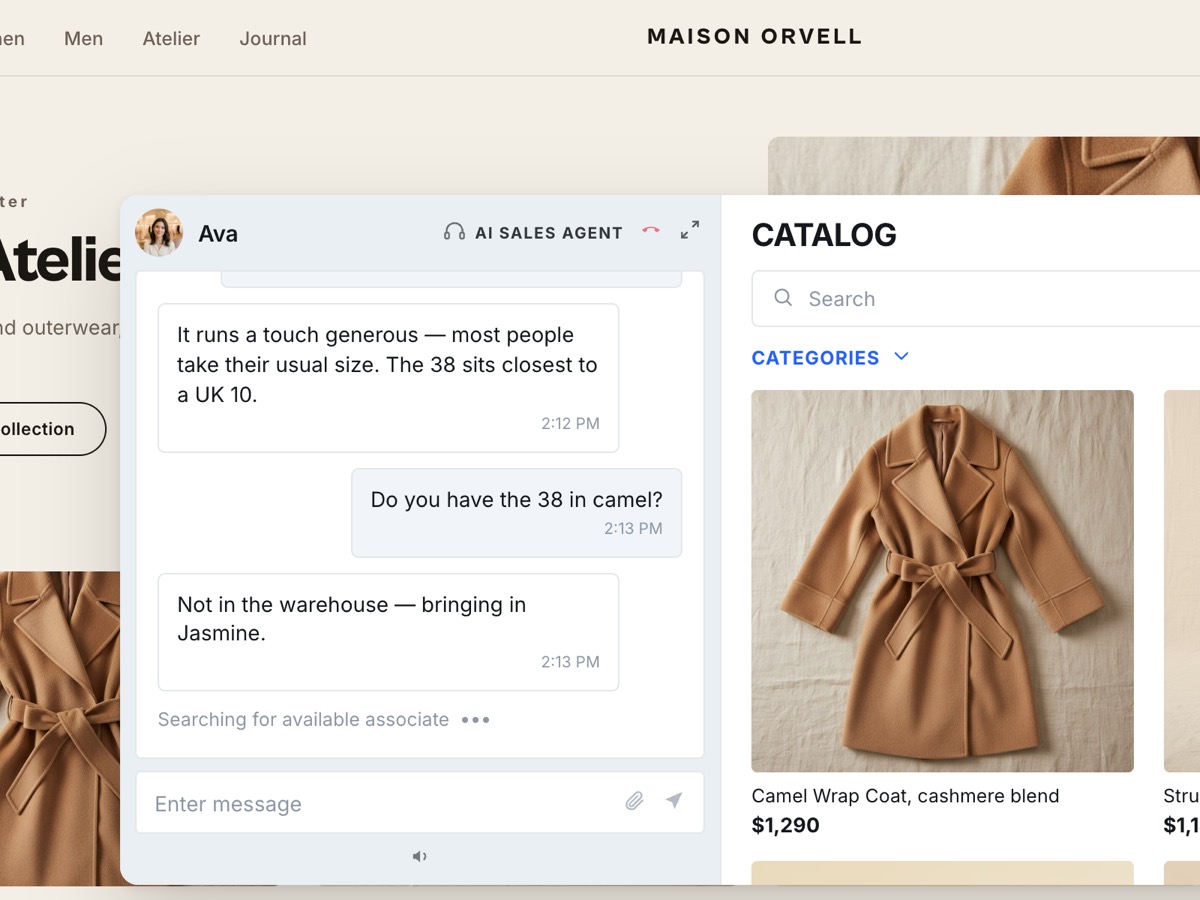
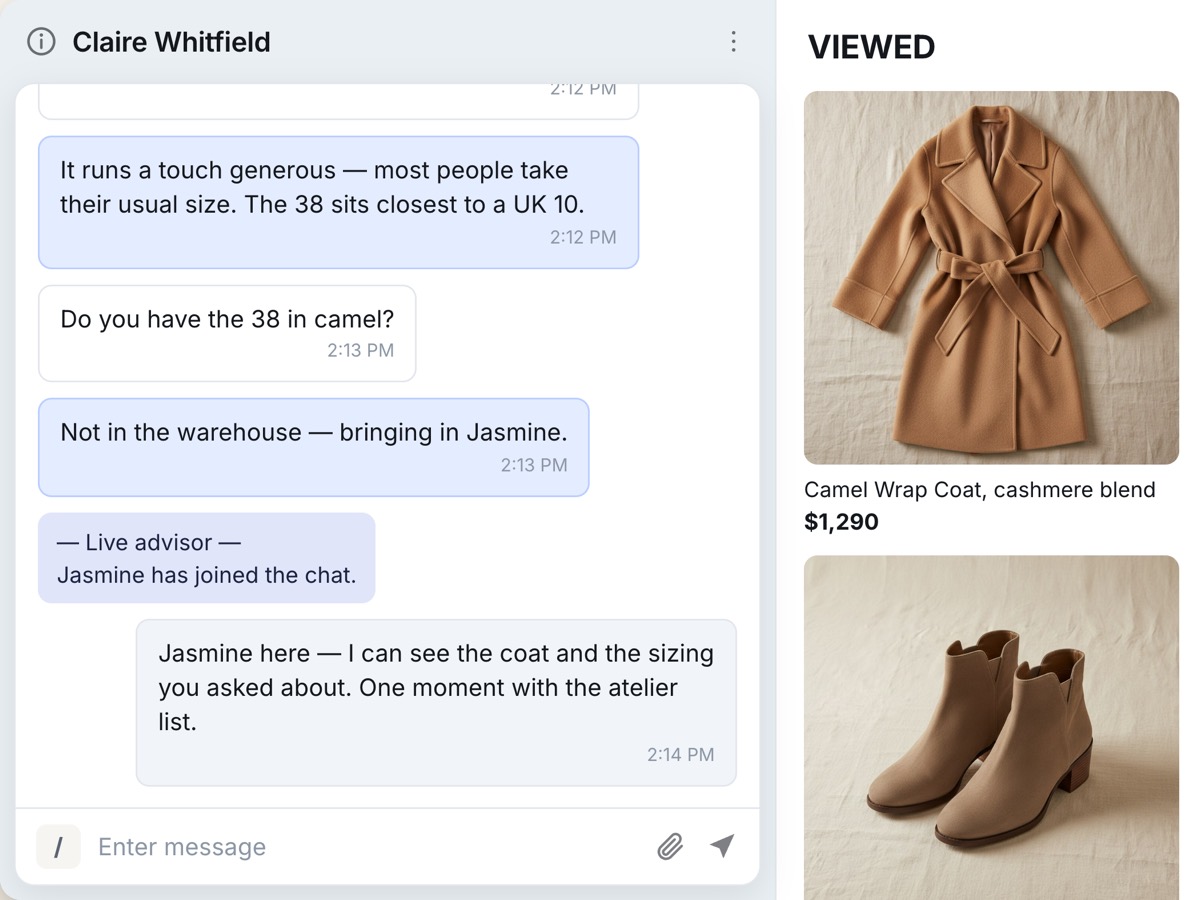










What travels with the conversation
That is one shopper and one handover. These are the parts that hold every time — and what each one takes off your side.
The thread, not a summary. The advisor opens the conversation that is already happening, with the AI's own replies in it — nothing is retyped and nothing is summarised. The shopper does not notice a handover so much as a change of voice, because from their side the thread never moved.
The session, not a form. What this shopper viewed, what they liked and what is sitting in their bag are beside the thread when the advisor arrives. Expert guidance without an interview first — the questions a fresh ticket would open with have all been answered already.
Whoever is free, by your rule. The handover is routed rather than broadcast: the shopper sees that an advisor is being found, and the conversation goes to the person your rule says should have it. Nobody has to be watching a queue for the shopper to be picked up.
And when nobody is free. The AI keeps the conversation rather than dropping it — it answers what it can and takes the appointment for the rest. Coverage before the handover is the AI Sales Agent; when the answer has to be seen rather than typed, the conversation goes on to Live Co-Shopping and the advisor comes onto live video.
Both of these are called a handoff
Nearly every support bot can pass a conversation to a person, and for support that is the right design: the question becomes a ticket, the ticket gets an owner, the owner answers properly. Run it, and keep running it. It just is not what happens when someone with a full cart asks the one question that decides the purchase.
Where the last question decides the sale


Not ready for a walkthrough?
On immerss.ai you set the AI Sales Agent up yourself: sign up, connect the store, put the widget live the same day — no call, no scoping.
Same agent, smaller surface. Move to the full layer when the conversations outgrow it.
FAQs
It hands over on the two things it can actually detect. The first is its own edge: it answers out of your catalogue rather than around it, so a question that falls outside — stock that is not in the warehouse, a commitment nobody has authorised it to make — is a handover rather than a guess. The second is worth: it qualifies before it escalates, so what reaches an advisor is a shopper who is deciding on something, not a request for a tracking number. That order matters more than the trigger list, because the point of the handover is to spend human hours where they change the outcome.
Then they get one, and the AI does not argue about it. Asking outright is the clearest possible signal of intent, and a system that makes someone talk their way past a bot first has spent the goodwill it was meant to be protecting. The conversation is routed the moment it is asked for; the shopper sees that an advisor is being found and stays exactly where they are while it happens.
The same three people — but far fewer conversations, and each one further along. Conversational AI absorbs the bulk of routine inquiries before anyone is involved, which is precisely what makes a small team viable: the arithmetic that does not work is five more associates, and the one that does is coverage underneath the people you already have. Set the routing rule before rollout rather than after — who is on, in what order, and what happens when nobody is — and be honest that taking handovers is a duty on people who are also fulfilling online orders.
Yes, and it is stated rather than implied. The thread names each arrival as it happens — the assistant when it joins, the advisor by name when she does — and the conversation header says which of the two is in it. We would not build it the other way round: a shopper who works out mid-purchase that the “advisor” was software has been given a reason to doubt everything else they were told, and on a five-figure order that is an expensive way to save a disclosure.