
A sofa is bought against a room you cannot see
The room they are matching to, shown to an advisor
The half of the decision that is not on your site
The shopper is matching your piece to a room only they can see. Four consequences, and a product page cannot address any of them.
The room is the brief, and you never get it. They are matching to a floor, a wall, a window and three things they already own. All of it is standing in front of them and none of it reaches you, so the decision is made by somebody working from your photographs and their memory. On a call they simply turn the camera round.
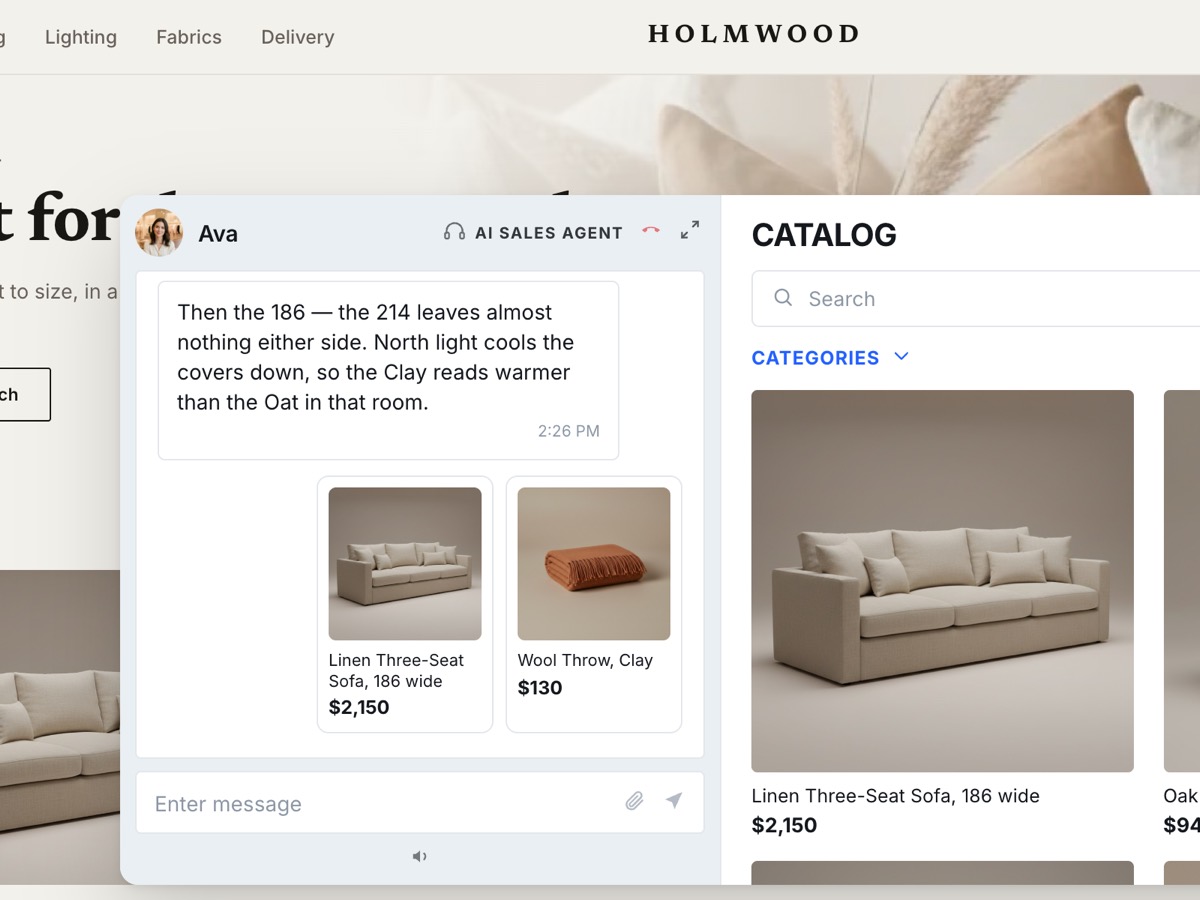
Colour is a lighting question. A fabric photographed in a studio, rendered by a screen and then seen under a north window at four in the afternoon is three different colours. A swatch posted out answers it in a week, by which time the shopper has bought elsewhere or bought nothing.
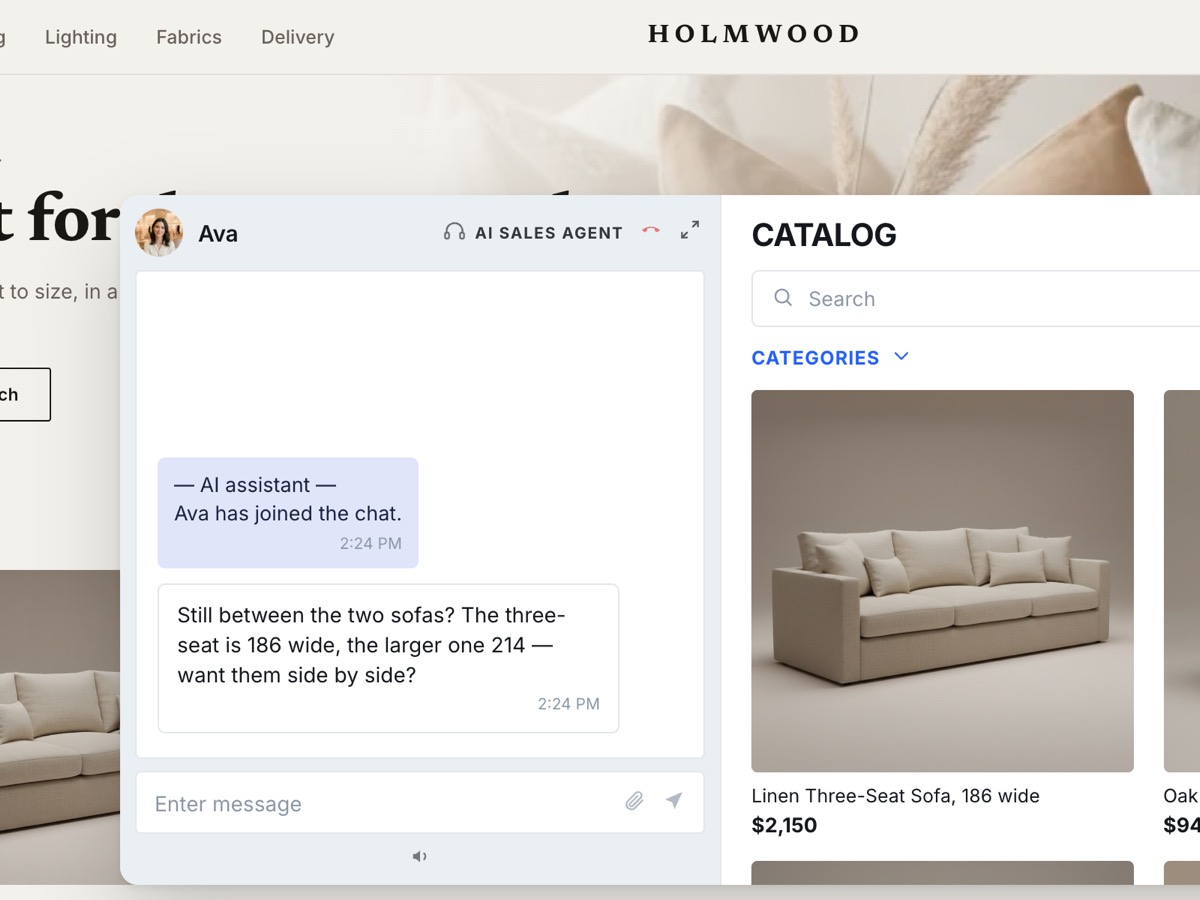
The dimensions are published, and nobody can picture them. The measurements have been on the page all along. What the shopper actually wants to know is whether it will feel too big in a room that is already full, and that is a judgement somebody makes for them out loud, not a number they are handed.
Undoing it costs a lorry, and they know that before they order. A two-person delivery does not go back in a mailer, and the hesitation this produces is priced into the basket long before checkout. It is the exact hesitation an advisor removes — and the exact one an unattended product page has no way to reach.

Show us the room you are selling into, and we will show you the call.
On selling what arrives on a lorry
All insights →




FAQs
That is the whole reason the call is video rather than a phone line. They turn the camera round and the advisor sees the floor, the light and the three things already in the room — the half of the decision that never reaches you otherwise. From there the answer stops being a guess about scale and becomes somebody who has seen the space saying whether it will sit right in it.
No, and a programme that required it would not survive its first season. The advisor holds the swatch on the call, which answers the colour question in the only light that matters — the customer's. What is worth filming once is the piece itself, moving, and that clip goes on the product page and keeps working for everyone who never books a call.
The session stays attached to the order, and the customer's own history stays in front of whoever picks the conversation up next. A months-long lead time is exactly where that matters: the person answering the question in March about an order placed in January is not starting from nothing, and the customer does not have to explain their room a second time.