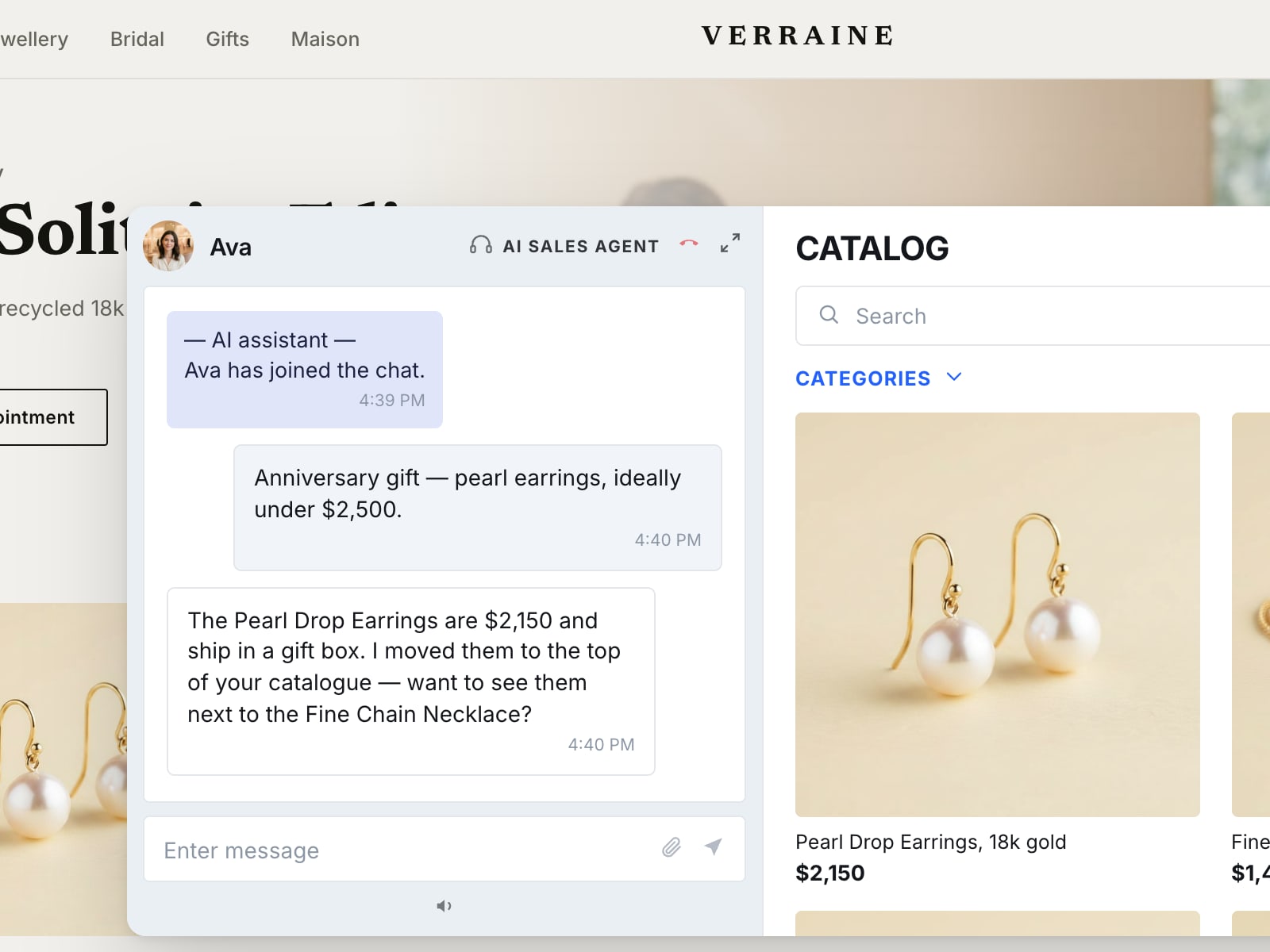
Sell to a room, not one shopper at a time










What holds through every event
An event is an hour with a beginning and an end. What decides whether it was worth running is everything around it — whose audience turned up, what happened to the one person who needed more than the room, and what is left on the site the next morning.
It is your storefront, not somebody's feed. A stream on a social platform buys you access to an audience on terms you do not set, and the follower it earns stays theirs. An event on your own site is sold to your own list and your own traffic: a smaller room, and the customer, the recording and the data stay with your domain.
A person is one tap away when the room is not enough. Broadcast does not fix doubt — if a buyer needs somebody to answer something before they will commit, no amount of reach changes that. The same session carries the AI Sales Agent for the questions that arrive at three in the morning, and a named advisor on live video, one to one, for the piece that needs a person.
The hour keeps working after it ends. The recording goes straight into your Shoppable Video Library with the same products still attached to it. The advisor's best hour convinces one room live and the next hundred people asynchronously, which is the difference between running events as a campaign and running them as a channel.
Streaming where the audience is, and streaming where the sale is
Both are real, and a brand with no list and no traffic should start where the crowd already is. The trade is worth naming out loud: reach you rent is the fastest way to be seen, and the slowest way to own anything.

“Live events showcase Hammitt products in person and let us create a story behind each piece.”
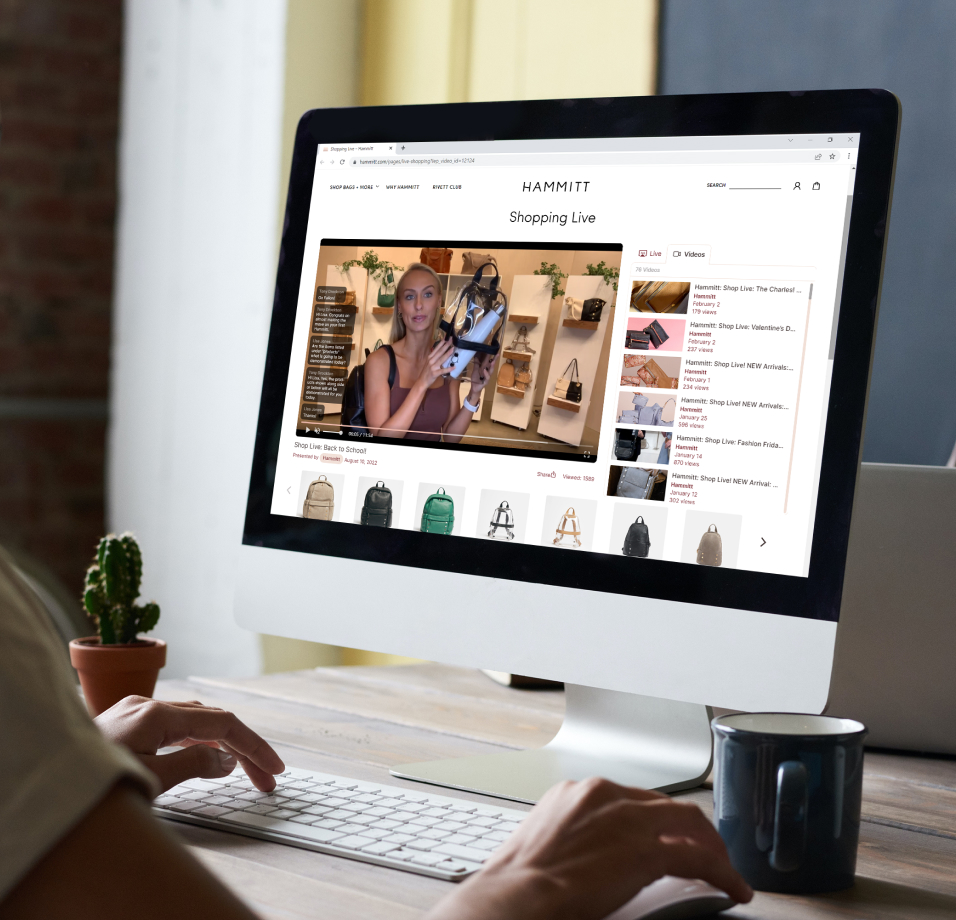
Hammitt's own Shopping Live page, running on Immerss.
Where an hour on camera is worth the room


FAQs
Less than most brands expect, and our own production guide puts the minimum at a phone with a decent camera, a ring light, a clip-on microphone, a tripod and a clean background, on a wired connection rather than office wi-fi. The rest is preparation rather than equipment: eight to ten products chosen in advance, a loose outline rather than a script, and the invitation out to your list about three days ahead. A studio build is a later decision, not an entry requirement.
About three quarters of an hour, and the shape matters more than the length. Our production guide runs five minutes to open and introduce the host, thirty to forty minutes of products at two to five minutes each, and five minutes to close — which is where the eight-to-ten product list comes from. Start two or three minutes late so people can arrive, and put your strongest pieces early: average watch time runs twelve to twenty-five minutes, so the first third of the hour is the part everybody sees.
On a consistent schedule rather than as a campaign — weekly is the cadence our guide recommends, and the consistency matters more than the frequency, because an audience that knows when you go live is what turns a one-off into a channel. Start with a rhythm you can actually hold through a busy quarter. One event a month that always happens beats four that stop in November.
It changes who you are inviting rather than whether it works. An event on your own storefront is sold to your own list and your own traffic, which is a smaller and much warmer audience than a feed — you are not competing for reach, you are giving people who already know you a reason to turn up. Follower count is not one of the things that decides this; having somebody to invite is.