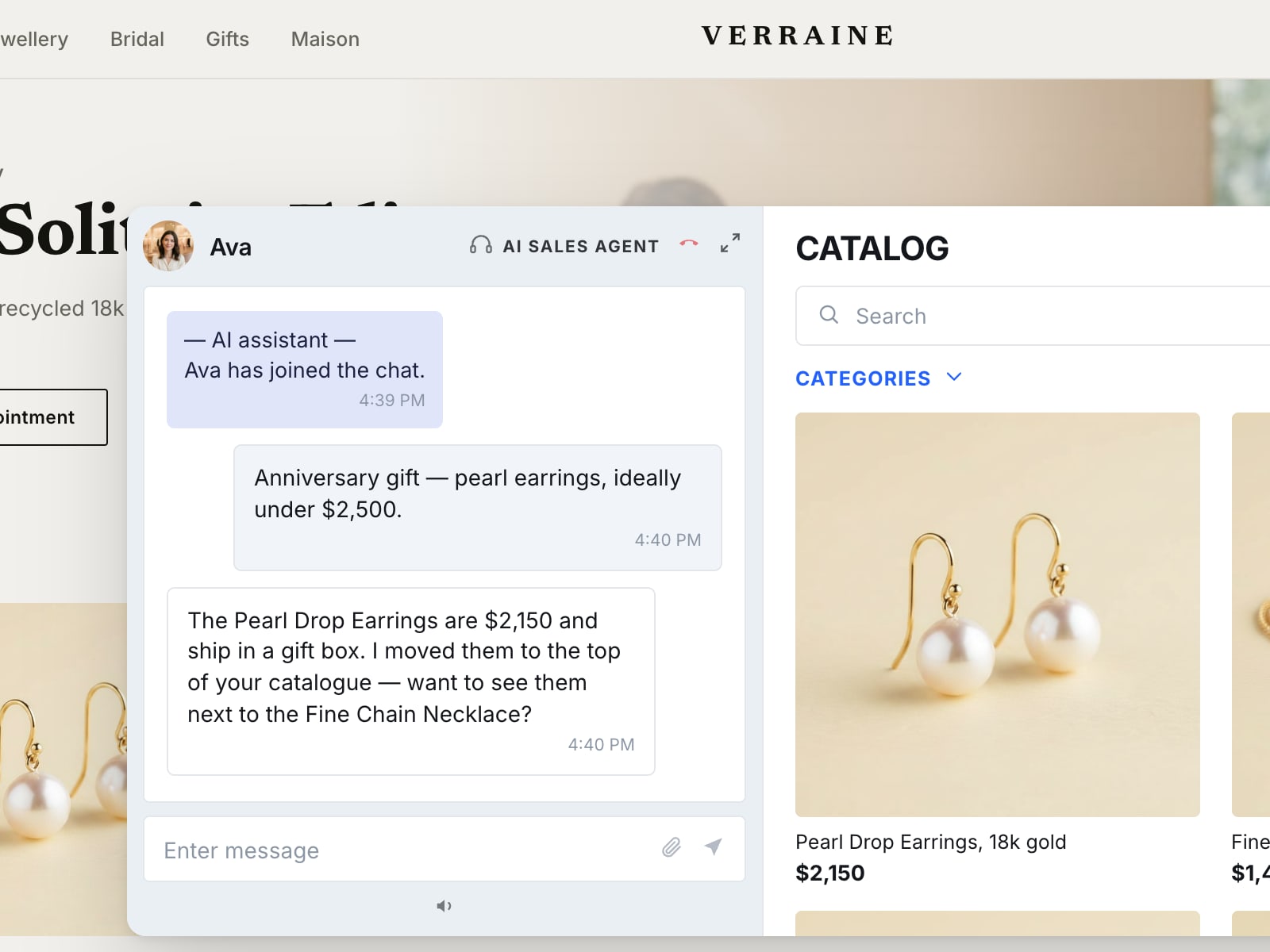
Keep every event selling after it ends









What a library is for
Most brands take one module first and add the next when the first has earned it, and the library is usually the second: it costs no new filming, because what goes into it is what you already did.
Expertise that compounds. The same explanation that convinces one client in a live room convinces the next hundred asynchronously. An advisor's best hour is not a Tuesday afternoon that happened — it is the best version of your sales pitch, on the shelf, and it is working while the shop is shut.
It does not replace the call, and should not be sold as though it did. Video sent to somebody is not a face-to-face close, and the two are aimed at different people. The library answers the shopper who wants to look before they ask; a live advisor answers the one who is ready to ask. Where a brand runs both, the library is what fills the second one's calendar.
The same film works harder on the product page. A recording earns its keep in the library and earns it again in the gallery of the piece it shows. That is the next module rather than a setting in this one: PDP Videos puts the clip where a shopper is already standing over the decision, instead of waiting to be browsed to.
Video that gets watched, and video that gets bought from
Both are real products and most storefronts should own one. The expensive mistake is pointing the first at a purchase that turns on trust: a shoppable-video widget aimed at a high-consideration sale still behaves like a widget — it plays, it tags, and it waits for the click.
Where the same question gets asked every week


FAQs
On yours. A PDP video goes into the gallery your product page already has, and the library of recordings sits on your own site, with your products attached to the films. Your photography, your product names, your prices and your add-to-bag button are untouched — nothing of ours is drawn over them. What that means commercially is that the audience and the content stay with your domain rather than with a feed.
Whatever you already make. Our own video framework treats the library as three layers: the events you record, the deliberate pieces — brand story, category education, how-to and tutorial films — and customer video collected through a post-purchase request programme. Most brands find the second layer is already sitting in a folder somewhere, shot for a campaign and used once.
The consumer data says the on-demand layer is the bigger one. Ninety-one per cent of shoppers watched video to learn about a product last year, forty-four per cent prefer short video to any other format when they are working out what something is, and eighty-two per cent say a video convinced them to buy. Product pages carrying video reviews convert at around three and a half times the rate of ones without. A live hour reaches the people free that hour; the recording reaches everyone else.
No — events are one source of stock, not the only one, and plenty of libraries are built from deliberate pieces rather than replays. Running events does make it cheaper, because the material arrives as a by-product of something you were doing anyway. The sensible order is the one most brands land on: take one module, and add the next when the first has earned it.