
"Not in This Boutique" Is Where the Service Begins
In a house, the words we don’t have it here rarely end a conversation. Often they begin the best part of it.
What happens on the floor
A client asks for a particular watch: the steel model, the smaller case. It isn’t in the boutique.
An experienced advisor doesn’t apologise and step back. They check whether another boutique holds one, and offer to have it sent. If none is available, they offer to add her to the list for the next allocation, and to call her personally when it arrives. And often, while she’s there, they show her a piece in the same spirit: not as a substitute pressed on her, but because she might not have seen it.
She leaves without the watch she came for, and with a stronger relationship with the house than when she arrived. Someone has taken her wish seriously and made it their task.
What happens online
The same client, the same watch, on the house’s website.
She selects the case size. Currently unavailable. The button is disabled. Perhaps there’s a link to contact us, leading to a form. Perhaps a notify me field. Most often, the page simply carries on displaying the piece it won’t sell her.
For a house, this is more than a missed sale. The client has expressed a precise desire for a specific piece, the most valuable signal a client can give, and the site has received it with silence.
The page where clienteling should start
An unavailable piece is a natural opening for exactly the kind of attention a house is known for. Online, it can be designed that way.
Say plainly what’s known. If a piece is expected, say when. If it’s allocated, say so, with discretion. If the house doesn’t know, never imply otherwise.
Offer to look. Our advisors can check availability across our boutiques. A real offer, from a person, made where she’s standing.
Offer to keep her in mind. A request to be contacted when the piece is available, taken by an advisor, not a form that disappears into an inbox.
Show, don’t substitute. Where a piece in the same spirit exists, an advisor can show it, on video, on the wrist, beside what she wanted, without pressing it on her.
Keep it in one place. Whoever follows up should know exactly what she asked for, the piece, the size, the case, without asking her to explain it again. The same continuity she’d have in the boutique.
For the wider retail case, where a sold-out size is a status rather than a relationship, we’ve written a separate guide on handling out-of-stock products.
What to measure
How often clients reach unavailable pieces: which pieces, which sizes, which markets.
How many of those visits lead to a conversation with an advisor.
How many requests become a purchase: of the original piece when it arrives, or of another.
Where Immerss fits
Immerss is a live commerce platform, and two of its modules carry this kind of attention.
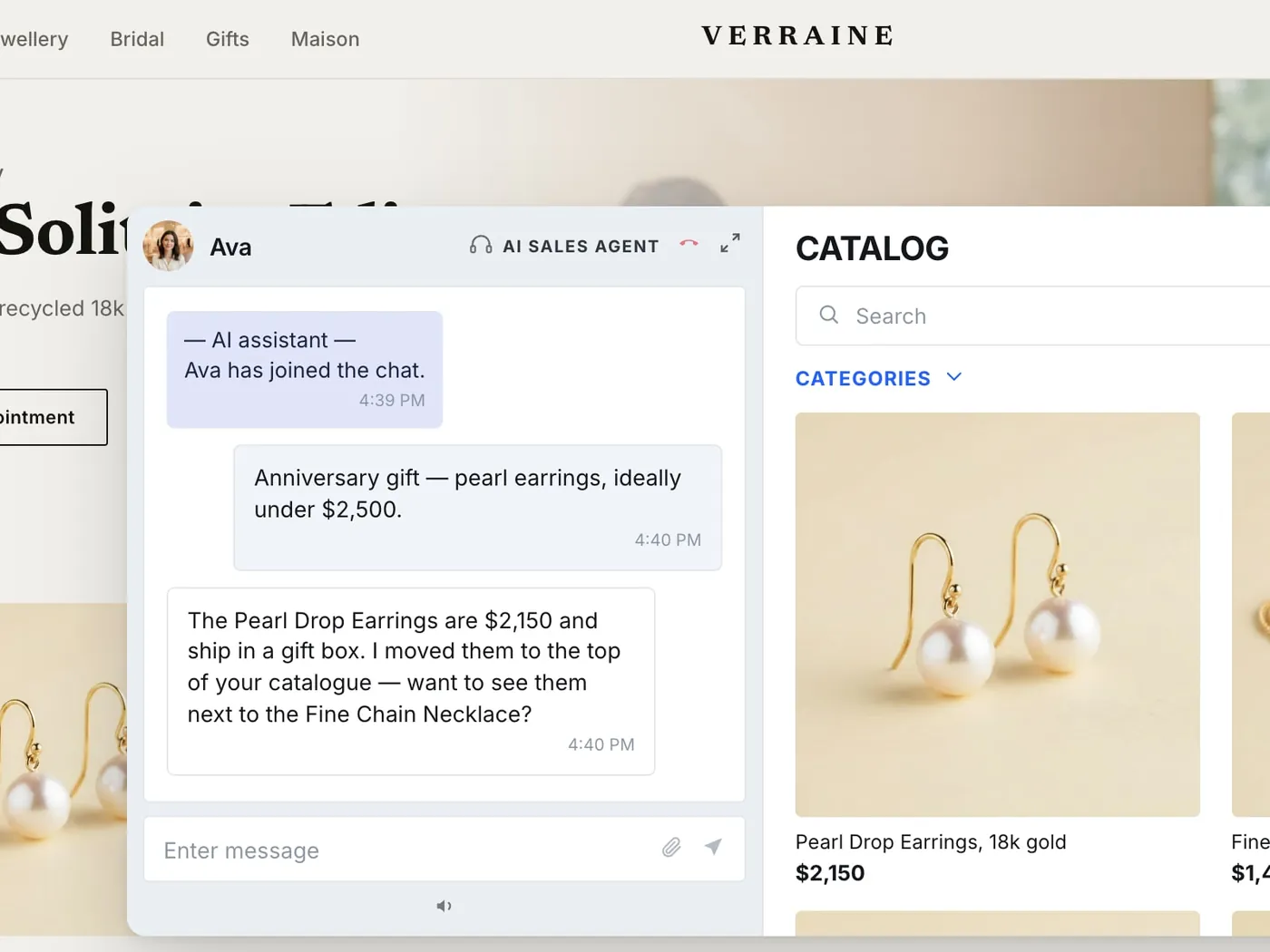
- AI Sales Agent: answers the client’s questions about a piece out of the house’s own catalogue, at any hour and on the house’s own site, and when she wants a person, it hands her to an advisor.
- Clienteling: Live Co-Shopping brings an advisor onto one-to-one video in one tap, with no download and no appointment. The advisor can take her request, check the house’s own availability and show a piece in the same spirit during the call. Outbound Clienteling lets the house reach her afterwards by text, email or phone from a shared client record, where her stated preferences and wishlist sit for any advisor to open, so that when the piece arrives, the call comes from someone who knows what she asked for.
The platform does not check stock across boutiques or keep the allocation list. The search, the list and the decision stay with the house and its advisors, where they belong.
The service stays human, because a person takes her wish and makes it their task; personal, because the follow-up starts from what she asked for, not from a template; and measurable, because the house can count how often clients reach unavailable pieces, how many of those visits become conversations and how many requests end in a purchase.
For a house, the entry point is a conversation and a 60-day pilot, on us.
On the floor, not in this boutique is where the service begins.
Online, it shouldn’t be where the page ends.
Frequently asked questions
They don't apologise and step back. They check whether another boutique holds one and offer to have it sent; if none is available, they offer to add the client to the list for the next allocation and to call her personally when it arrives; and often they show her a piece in the same spirit, not as a substitute pressed on her, but because she might not have seen it.
Because a client who selects a specific piece and size has expressed a precise desire, the most valuable signal a client can give. Online, it is usually met with a disabled button, a contact form or a notify-me field, so the house receives that signal with silence.
Say plainly what's known, with discretion for allocated pieces; offer an advisor to check availability across boutiques; offer to keep the client in mind, with the request taken by a person rather than a form; and, where a piece in the same spirit exists, let an advisor show it without pressing it on her.
No. Availability, allocation lists and the search across boutiques stay with the house's own systems and advisors. Immerss gives the client a way to reach an advisor from the page, on live video, and gives the advisor a client record to follow up from.