
When the Advisor Leaves, Does the Client Relationship Leave Too?
Every luxury house knows the scenario, and few discuss it openly.
A strong advisor moves to another house, or retires, or relocates. Within months, some of her most valuable clients are buying elsewhere. Not because of anything the house did wrong in that moment, but because the relationship was with her, and it went where she went.
The usual framing treats this as a staffing or loyalty problem. It is better understood as a continuity problem, and the person it harms most is not the house but the client.
What the client actually loses
From the client’s side, a trusted advisor leaving is a genuine loss of service.
The new person does not know her sizes in this house versus that one. Does not know that she returned a piece last spring, and why. Does not know she buys for her mother in November, or that she dislikes a particular cut, or prefers to be contacted before a piece reaches the floor.
So the client is asked, in effect, to start again. At a level of spend where being known is a large part of what she’s paying for, that is not a neutral handover. It is a downgrade, experienced personally.
Some clients follow the advisor. Many simply drift, because nothing about the house now feels like theirs.
Where the relationship actually lives
In most houses, the valuable part of a client relationship is held in places the house doesn’t reach.
The advisor’s personal phone and messaging apps. Private notes. Memory. The CRM usually holds transactions and some structured fields, but rarely the things that make the relationship work. That is rational: an advisor has little reason to spend time entering nuance into a system that doesn’t help her serve the client better.
It’s worth stating without judgement. Advisors keep the real book where it’s useful to them. If the house’s systems were the most useful place to hold it, that’s where it would be.
This is a different boundary from the one most clienteling programmes worry about. The familiar gap is between channels: the client who is known in the boutique and anonymous on the website, the client book that stops at the door. Here the gap is between people. The relationship may cross channels perfectly well and still not survive a change of advisor.
The wrong answer
The instinctive response is to capture it: mandate CRM entry, restrict personal messaging, tighten contracts.
Some of that has its place. But as a primary strategy it tends to fail, for two reasons.
It treats the advisor as a risk to be managed rather than the person the client trusts. Advisors notice, and the best of them leave for houses that don’t do it.
And it misreads what’s being protected. The trust a client places in an individual can’t be transferred by moving her notes into a database. Continuity isn’t achieved by confiscating knowledge. It’s achieved by making sure the relationship happens somewhere the house is also present.
The better answer: make the house the natural place
Let the client reach her advisor through the house. If the most convenient way for a client to talk to her advisor is the advisor’s personal number, that’s where the relationship will live. If the house offers something better (reaching her advisor from the product page, by text or on video, with her history visible to the advisor in the moment), the relationship grows inside the house instead of beside it.
Make history useful to the advisor first. Context that appears when a client gets in touch, such as what she owns and what she asked about last time, helps the advisor serve her. That’s a reason to keep it current that has nothing to do with compliance.
Plan the introduction, not just the handover. When an advisor moves on, the client should meet her successor in a way that honours the previous relationship: ideally with the outgoing advisor making the introduction, and the new one arriving already briefed.
Treat continuity as a stated standard. If your advisor changes, you won’t have to start again is a promise worth making explicitly. Clients at this level value it, and it shifts the house’s obligation from retention to service.
None of this asks advisors to give anything up. It gives them a better place to do the work they already do, and a house built this way is also a better house to join: a new advisor inherits relationships that come with context, instead of a list of names. The broader model is set out in our guide to digital clienteling.
What to measure
Client retention through an advisor transition: spend in the twelve months after a change against the twelve before.
Share of client conversations happening through house channels rather than personal ones. Not as a surveillance metric, but as a sign of whether the house is the most useful place for the relationship.
Time to first purchase with a new advisor after a handover. Long gaps suggest the client didn’t feel known.
Judge each against your own history. Transitions are infrequent, so a single departure is a case to study rather than a trend.
Where Immerss fits
Immerss is a live commerce platform that gives the relationship a home on the house’s own site. Three modules work together:
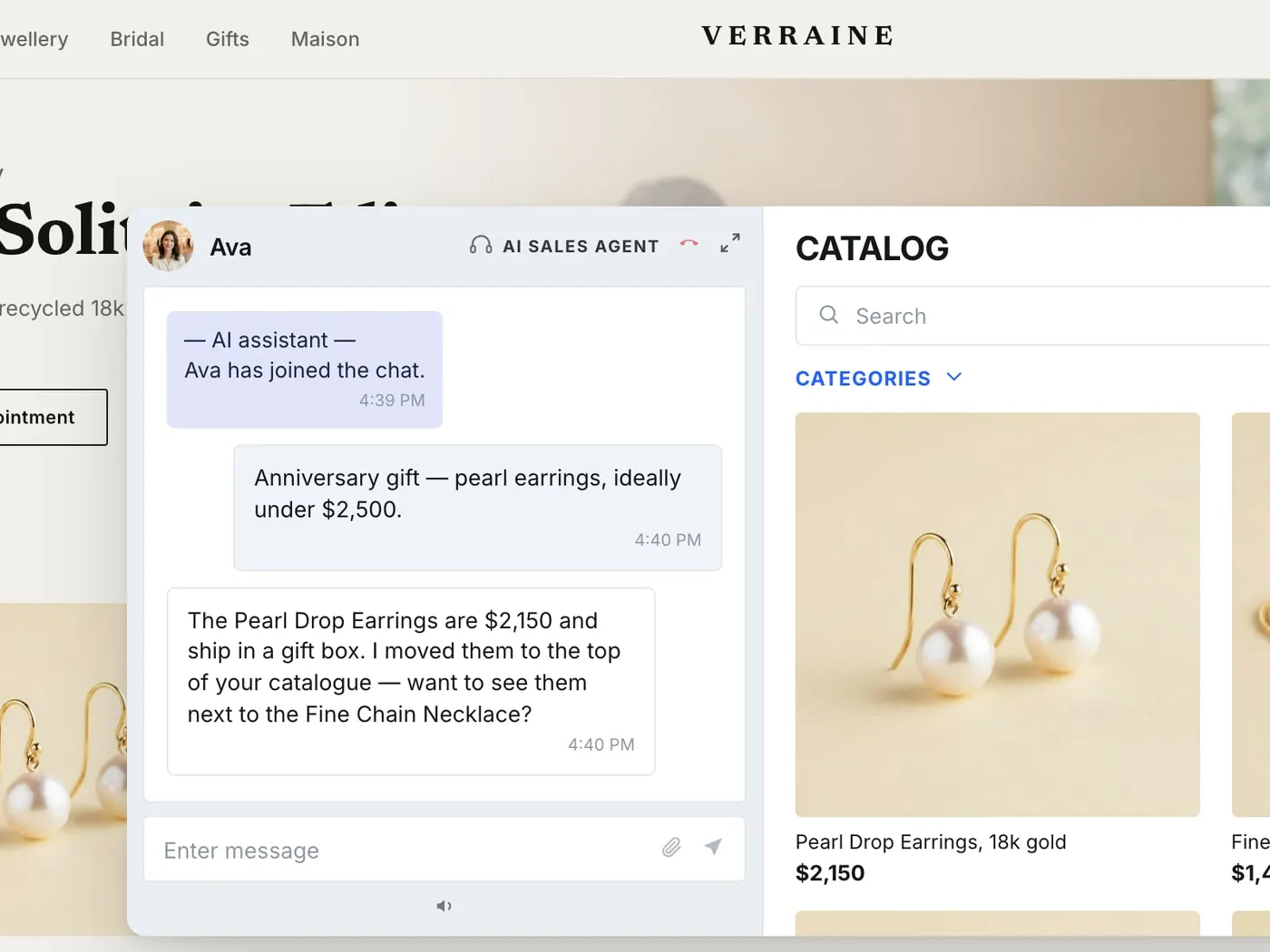
- Clienteling: Live Co-Shopping lets a client reach her advisor from the house’s site, by text or in a one-to-one video consultation where the advisor can show a piece and place it in her basket during the call. Outbound lets the advisor reach her first, when a piece she would want arrives. Conversations are routed to the named advisor where one exists, with the client’s history visible in the moment.
- AI Sales Agent: answers the questions that don’t need a person at any hour, and hands the conversation to an advisor, with its context, when they do.
- Video Commerce: Live Shopping Events, shoppable video and PDP video, so the house’s own voice reaches clients between conversations.
The relationship stays human, because it is still with a person; personal, because the advisor (whoever it is this year) arrives knowing her; and measurable, because it now happens where the house can see continuity hold or break.
For a house, the entry point is a conversation and a 60-day pilot, on us.
A house can’t own a relationship. It can be the place the relationship happens.
That’s the difference between a client who leaves with her advisor and one who is simply introduced to the next.
Frequently asked questions
Because the relationship was held by the advisor, not the house. The things that make it work (her sizes in this house, the piece she returned and why, who she buys for in November) usually live in the advisor's phone, private notes and memory. A successor starts without them, so the client is asked to start again, and at this level of spend that is experienced as a downgrade of service.
Not as the primary strategy. Mandated entry, restricted personal messaging and tighter contracts treat the advisor as a risk rather than the person the client trusts, and the best advisors leave for houses that don't do it. Advisors keep the real book where it is most useful to them; the durable fix is to make the house's own channels and history the most useful place to serve the client.
Plan the introduction, not just the handover. Ideally the outgoing advisor introduces the client to her successor, and the successor arrives already briefed on what she owns, what she asked about last and how she likes to be contacted. The aim is that the client never has to explain herself twice.
Three measures: client spend in the twelve months after an advisor change against the twelve months before; the share of client conversations happening through house channels rather than personal ones, read as a sign of usefulness rather than surveillance; and time to first purchase with a new advisor after a handover, where long gaps suggest the client didn't feel known.