
A Fault Is Not a Ticket. It's a Test of the Relationship.
At this level, things still occasionally go wrong. A clasp fails. A watch stops. A stitch gives on a bag carried every day for a year. A stone loosens in its setting.
These are rare, and every house has a process for them. But the process usually misunderstands what the client is experiencing, and so misses the most revealing moment in the entire relationship.
What the client does first
When something goes wrong with a significant piece, a client’s first instinct is almost always to contact the person she bought it from.
Not the house in the abstract. Her advisor: the one who showed her the piece, knew why she chose it, and would understand immediately what it means that it has failed.
What she tends to meet instead is a repairs process. A form. A reference number. A turnaround estimate measured in weeks. A piece collected by courier and returned the same way, with little or nothing in between.
Each step is sensible. Repairs need logging; ateliers need scheduling. But to the client, it can feel as though a relationship has been converted into a transaction at exactly the moment she needed it to be a relationship.
Why this moment reveals so much
Up to the point of a fault, everything a house shows a client is effortless. The boutique, the advisor’s attention, the presentation of the piece, the packaging. None of it is tested, because nothing has gone wrong.
A fault is the first time the client learns how the house behaves under strain. Does anyone take it personally? Does her advisor know? Is the piece treated as something precious, or as a job number?
How a house handles a problem tells a client more about it than any campaign. It is the moment a promise of care is either kept or quietly withdrawn.
What experienced houses do
The houses that handle this well tend to share a few instincts.
The advisor hears about it first, or immediately. Even if the repair itself goes to an atelier, the relationship stays with the person who knows the client. A call from her advisor saying I’ve heard, I’m sorry, I’m looking after this changes the entire experience.
The client is kept informed without having to ask. A repair taking several weeks is acceptable. Several weeks of silence is not. An occasional update (the piece has arrived at the atelier, this is what they found, this is when to expect it) keeps her connected to something she cares about.
The piece is treated as hers. Language matters. Your watch rather than the item. We’ll take care of it rather than it will be processed.
The return is a moment, not a delivery. Where possible, the piece is handed back personally, or at least presented with the same care as when it was first sold.
What gets lost online
For clients who buy or maintain their relationship with a house largely online, the advisor is often absent from after-sales entirely. The fault is reported through a form, the repair runs through logistics, and the person who knows her never hears about it.
So the client experiences the problem with none of the relationship that made the original purchase feel personal. The house may never learn what that cost, because a client who feels forgotten rarely complains. She simply buys the next piece somewhere else.
What good looks like
Route faults to the advisor, not just to after-sales. The repair can follow its process; the relationship shouldn’t.
Let the client show the problem, not just describe it. A short video conversation where she can show her advisor the fault (the clasp, the setting, the mark) is faster and more reassuring than photographs attached to a form, and lets the advisor tell her honestly what to expect.
Keep her informed proactively. Updates she didn’t have to chase.
Write it into her record. The fault, the repair and how it was resolved belong in the client’s history, so that whoever speaks to her next, in the boutique or online, already knows.
Close the loop personally. The return of a repaired piece is an opportunity to rebuild the moment of care.
A caution
It is sometimes claimed that a well-handled problem leaves clients more loyal than if nothing had gone wrong. The evidence for that is mixed, and it would be a strange thing to plan around. The better argument is simpler: a fault handled coldly can quietly end a relationship worth a great deal, and a fault handled with care very often preserves it.
What to measure
Who the client heard from first. Of the faults reported, how many reached her advisor, and how quickly.
Updates sent against updates chased. Every message where the client had to ask for news is one the house should have sent.
Repeat purchase after a repair, against clients with no fault on record. A wide gap says after-sales is ending relationships.
Where Immerss fits
Immerss is a live commerce platform; it does not manage repairs, track their status or handle logistics. What it does is keep the advisor in the conversation while the after-sales process runs.
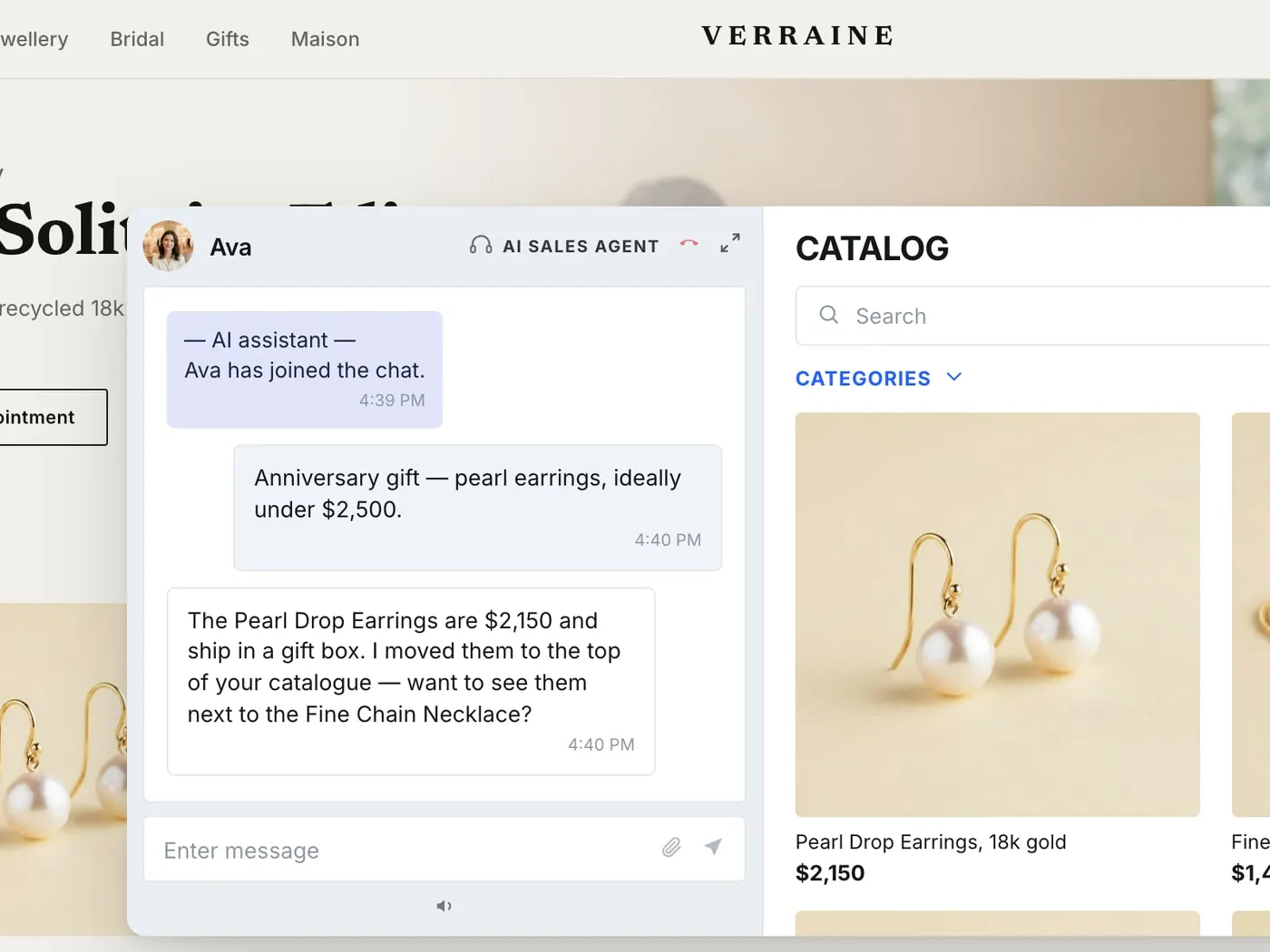
- Clienteling: Live Co-Shopping lets a client reach an advisor from the house’s own site on one-to-one video, where she can show the piece and the fault and hear honestly what happens next. Where she has her own advisor, the conversation is routed to them. Outbound keeps service history in a shared client record, and lets her advisor send the update or the invitation to collect the piece in person.
- AI Sales Agent: answers the first question at any hour and hands the conversation to an advisor, with its context intact, rather than to a form.
The approach stays human, because a person the client knows answers; personal, because the conversation starts from her piece and her history; and measurable, because the house can see which faults reached an advisor and which clients came back.
A fault tests the relationship; so does the moment a client hesitates over a piece in the first place. We wrote about noticing a client circling a piece without watching her, and about how a small team keeps a named relationship with thousands of clients.
For a house, the entry point is a conversation and a 60-day pilot, on us.
A repairs process can be efficient and still leave a client feeling forgotten.
The fault isn’t the test. What the house does next is.
Frequently asked questions
Her advisor, first or immediately. The repair itself can go to an atelier and follow its process, but the relationship should stay with the person who knows the client and understands what the piece means to her. A short call saying the advisor has heard and is looking after it changes the whole experience.
Often enough that she never has to ask. A repair taking several weeks is acceptable; several weeks of silence is not. An update when the piece reaches the atelier, another when they know what they found, and a date to expect it back keep her connected to something she cares about.
The evidence for the so-called recovery paradox is mixed, and it is not something to plan around. The stronger argument is simpler: a fault handled coldly can quietly end a relationship worth a great deal, and a fault handled with care very often preserves it.
The advisor. For clients who buy largely online, a fault is often reported through a form and the repair runs through logistics, so the person who knows her never hears about it. She experiences the problem with none of the relationship that made the original purchase feel personal.