
A House That Knows Her Doesn't Guess
There are two very different things that both get called personalisation, and luxury retail tends to blur them.
The first is what a good advisor does. She knows that a client takes a particular size in this house, dislikes a certain cut, buys for her mother each winter, prefers to hear about new pieces before they reach the floor. She knows these things because the client told her, or because she watched carefully and confirmed them over years.
The second is what most digital systems do. They infer what a client wants from what she clicked, viewed and bought, and present the result under a heading like Selected for you.
The first is knowledge. The second is a guess. And at this level, a guess presented as knowledge reads as something worse than a mistake.
Why a wrong guess lands badly here
Consider how often a luxury purchase isn’t for the person making it.
A client buys a watch for her partner’s fiftieth. A piece for her daughter’s graduation. A gift for a business relationship. Each of these teaches an inference engine something untrue about her, and her Selected for you page now reflects her partner’s taste, or her daughter’s. The gift buyer is among the most valuable clients a house serves, and the one a profile misreads most reliably.
In mass retail, that’s merely clumsy. In luxury, it lands differently. The house has spent years building an image of attentiveness, of knowing its clients. A digital surface that confidently misunderstands her undercuts exactly that promise, and does so under a heading that claims the opposite.
There’s a register problem too. An advisor would never tell a client, uninvited, based on what you’ve been looking at, we think you’ll like this. It would sound presumptuous: a stranger claiming to understand her taste from a glance. A personalised feed often says precisely that, constantly.
When inference turns intrusive
Some guesses go further than clumsy, and this deserves to be stated plainly.
Inference can guess at a client’s life, not just her taste. Browsing for christening gifts may lead a system to conclude a client is expecting. Looking at mourning jewellery, that she has suffered a loss. A change in browsing pattern, that her circumstances have changed.
A good advisor would never presume any of these. She would wait to be told, and if told, would respond with discretion. A system that acts on such inferences uninvited isn’t personalising. It’s intruding, at exactly the level of retail where discretion matters most. And when the inference is wrong, the effect can be hurtful.
The line here should be absolute: a house does not infer a client’s personal circumstances from her behaviour, and does not act on such inferences if its tools produce them.
The asymmetry: asking versus guessing
What is striking is how much effort goes into inferring things a house could simply know.
A recommendation model may weigh many signals to estimate whether a client is buying for herself. An advisor asks: is this for you, or a gift? The answer is instant, accurate, and, handled gracefully, part of the service itself.
The same applies to taste, occasion, size, timing. What a client has said is better information than anything inferred from her clicks, because it’s what she meant and not what was supposed.
None of this makes behaviour worthless. A client who keeps returning to one piece is telling the house something real, and there is a way to notice that without watching. The difference is in what the house does next. A signal is a reason to offer a conversation. It is not a conclusion to act on.
What good looks like
Keep gifts out of her profile. When a purchase is for someone else, it shouldn’t shape what the house shows her. Asking, quietly and at the right moment, makes this possible.
Let stated knowledge lead. Where her advisor holds real knowledge of her preferences, that should outweigh anything inferred from browsing.
Be modest about inference. Where a site does surface suggestions, frame them honestly, as new this season or pieces from the collection you asked about, and never as a personal understanding it doesn’t have.
Never act on inferred life events. Not in recommendations, not in messages, not in outreach.
Let her correct it. A client should be able to tell the house, simply, that a suggestion isn’t for her.
What to measure
How often personalised suggestions are acted on, compared with non-personalised ones. If Selected for you underperforms New arrivals, the inference may be eroding trust.
Share of high-value purchases that are gifts. Few houses have counted, and a profile-based system assumes the answer is none.
Whether client-stated preferences are captured and used across channels, and not only in the advisor’s own notes.
Where Immerss fits
Immerss is a live commerce platform; it does not run the Selected for you rows on a house’s site. What it does is give the client a way to say what she wants, to someone who can act on it, from the piece itself.
- Clienteling: Live Co-Shopping lets a client reach an advisor from the house’s own site, by text or on one-to-one video. Who it’s for, what the occasion is, what she already owns: the advisor establishes these the way she would on the floor, by asking, and can place the piece in her bag during the call. Outbound keeps sizes, stated preferences and past conversations in a shared client record, so what she has told one advisor is there for the next, and a message to her starts from what she said.
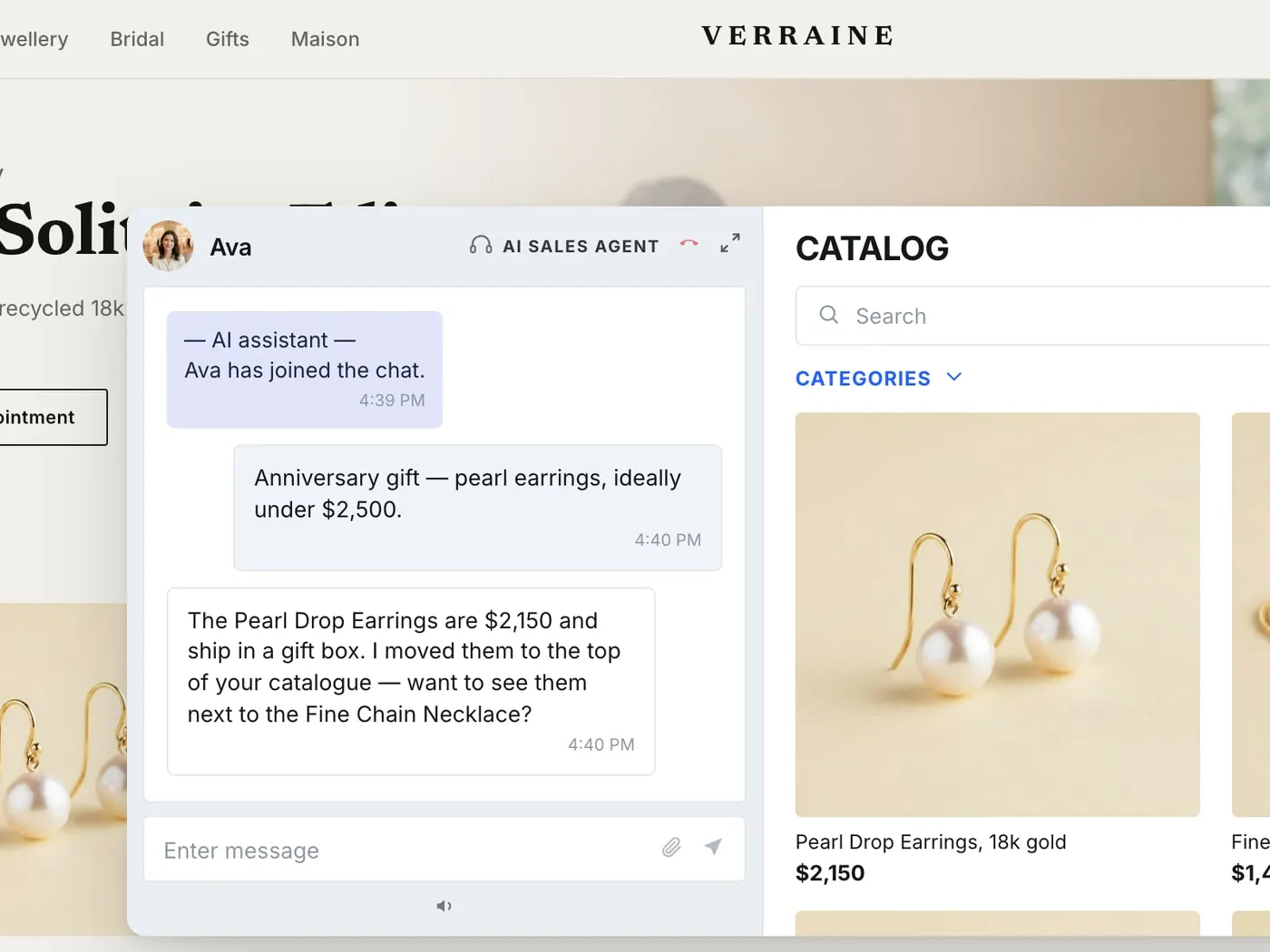
- AI Sales Agent: answers out of the house’s catalogue at any hour. It does follow what a client is looking at during her visit, so the advice here applies to it as well: that context is there to make an answer relevant, and what she types leads. When the conversation wants a person, it passes to an advisor with the thread intact.
The approach stays human, because the knowledge is held by an advisor she has spoken to; personal, because it starts from what she said and not from what was supposed; and measurable, because the house can see which stated preferences were recorded and what came of them.
For a house, the entry point is a conversation and a 60-day pilot, on us.
An advisor’s knowledge of a client was always built on listening.
A house that wants its digital channel to feel the same should start where she did: by asking, and by never presuming what it hasn’t been told.
Frequently asked questions
Clienteling rests on what a client has told her advisor, or what the advisor observed and confirmed over years. Most digital personalisation infers what she wants from what she clicked, viewed and bought. The first is knowledge. The second is a guess, and it should not be presented as knowledge.
Because a house has spent years building an image of attentiveness. Many luxury purchases are gifts, so an inference engine learns something untrue about the client, and a page headed Selected for you then shows her someone else's taste under a heading that claims to know hers.
No. A house does not infer pregnancy, health, bereavement, a change in relationship or financial circumstances from a client's behaviour, and does not act on such inferences if its tools produce them. A good advisor waits to be told, and responds with discretion when she is.
Honestly. New this season, or pieces from the collection she asked about, describes what the suggestion is. A heading that claims a personal understanding the site does not have turns every wrong guess into evidence against the house.