
The Service Visit Is the Relationship's Heartbeat
Most of the moments that bring a client back to a house have to be created. A new collection, an event, an invitation, an advisor’s carefully judged message.
One kind of return doesn’t need creating at all. It is built into the objects themselves.
A mechanical watch needs servicing every few years, at an interval that depends on the maker and the movement. Fine leather benefits from conditioning. Jewellery wants cleaning, its settings checked, a ring resized as a life changes. These visits are predictable and recurring, and they are the only point of contact that brings the client back without anyone having to sell her anything.
That makes the service visit one of the most valuable moments in the relationship. Most houses treat it as logistics.
What usually happens
A client’s watch is due for service, or her bag needs attention, or a ring needs resizing.
She hands it in, or arranges a collection. She receives a reference number and an estimated turnaround, often measured in weeks. Her piece goes to an atelier. Some time later she’s told it’s ready, and it comes back.
All of it is reasonable. Ateliers need scheduling and pieces need tracking. But somewhere in that process, the advisor who knows her (who sold her the piece, who knows what it means to her) usually never hears about it.
So a moment that could renew the relationship passes as a transaction.
Why this moment is different
The service visit has a quality almost nothing else in the relationship has: there’s no pitch in it.
Every other contact a house initiates carries at least a faint question: is she ready to buy something? The client knows it, even when it’s handled gracefully. The service visit has none of that. The house is simply caring for something she already owns.
That makes it the most trusting point of contact in the relationship, and the one where a client is most open to feeling looked after.
It’s also predictable. A house knows, roughly, when each piece will next need attention. Few touchpoints in luxury retail can be anticipated so reliably.
The temptation to resist
Because the service visit brings a client back, it’s tempting to use it to sell. While you’re here, have you seen the new collection?
It’s worth resisting firmly.
The visit’s value rests entirely on its having no agenda. The moment it’s used as an opening for a sale, the client recognises it, and the one point of contact that felt purely like care starts to feel like everything else. What was trust becomes another occasion to be guarded.
If she asks about something new, that’s different and welcome. But the house shouldn’t lead with it. The service visit earns its value by being exactly what it appears to be.
What good looks like
Her advisor knows. Even when the work goes to an atelier, the person who knows her is told the piece has come in, and acknowledges it personally. A line from someone she knows changes what the reference number means.
She hears what the atelier found. A turnaround of several weeks is acceptable; several weeks of silence is not. A note that the piece has arrived, and then what was done to it (the movement cleaned, a worn clasp replaced, a setting tightened) keeps her connected to something she cares about, and shows her the house looked closely.
The piece is treated as hers. Your watch, not the item. Small differences in language carry a great deal at this level.
The return is a moment, not a delivery. Where possible the piece is handed back personally, or presented with the same care as when it was first sold.
It goes into her record. What was serviced, when, and what was found belong in the client’s history, so that whoever speaks to her next already knows the piece has been looked after, and when it will next need it.
The next visit is anticipated, not chased. A gentle note when service is approaching, framed around the piece’s care and not around a visit to the boutique.
What gets lost online
For clients whose relationship with a house is partly or largely digital, the advisor is often absent from servicing entirely. A form is submitted, a courier collects, an atelier works, a courier returns.
Nothing is wrong with any step. But the person who would have made it feel like care is never part of it.
What to measure
Share of service visits where the client’s advisor was informed and made contact.
Client spend in the period after a service visit compared to before. Not as a target to push, but as a sign of whether the visit strengthened the relationship.
Proportion of service reminders acted on, which reflects whether clients trust the house with their pieces.
Where Immerss fits
Immerss is a live commerce platform; it does not schedule services, track repairs or manage logistics. What it does is keep the advisor in the visit while the atelier and the couriers do their part.
- Clienteling: Outbound keeps service history in a shared client record, beside her preferences and past conversations, and lets her advisor send the service reminder as a personal message with a reason she recognises. Live Co-Shopping lets a client reach an advisor from the house’s own site, by text or on one-to-one video, where she can show the piece and talk through what it needs. Where she has her own advisor, the conversation is routed to them.
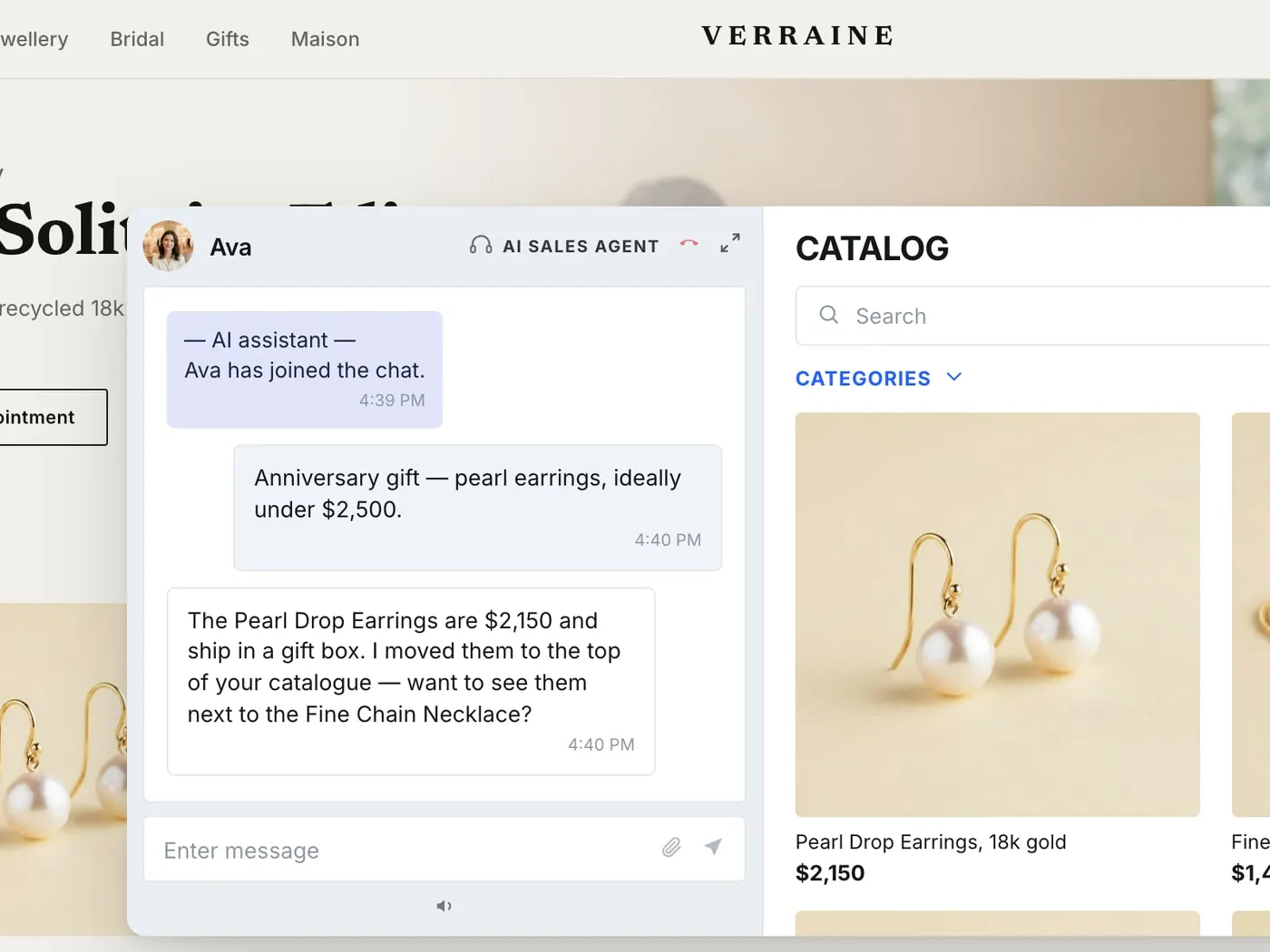
- AI Sales Agent: answers a care question at any hour and hands the conversation to an advisor, with its context intact, when it needs a person.
The approach stays human, because the note comes from someone she knows; personal, because it starts from her piece and its history; and measurable, because the house can see which service visits reached an advisor and which reminders were acted on.
Planned care is one half of after-sales. The other is the unplanned one, and we wrote about why a fault is a test of the relationship, not a ticket. The record matters for a second reason too: it is what keeps the relationship with the house when the advisor leaves.
For a house, the entry point is a conversation and a 60-day pilot, on us.
Every other reason a client returns to a house has to be made.
The service visit is already there, built into the piece, waiting to be treated as the relationship and not the paperwork.
Frequently asked questions
It is the one recurring contact with no pitch in it. The house is caring for something the client already owns, so she has nothing to be guarded about. That makes it the most trusting point of contact in the relationship, and one of the few that can be anticipated in advance.
No. The visit's value rests on its having no agenda. Once it is used as an opening for a sale, the client recognises it and the one contact that felt purely like care starts to feel like every other. If she asks about something new, that is welcome; the house should not lead with it.
Her advisor. The work can go to an atelier and follow its own schedule, but the person who knows the client should be told the piece has come in, acknowledge it personally and stay in the conversation until it is returned.
As a personal note from her advisor, framed around the care of the piece and not around a visit to the boutique. Intervals vary by maker and movement, so the note should follow the piece's own schedule and give her a reason she recognises.