
Best Live Shopping Platforms for Jewelry Retailers in 2026: A Comparison & Buying Guide
Live shopping has split into two very different models, and for a jewelry retailer the choice between them decides whether the technology helps or hurts. Broadcast platforms (TikTok Shop, Instagram Live, Amazon Live) are built for $20–$300 impulse buys, where the job is reach and urgency. Consultation platforms (Immerss, Bambuser) are built for $1,000–$100,000+ considered purchases, where the job is one buyer, one advisor and every question answered before the card comes out. This guide compares the leading live shopping platforms in 2026 specifically through a jewelry lens — conversion, average order value, pricing, jewelry-specific features, and how to choose.
The short version: most “live shopping” advice is written for fashion and beauty, where the broadcast model thrives. Jewelry is the opposite kind of purchase, and it needs the opposite kind of platform.
What makes a live shopping platform right for jewelry?
A live shopping platform is right for jewelry when it supports a high-consideration, high-AOV, trust-driven sale — not a fast, low-price impulse buy. Jewelry buying behavior is unlike fashion or beauty in four ways that should drive the platform decision:
- The price is high and the decision is slow. A $5,000–$50,000 piece is deliberated over days or weeks, not seconds. The platform has to support a guided, unhurried conversation, not a stampede checkout.
- The customer needs to see the piece. Sparkle, color, cut, and scale only read in high-definition, close up. Jewelry demands 4K video and macro-lens support, which most broadcast tools don’t prioritize.
- Trust is the whole sale. Spending five figures on something you can’t hold requires a person who can answer questions, show certificates and appraisals, and build confidence. That’s a one-to-one interaction, not a one-to-many broadcast.
- The relationship is the asset. Jewelry customers return for anniversaries, upgrades, and milestones. The platform should support clienteling — customer history, preferences, follow-up — not just a single transaction.
Hold those four against any platform and the field narrows fast.
Broadcast vs. consultation: which live shopping model fits jewelry?
The consultation model fits jewelry; the broadcast model fits fashion, beauty, and trending impulse products. The two models are built for opposite purchases:
| Broadcast commerce (one-to-many) | Consultation commerce (one-to-one) | |
|---|---|---|
| Format | One stream → many viewers | Scheduled private video appointment |
| AOV sweet spot | $20–$300 | $1,000–$100,000+ |
| Typical conversion | Low | High |
| Decision time | Seconds to minutes | Days to weeks |
| Best for | Fashion, beauty, trending items | Jewelry, watches, luxury, B2B |
| Wins on | Reach, volume, impulse | Trust, guidance, high AOV |
For jewelry, broadcasting a $15,000 ring to ten thousand viewers optimizes for exactly the wrong thing. You don’t need reach into a mass audience of impulse buyers; you need depth with a small number of serious, qualified ones. That is the consultation model, and it’s why the rest of this comparison weighs platforms primarily on how well they serve a guided, one-to-one jewelry sale.
Comparison matrix: live shopping platforms for jewelry (2026)
Here’s how the leading platforms compare, scored for a jewelry use case specifically.
| Platform | Model | Best for jewelry? | Starting price | Typical conversion | AOV range |
|---|---|---|---|---|---|
| Immerss | Consultation | Built for it | $800–2,500/mo | High (consultation) | $5,000–$50,000 |
| Bambuser | Both | Enterprise only | ~$5,000–15,000+/mo | Varies | Varies |
| Zoom + manual | Consultation | Testing only | $15–20/mo | High (consultation) | $1,000+ |
| TikTok Shop | Broadcast | Poor fit | Free + ~5% | Low | $30–$150 |
| Instagram Live | Broadcast | Poor fit | Free | Low | $50–$200 |
| Amazon Live | Broadcast | Poor fit | Free (sellers) | Low | $40–$300 |
| YouTube Shopping | Broadcast | Poor fit | Free | Low | $50–$250 |
Conversion and AOV figures are typical industry ranges and documented platform benchmarks, not guarantees; your numbers depend on your inventory, audience, and execution.
The best live shopping platforms for jewelry, compared
1. Immerss — built for jewelry consultation
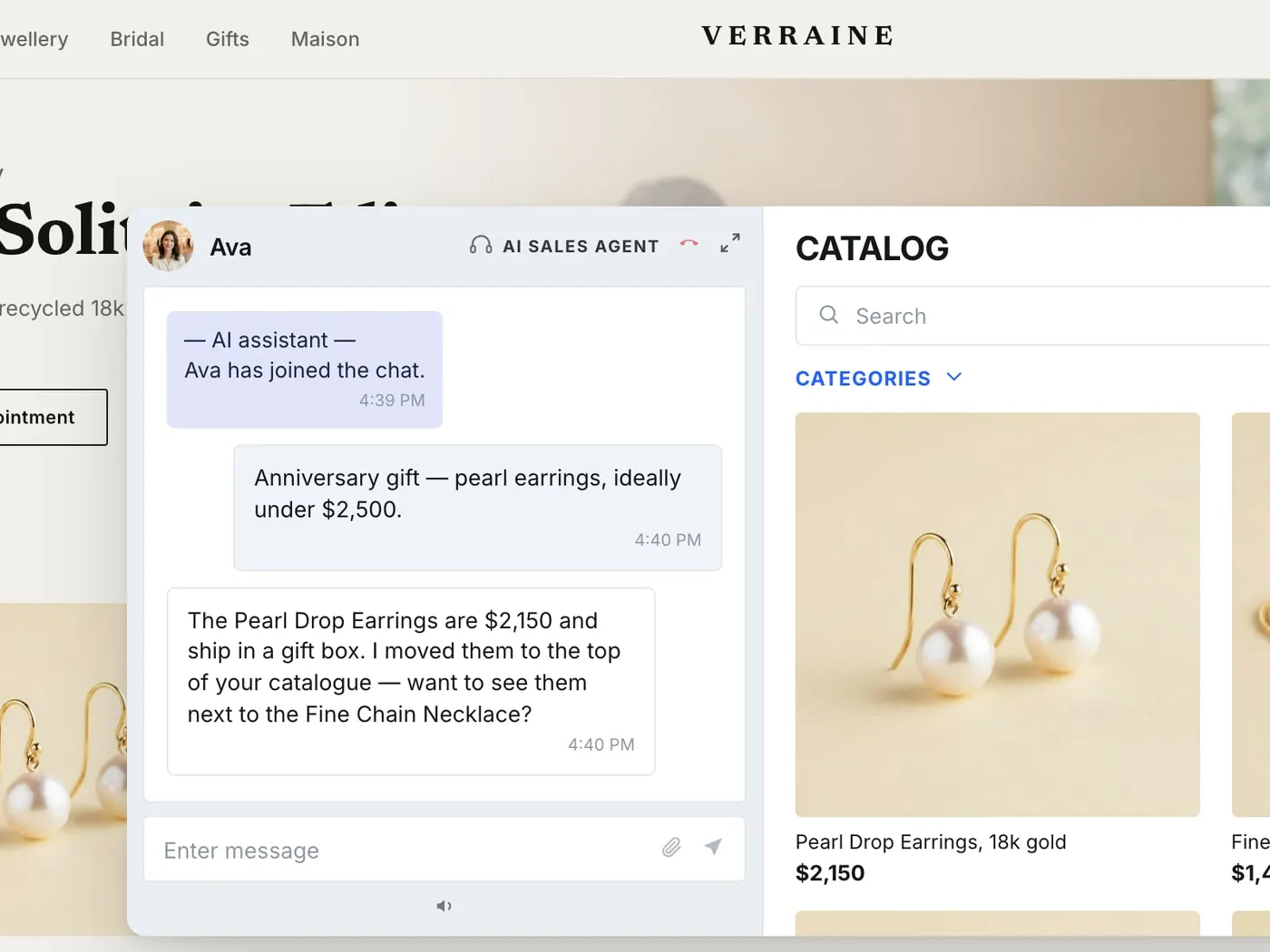
Immerss is a consultation-commerce platform purpose-built for luxury and high-AOV retail, with jewelry and watches as a core use case. It pairs an AI sales agent (which engages and qualifies high-intent shoppers) with live, one-to-one video consultation, so a real advisor guides the buyer to a confident purchase.
Why it fits jewelry: 4K video with macro-lens support for showing stones and settings; screen sharing for certificates, GIA reports, and appraisals; digital clienteling (customer notes, preferences, purchase history) for the relationship that drives repeat jewelry buying; appointment scheduling and follow-up automation; Shopify Plus, Salesforce, HubSpot, and Stripe integrations. What the platform is actually good at: getting a qualified buyer into a booked appointment, giving the advisor the customer’s history before the call starts, and putting the certificate on screen next to the stone so the two are compared in one place rather than in two tabs.
Pricing: per-module and quoted against your setup rather than sold off a price list — ask what drives the number (advisor seats, appointment volume, which modules) before comparing it with anything. Best for: independent and mid-market jewelers and watch retailers who want the in-store consultation experience online. (For how the underlying AI piece works, see our guide to the AI sales agent for ecommerce.)
2. Bambuser — enterprise consultation
Bambuser is an enterprise video-commerce platform used by major global luxury brands, offering broadcast, one-to-one, and hybrid modes with deep customization and global infrastructure.
Why it can fit jewelry: robust one-to-one mode, 4K, white-label, enterprise security (SSO, SOC 2), and integrations with Salesforce Commerce Cloud and Adobe. The catch: enterprise pricing with implementation fees and annual contracts, which puts it out of reach for most independent and mid-market jewelers — check their own pricing page for current tiers, they have moved more than once. Best for: large luxury houses ($50M+ revenue) with complex tech stacks and dedicated teams.
3. Zoom + a manual process — for testing only
Using Zoom for video appointments is a legitimate, low-cost way to validate the consultation model before investing in a specialized platform.
Why it works to start: costs about what one lunch does, everyone already has it, the video is decent and you can screen-share a certificate. Why it’s not a real solution: no product catalog, no in-call checkout, generic (non-branded) interface, no customer history or clienteling, no analytics, and entirely manual order capture and follow-up. Best for: a jeweler running their first 10–30 consultations to prove the model, then graduating to a purpose-built platform once conversion is validated.
4–7. Broadcast platforms (TikTok Shop, Instagram Live, Amazon Live, YouTube Shopping) — poor fit for fine jewelry
These platforms are excellent at what they’re built for: reaching large audiences with visually appealing, lower-priced products that sell on impulse. For costume jewelry, fashion accessories, or sub-$300 pieces, they can work. For fine jewelry, they fight the nature of the purchase:
- No real one-to-one guidance — they’re one-to-many by design, so the trust-building conversation a five-figure sale needs can’t happen.
- Video quality and macro support are limited — Instagram Live caps around 720p; showing a diamond’s fire and a setting’s detail is hard.
- They invite price-comparison and impulse behavior — exactly the wrong mode for a considered jewelry purchase, and a fast track to discounting.
They’re worth using for audience-building and brand reach — but as the sales mechanism for high-AOV jewelry, they’re the wrong tool.
How much do live shopping platforms for jewelry cost?
There are three pricing models here, and the cheapest one is rarely the lowest total cost.
Broadcast platforms are mostly free or commission-based. On jewelry the cost is not on the invoice — it shows up as high-AOV sales that never close.
Purpose-built consultation platforms are quoted against your setup: seats, appointment volume, modules. Against a single recovered five-figure sale the line item is marginal, which is why the useful question is not the price but what the vendor counts.
Enterprise platforms add implementation fees and annual contracts on top of the subscription, and are justified only at scale. Take the current numbers from each vendor’s own pricing page rather than from a comparison post — this one included, because published tiers move.
Budget the equipment separately: a jewelry-grade setup (4K camera, macro lens, CRI-95+ lighting) is a one-time spend in the low thousands, and it is the part most jewelers underestimate.
Worked example: ROI of a consultation platform for a jeweler
Here is the calculation to run with your own numbers. It is short, and every input is either something you already know or something you will know after twenty consultations.
Cost side, per month:
- Platform fee, from your quote
- Equipment, amortised over a year rather than charged to the first month
- Advisor time: consultations per day × working days × hours each × fully-loaded hourly cost
- Lead generation to fill the calendar
Revenue side, per month:
- Consultations actually held — not booked, held; the no-show rate is the input people forget
- Your own consultation-to-sale rate, measured over the first twenty
- Your own average order value on assisted sales, which usually differs from your site average
The reason to build this rather than borrow it is the shape of the answer. Platform and equipment are fixed and small; advisor time is the real cost; a single recovered five-figure sale covers months of both. Which means the number that decides the case is not the price of the platform — it is how many consultations your advisors can actually hold in a week.
Do watch retailers need a different platform than jewelers?
Watch retailers need the same consultation model as jewelers, with a few added requirements. The buying behavior is nearly identical — high AOV, long consideration, trust-driven, relationship-led — so the broadcast-vs-consultation logic is the same, and the same platforms win. What changes is the detail of presentation: watches demand the ability to show movement, dial finishing, and case work at extreme close range, which raises the bar on macro-lens quality and lighting, and provenance documents (box, papers, service history) make certificate screen-sharing even more important than in jewelry. A platform that handles fine jewelry well — 4K, macro, certificate sharing, clienteling — will handle watches well; one that can’t show a dial’s texture cleanly will undermine a five-figure watch sale the same way it would a diamond. In short: same model, slightly more demanding optics.
How to choose a live shopping platform for your jewelry store
Choose based on average order value, the buying behavior of your customers, and your team’s capacity — not on follower count or platform hype. A simple decision path:
- Is your AOV above ~$1,000? If yes, you need the consultation model, not broadcast. Fine jewelry almost always sits here.
- Do you have product expertise on your team? Consultation rewards an advisor who can answer real questions and show certificates. If yes, you’re ready.
- Are you validating or scaling? Validate with Zoom for 10–30 appointments; once you’ve proven a 30%+ conversion rate, graduate to a purpose-built platform like Immerss, which builds for jewelers and watch retailers specifically. Reserve enterprise platforms for true enterprise scale.
- Does it support jewelry specifics? Require 4K + macro, certificate screen-sharing, and clienteling. Without those, it’s not a jewelry platform.
Common mistakes jewelers make with live shopping
- Using a broadcast platform for fine jewelry. Selling a $15,000 piece on TikTok optimizes for impulse and price-comparison — the wrong mode entirely.
- Under-investing in equipment. A laptop webcam can’t show a diamond’s fire. A 4K camera with a macro lens is non-negotiable for jewelry.
- Treating it as a one-off transaction. Jewelry runs on relationships; skipping clienteling throws away the repeat anniversary, upgrade, and referral business.
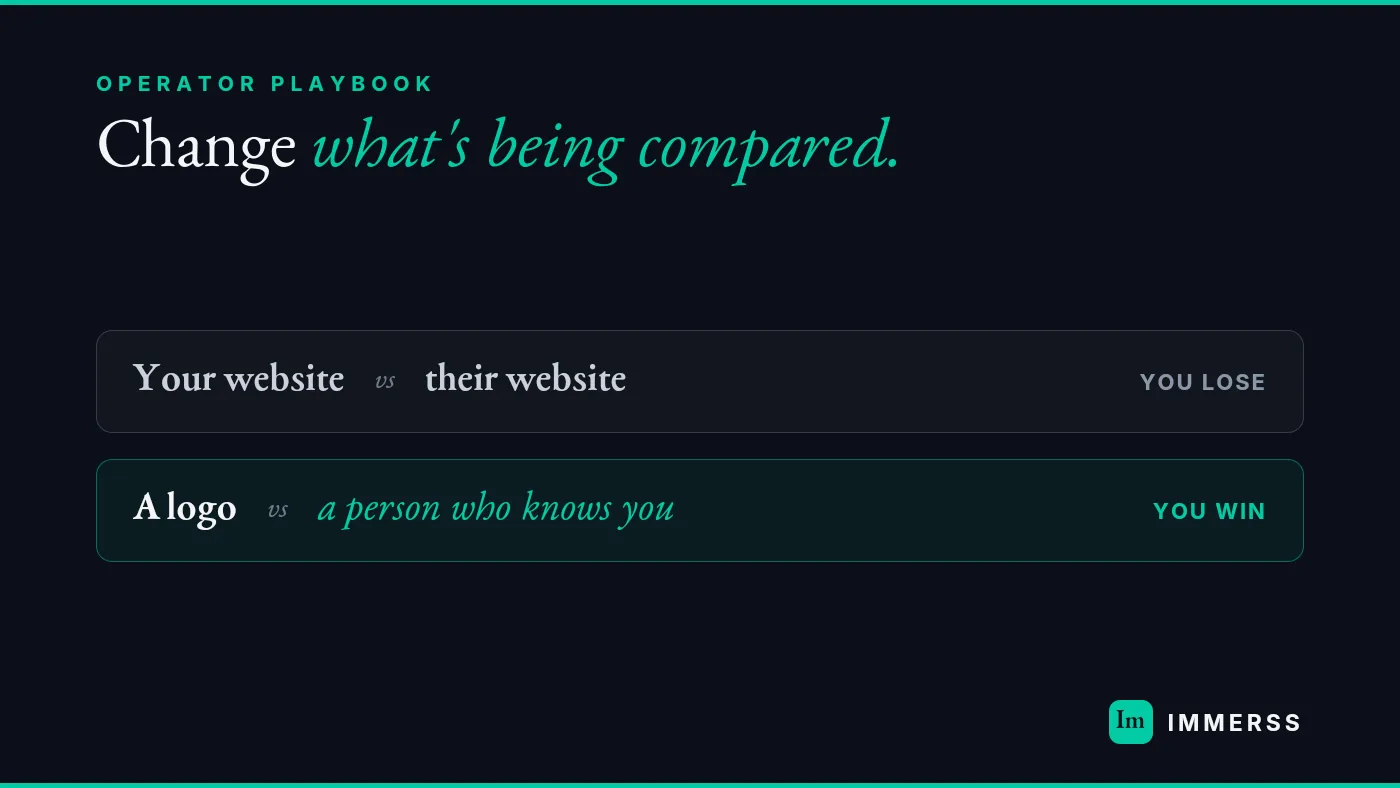
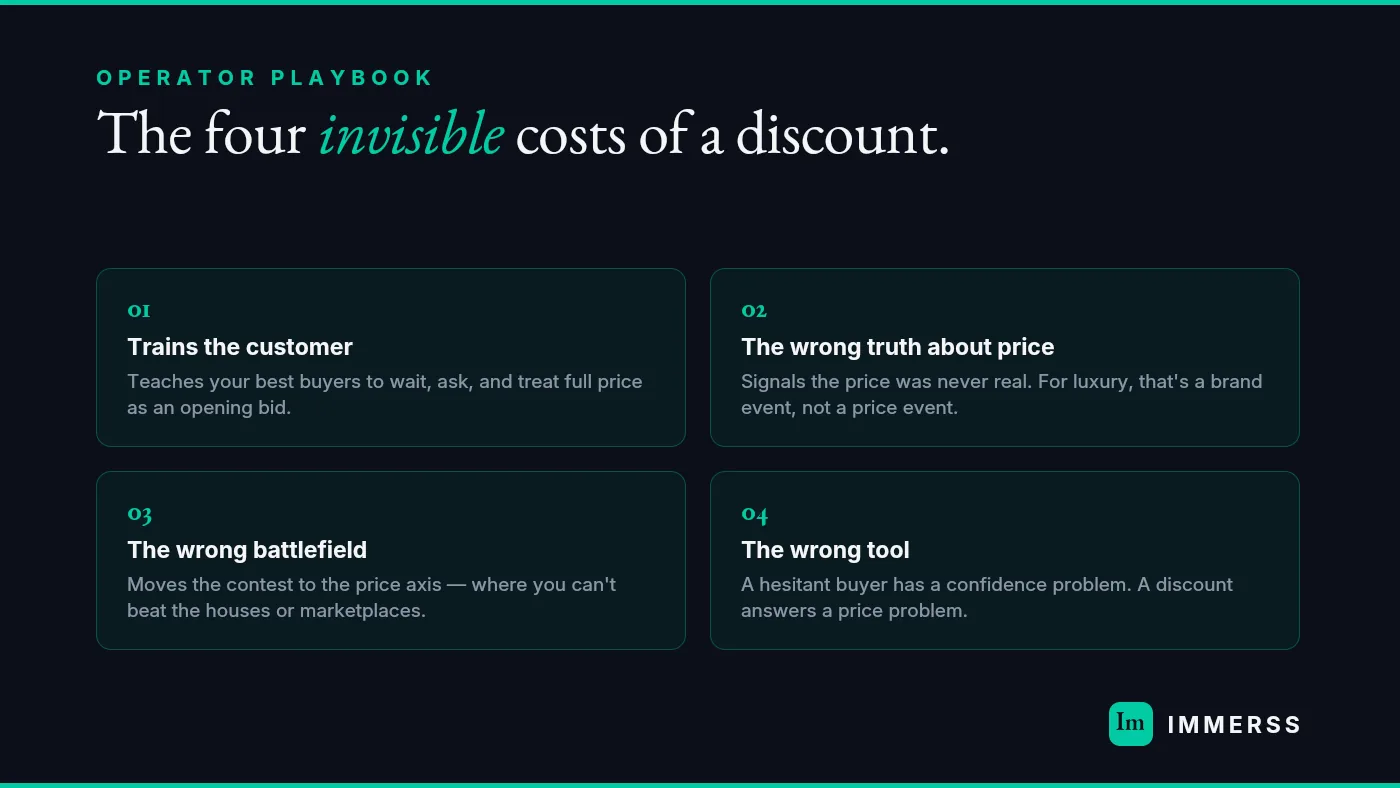
- Defaulting to discounts to close. A hesitant high-AOV buyer usually has a confidence question, not a price objection — answer it with guidance, not a markdown. (More in our guide on reducing high-ticket cart abandonment.)
FAQ: live shopping platforms for jewelry
What is the best live shopping platform for jewelry? For fine jewelry, a consultation-commerce platform like Immerss is the best fit, because it supports the high-AOV, high-trust, one-to-one sale jewelry requires. Broadcast platforms (TikTok Shop, Instagram Live) suit costume or fashion jewelry under ~$300 but underperform on fine pieces.
Can you sell fine jewelry on TikTok Shop or Instagram Live? You can, but it’s a poor fit for high-value pieces. Broadcast platforms are built for fast, lower-price impulse buys in front of a crowd; a five-figure jewelry purchase needs a guided one-to-one conversation — the stone under a macro lens, the certificate on screen, the sizing question answered — which those platforms aren’t designed to provide.
What conversion rate can jewelry live shopping achieve? Higher than broadcast or self-service ecommerce, and the gap comes from guidance rather than price. Measure it on your own appointments rather than on anyone’s published figure: the number that matters is what share of booked consultations end in a sale, and you will have it after a dozen of them.
How much should a jeweler budget for a live shopping platform? Consultation platforms are quoted against your setup rather than sold off a price list, so get the quote before you budget; ask each vendor what drives the number — seats, appointments, or modules. Add a one-off spend for a jewelry-grade camera, macro lens and lighting, which is the part most jewelers underestimate. Against a single recovered five-figure sale, the platform line is marginal.
Do I need special equipment to sell jewelry on video? Yes — jewelry requires 4K video and a macro lens to show stones, cut, and settings accurately, plus CRI-95+ lighting. Standard webcams can’t render a diamond’s sparkle, and poor visuals undermine trust on a high-value purchase.
The 60-day pilot, on us
The fastest way to see whether consultation commerce works on your jewelry inventory is to run it and measure conversion against your current baseline. That’s what the pilot is for.
We run a structured 60-day pilot, on us — an AI sales agent engaging and qualifying high-intent jewelry shoppers, live one-to-one video consultation as the selling mechanism, and measurement built around consultation conversion, AOV, and recovered carts. You change no platform and risk no margin to see what a guided, in-store-grade experience does for your high-AOV pieces online.
See the pilot for merchants: landing.immerss.live Agency partner program: partners.immerss.live
Immerss is a luxury live commerce platform — AI sales agents and one-to-one video consultation for fine jewelry, watches, and high-AOV retail, built on Shopify Plus.