

Real Scarcity Should Be Told, Not Shouted
Most of ecommerce has to manufacture scarcity. Luxury doesn’t.
Production is limited. Some pieces are allocated and not simply sold. Some will not be made again once a run is finished. For many houses, scarcity is not a marketing device at all. It is a genuine property of the work, and part of what the client is paying for.
Which makes it all the more striking when luxury sites borrow the urgency tactics of mass ecommerce.
The borrowed tactics
They arrive gradually, usually through platform features and conversion tools built for a different kind of retail.
A “low stock” badge. A banner announcing that an offer ends soon. A note that others are viewing the same piece. A timer in the checkout.
On a mass-market site these are questionable. On a luxury site they’re actively damaging, for a reason specific to the category.
Why pressure is so costly here
A luxury house sells, among other things, a particular kind of relationship: unhurried, attentive, discreet. The client is not rushed. She is given time and space and information, and trusted to decide.
Urgency tactics break that. A house that hurries its client is behaving like a sale, and a client at this level recognises the register instantly. The moment the site starts telling her to hurry, it has stopped sounding like the house and started sounding like a promotion. It is the same slide that ends in discounting to close.
There’s a second cost. Because the scarcity in luxury is often genuine, faking or exaggerating it does double harm. It devalues the real thing. If every piece is “almost gone,” then the piece that genuinely is the last of its kind can’t be distinguished from the rest.
How advisors convey scarcity
On the floor, experienced advisors communicate real scarcity all the time, but never as pressure.
It sounds like information, offered quietly and specifically. There were twelve made this year, and I have one left. This is the last allocation before the summer. The atelier isn’t continuing this leather.
Notice what is absent. No deadline imposed on the client. No suggestion that she must decide now. Simply an accurate account of the situation, from someone she trusts, leaving the decision with her.
That restraint is what makes it persuasive. Because the advisor never inflates scarcity, the client believes it when the advisor says something is genuinely rare.
It matters most with the client who keeps coming back to the same piece. She is not waiting to be hurried. She is waiting for something she can rely on, and an accurate account of what remains is exactly that.
Allocation and the waitlist
For many houses the most natural form of scarcity is allocation: a list, a reservation, an introduction when a piece becomes available.
Handled well, this is one of the most valuable things a house offers: the sense that someone is looking out for her, and will let her know. Handled badly, as a generic waitlist form with no human behind it, it becomes another impersonal queue.
The difference, again, is whether a person who knows her is involved.
A note on regulation
This is not legal advice. But consumer regulators in several jurisdictions have acted against false urgency: resetting timers, inflated “high demand” claims, fabricated “others are viewing” messages. A luxury house has more reason than most to stay well clear of anything resembling these, because its reputation rests on being trusted to tell the truth about its pieces.
What good looks like
Remove borrowed pressure. Generic low-stock badges, countdown timers and “others are viewing” notices don’t belong in the register of a house.
State genuine scarcity as information. Where a piece is truly limited, say so specifically and calmly: how many, what remains, whether it will be made again.
Let the advisor convey it personally. Real scarcity lands best when it comes from someone she trusts, in a conversation, and not from a badge.
Make allocation personal. A reservation or a waitlist should lead to a person, not just a confirmation email.
What to measure
Every urgency or scarcity message on the site, checked against the facts. Each one is either tied to real stock, a real allocation or a real date, or it is removed. This is an audit with a finite list, and it is worth repeating after every platform update.
Share of reservation and waitlist requests that reached a named advisor, and how many of those clients heard back from a person.
What clients ask about availability, and on which pieces. Those questions show where the site is silent about something she needs to know.
Where Immerss fits
Immerss is a live commerce platform; it does not manage allocation lists or decide what is scarce. What it does is put the person who can describe scarcity truthfully within reach of the client, from the piece itself.
- Clienteling: Live Co-Shopping lets a client reach an advisor from the house’s own site, by text or on one-to-one video. The advisor has product detail and stock in front of them during the call, can show the piece, say honestly what remains and whether more will be made, and place it in her bag while she watches. Outbound keeps her preferences and past conversations in a shared client record, so the advisor who promised to let her know can write to her personally, with the piece itself in the message.
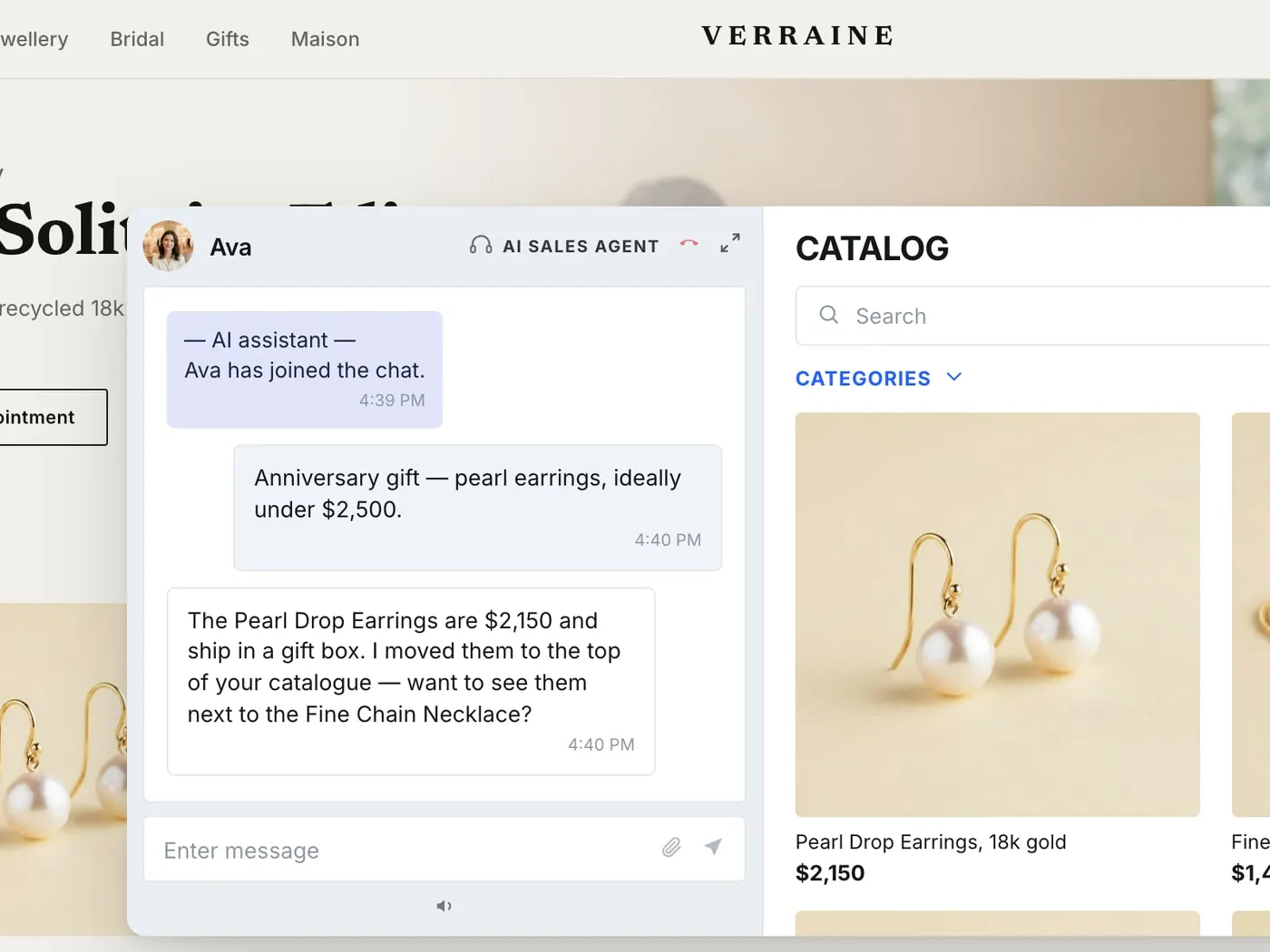
- AI Sales Agent: answers out of the house’s catalogue at any hour, including what is in stock, and does not improvise past it. A question it cannot answer from the catalogue, such as whether a run will be repeated, goes to an advisor with the conversation intact.
The approach stays human, because scarcity is described by someone she trusts; personal, because it is said to her, about the piece she is considering; and measurable, because the house can see which availability questions reached an advisor and what came of them.
It’s the digital equivalent of I have one left, said quietly and truthfully, in place of a badge telling her to hurry.
For a house, the entry point is a conversation and a 60-day pilot, on us.
A house never needs to fake scarcity.
It only needs to describe it the way its best advisors always have: quietly, specifically, and without hurrying anyone.
Frequently asked questions
Generic ones, no. A house sells an unhurried, attentive relationship, and a badge telling the client to hurry sounds like a promotion. Where a piece is truly limited, the site can say so as information: how many were made, what remains, whether it will be made again.
Because the scarcity in luxury is often genuine. Faking or exaggerating it devalues the real thing: if every piece is almost gone, the piece that truly is the last of its kind can no longer be told apart from the rest.
As information, offered quietly and specifically, with no deadline imposed on the client. There were twelve made this year and one is left; this is the last allocation before the summer. Because the advisor never inflates scarcity, the client believes it when something is said to be rare.
A person who knows the client being involved. A reservation that leads to her advisor, who will let her know when a piece becomes available, is one of the most valuable things a house offers. A generic form with only a confirmation email behind it is another impersonal queue.