
Side by Side, in the Same Light
There is a moment in many considered purchases that every advisor recognises. The client has narrowed her choice to two pieces, and she cannot decide.
Two watches in different case sizes. Two necklaces in the same design, one in yellow gold, one in white. Two bags in nearly the same leather. She likes both. The question is no longer whether to buy, but which.
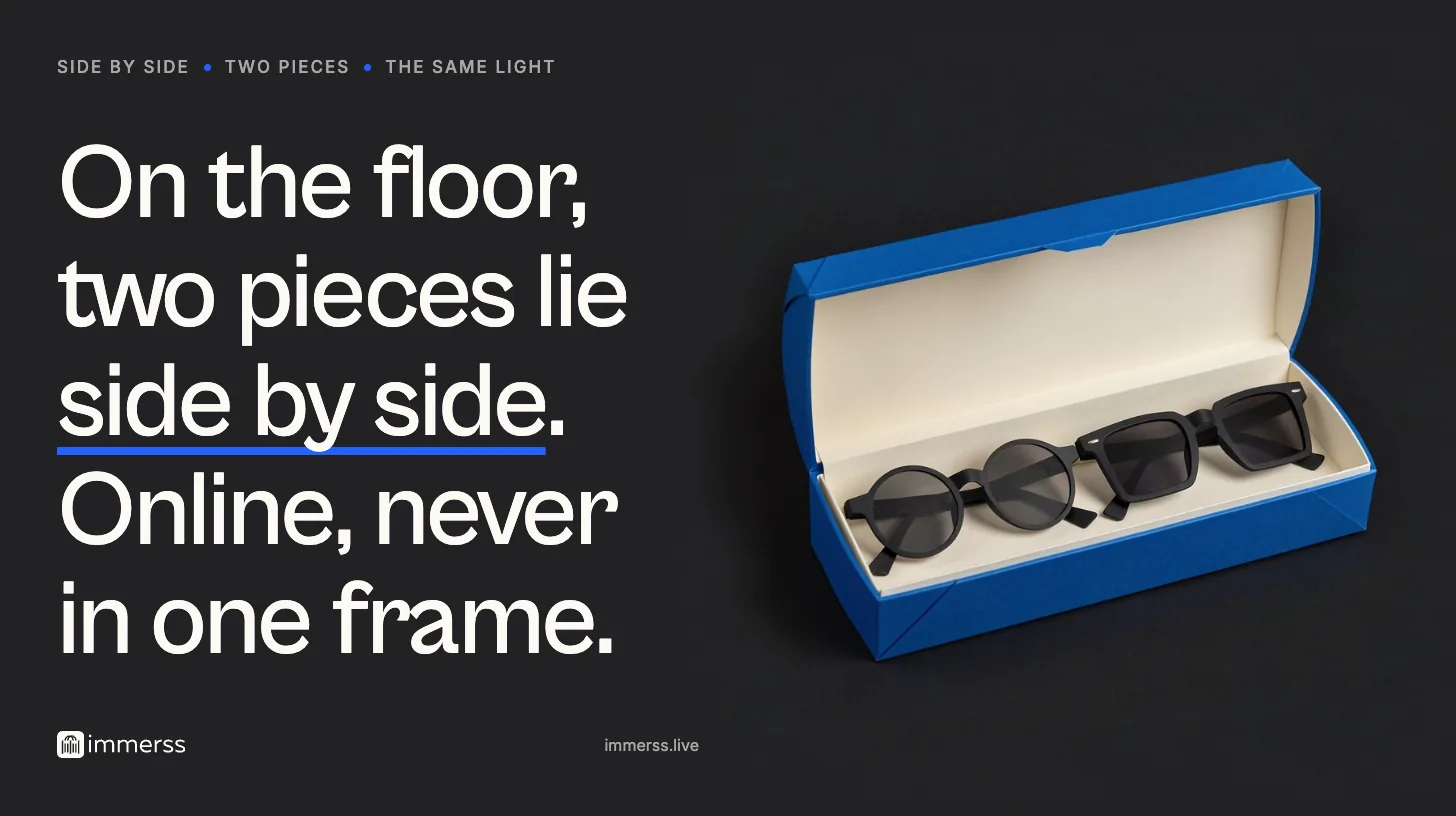
What a good advisor does next is simple, and very often decisive. She takes both pieces and lays them side by side on the tray, in the same light.
What side by side reveals
A remarkable amount becomes clear the moment two pieces are next to each other.
The difference between a 36mm and a 38mm case, which sounds trivial in a specification, is obvious on a wrist. Two golds that seemed identical in photographs reveal their different warmth. Two leathers described in nearly the same words show different grain and different weight.
And then the advisor adds the part no tray can: which one suits her. Her wrist, the other pieces she wears, the occasions she has in mind, what she said she was looking for. The comparison becomes a recommendation, made for one person.
That moment is the heart of many sales on the floor. Online, it almost never happens.
Two pieces, never in the same frame
On a website, each piece has its own page. Each was photographed on its own, often on a different day, sometimes by a different photographer, under different light.
So a client trying to decide between them is comparing two images that were never made to be compared. The two golds look different because the light was different. The case sizes are hard to judge because there is nothing to measure them against. Her own wrist and her own wardrobe are nowhere in the picture.
She can open both pages next to each other on a screen. But that isn’t the tray. The pieces are still in separate frames, taken separately, and the one person who could tell her which suits her isn’t there. Even the finest campaign photography doesn’t close that gap, for the reasons in a campaign image cannot be the proof: a beautiful image of one piece says nothing about the piece beside it.
The decision is about her, not the page
There is a deeper reason a page can’t settle this. The right answer to which one? usually depends on the client.
Which case size suits her wrist. Whether she wears more yellow gold or white. Whether the piece is for every day or for occasions. Whether she already owns something close to one of them. None of that is knowable from a product page, and no product description could hold it.
That is why the comparison is, at heart, a conversation, and why it is one of the moments where an advisor adds most.
What good looks like
Let a client ask to see two pieces together. From either product page, she should be able to ask for both to be shown side by side, without booking an appointment days ahead.
Show them in the same light, at the same time. On a live video consultation, an advisor can hold both pieces together, turn them, set them against each other: the digital equivalent of the tray.
Bring her into the comparison only if she wants. Where it helps, she can show her own wrist or a piece she already owns, so the advisor can judge which suits her. That is her choice, never a requirement; she can watch without being seen, as in a client shouldn’t have to be seen to be shown.
Let the advisor recommend, including the less expensive piece when it’s the better choice for her. A recommendation that sometimes points to the smaller purchase is the one clients trust.
Notice which pairs clients compare. When the same two pieces are repeatedly weighed against each other, it’s worth making sure both pages acknowledge the other and describe the difference plainly. The consultation answers one client; the page can then answer the next.
What to measure
Consultations involving two or more pieces, and what came of each.
Pairs most often compared: which pieces clients hesitate between.
Exchanges between similar pieces after purchase, a sign the comparison wasn’t settled before.
Where Immerss fits
Immerss is a live commerce platform, and this is the part of it that puts two pieces back on one tray.
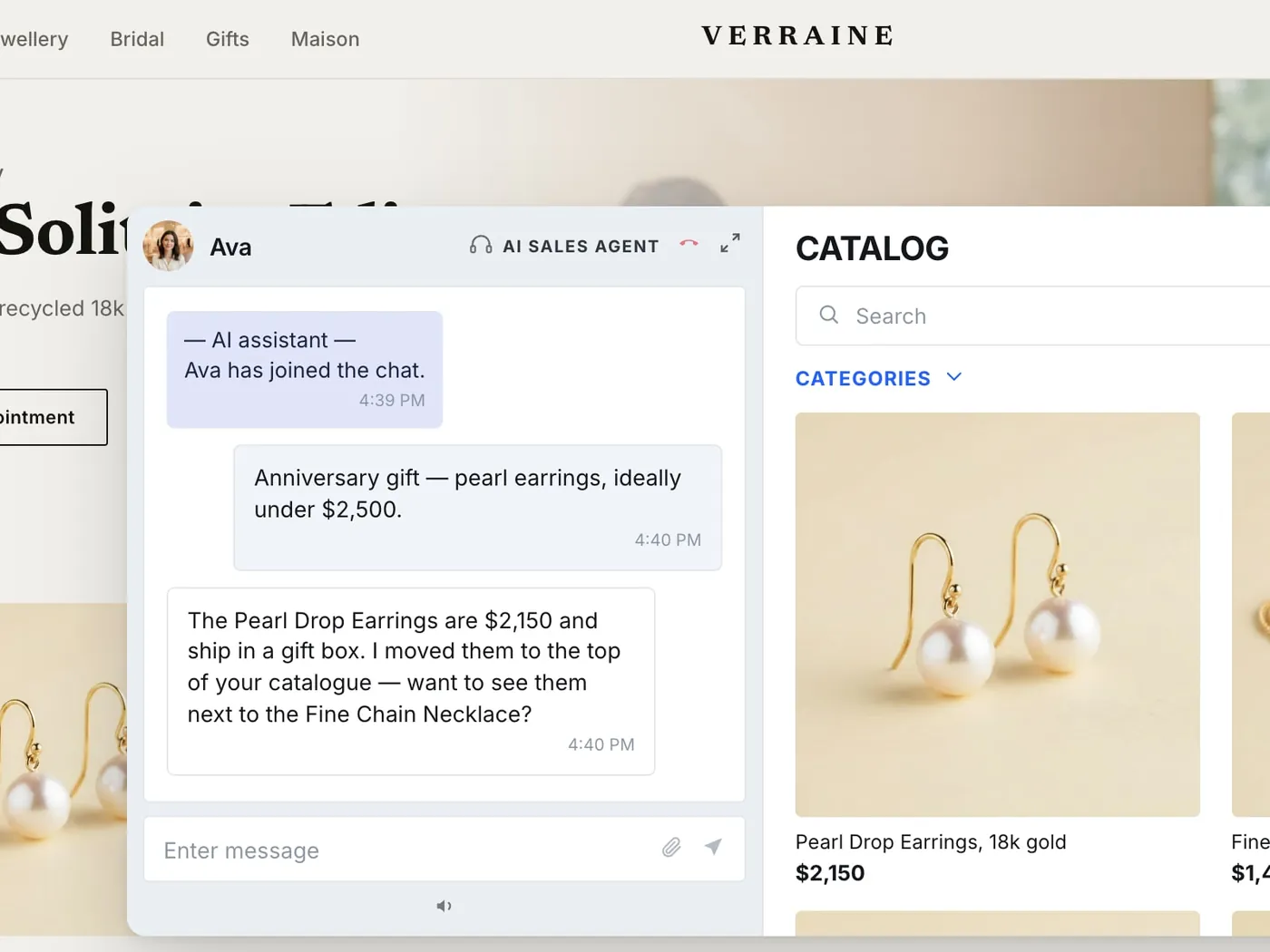
- AI Sales Agent: answers a client’s questions out of the house’s catalogue at any hour, on the house’s own site, including what is written about each of the two pieces. When she wants them shown, the conversation goes to a person.
- Clienteling: Live Co-Shopping puts a named advisor on one-to-one video from the product page, with no download and no appointment. The advisor sees what the client has been viewing, can hold both pieces together in the same light, and can place the one she chooses in her bag during the call.
Whether a house routes such a request to a particular advisor, and how its advisors handle a comparison, remain the house’s decisions; the software carries the conversation, not the judgement.
The approach stays human, because the comparison is made by an advisor who can show both pieces; personal, because the recommendation is made for her wrist and her wardrobe, not for an average client; and measurable, because the house can see which pairs clients hesitate between and what came of each consultation.
For a house, the entry point is a conversation and a 60-day pilot, on us.
On the floor, the hardest decisions are settled on a tray, two pieces side by side, with someone who knows the client.
Online, the pieces have never shared a frame. A consultation is how they can.
Frequently asked questions
Each piece has its own page, photographed separately, often on a different day and under different light. Two images never made to be compared cannot show the difference in warmth between two golds or in scale between two case sizes, and the right answer usually depends on the client: her wrist, her other pieces, the occasions she has in mind.
In a live video consultation, an advisor can hold both pieces together, in the same light, turn them and set them against each other, which is the closest equivalent of laying them on a tray. The advisor can then recommend the one that suits her.
No. She can watch the advisor without being seen. Showing her wrist or a piece she already owns is her choice, never a requirement.
Yes, when it is the better choice for her. A recommendation that sometimes points to the smaller purchase is the one clients trust, and it is what an advisor on the floor would do.